…Lives, businesses transformed in Ibwa 2.
…Funding stalls nationwide rollout to 7,000 communities.
For years, Mustapha Sani, a 50-year-old father of six, lived at the mercy of isolation. From his farm in Ibwa 2, a small rural settlement tucked into the outskirts of Gwagwalada, Abuja, he would trek long distances and pay high costs to transport his harvest to the market.
“The harvests were good, but transport alone would take all the profit. At the end of the season, I had nothing left,” Sani told BusinessDay.

Like many rural farmers across Nigeria, Sani was not struggling with production but with access. With no tarred roads and no reliable transport system, motorcycles were the only option to get produce to the nearest motorable road.
The costs were steep, and the frustrations ran deep. But for Sani and his community, things are beginning to shift — thanks to the Federal Government’s Smart Village initiative, a bold programme aimed at delivering digital access, skills, and infrastructure to underserved areas.
Led by Bosun Tijani, Minister of Communications, Innovation and Digital Economy, and executed in partnership with Huawei Nigeria, Glo, and the Universal Service Provision Fund (USPF), the Digital Innovation Village project in Ibwa 2 is part of a bigger vision—to connect 7,000 rural communities across Nigeria. Ibwa 2 is a pilot project and one of the early beneficiaries.
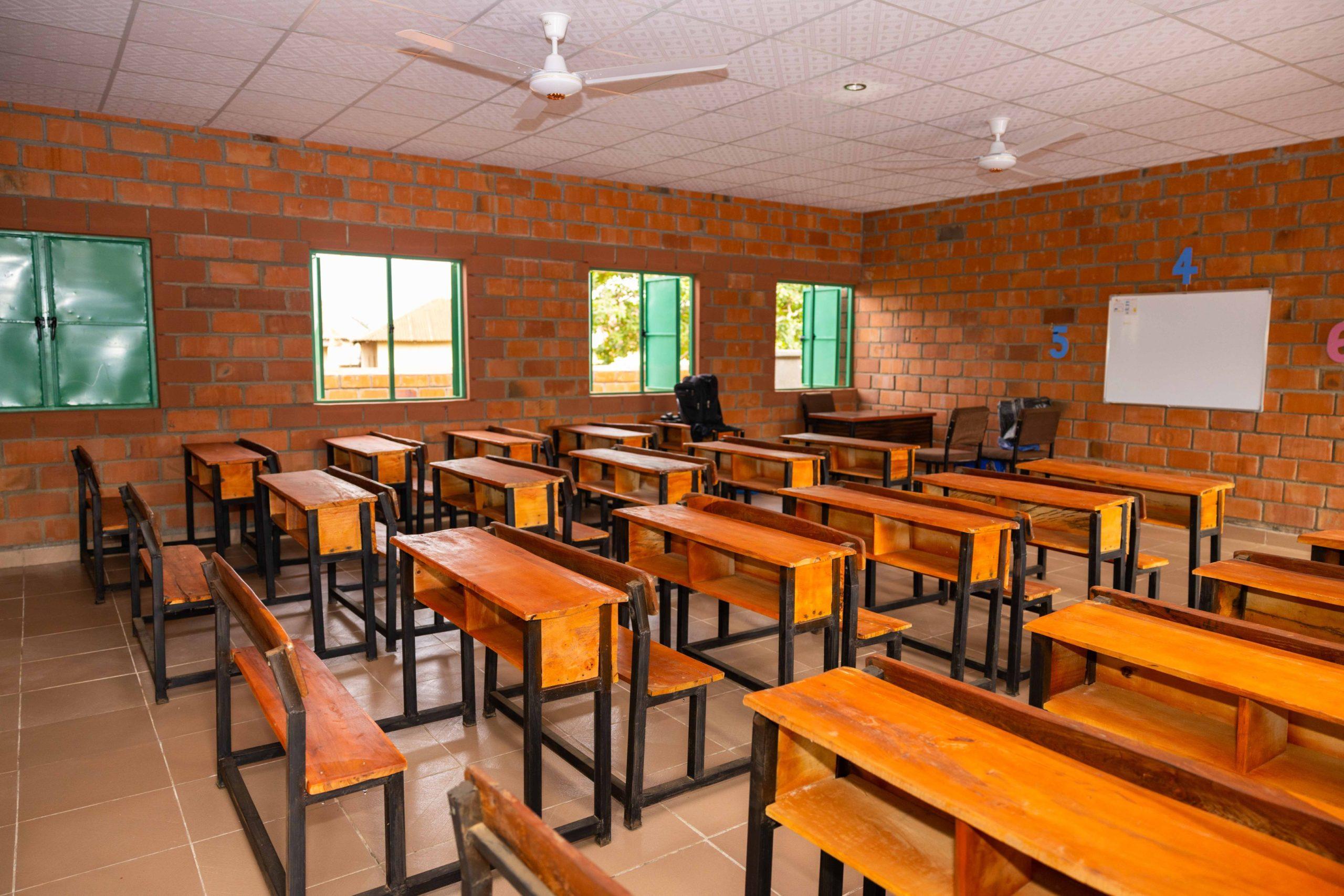
Launched earlier this year, the project brought a series of digital upgrades to the sleepy community—solar-powered internet kits, 100 Mbps broadband, Huawei IdeaHub smart classrooms, and even a digital health centre. More importantly, it brought hope.
Sani’s eldest son, Idris, was one of the first to be trained to market their farm produce online.

“With a smartphone provided by the programme and stable internet access, he began posting their crops on Facebook and WhatsApp,” Sani said.
“The calls started coming in. Buyers from Gwagwalada and other areas started placing orders. They came to collect the yams themselves,” Idris added, smiling.
Read also: NIN, BVN hinder rural farmers access to loan facilities
The shift eliminated costly transportation and middlemen, increasing profit margins for the family.
“For the first time, I am saving money. I can even plan to send my daughter to secondary school,” Sani said, visibly emotional.
Previously, the removal of the fuel subsidy had worsened transportation woes in Ibwa. Now, digital access is turning that crisis into an opportunity—allowing farmers to connect with buyers, expand their markets, and reduce waste.
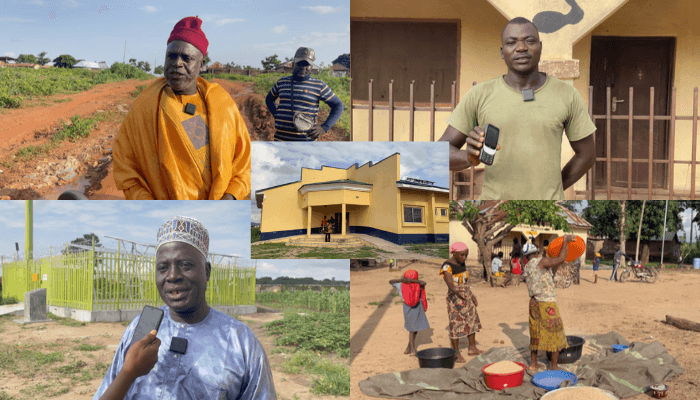
When BusinessDay visited Ibwa 2 to assess the impact of the project, it was clear that the transformation was broader than just farming.
“I used to struggle to sell my farm produce,” Issa Halidu, a student and part-time farmer,, said. “Now, with stable internet, selling is easier. The minister even provided phones and helped fix our network problems.”
“Our village has changed. What we never imagined is happening. We just hope the government continues to sustain it.”
Others, like Rabi Musa, a local tailor, have leveraged digital access to grow their non-agricultural businesses.
“Before, if I were at the farm, I could not take orders. Now I post designs online and get jobs,” she said. “I used to earn ₦3,000–₦5,000 per outfit; now I make up to ₦8,000.”
Another resident, Umar Jameel, a marketer, has seen his monthly income jump from ₦100,000–₦150,000 to ₦600,000, simply by tapping into online trading platforms.
Abubakar Bamaiyi, the community’s Village Head, called the intervention “the most impactful” he has witnessed in decades.
“This time, we are seeing results—not just promises,” he said.
Despite progress, hurdles remain…
Muhammad Ibrahim, councillor representing Ibwa 1 and 2, also praised the effort, particularly the solar and Wi-Fi infrastructure, which he said had “enhanced business opportunities and improved the local economy.”
But he was quick to note that not all areas have benefited equally. He cited Burufata, another nearby rural settlement, which lacks both internet and solar power.
Despite the progress, one key aspect of the project—telemedicine—remains largely unfulfilled.
Mamman Guduko, who oversees the Ibwa 2 Primary Health Centre, said that while Wi-Fi and solar panels were installed, critical equipment promised during the launch was never delivered.
“Solar panels and Wi-Fi were installed, and a few digital tools were demonstrated, but no additional equipment or staff support has come. There is still no ultrasound, glucometer or basic diagnostic tools,” he said.
This gap raises questions about the sustainability and completeness of the intervention.
Read also: Flood wreaks havoc, destroys nearly 1,000 rice farms in Jigawa
Scaling ambition, stalled by funding
While Ibwa 2 is enjoying a digital lifeline, thousands of other communities are still waiting—and may wait much longer.
Osibo Imhoitsike, Strategic Communications Adviser to the Minister, acknowledged that funding remains the primary challenge to scaling the initiative nationwide.
“We have seen encouraging results, but expansion to other communities depends on available resources,” Imhoitsike told BusinessDay.
“In its first week, Ibwa 2 recorded over 12,000 minutes of internet usage, showing strong adoption and demand. But replicating this success across 7,000 communities remains uncertain, as funding remains a key issue.”
He emphasised that the early outcomes have been encouraging.
“Within a week of deployment, data usage in the community jumped from zero to an average of 12,000 minutes,” he said. “There is clear evidence of economic activity and community engagement. We are using these insights to seek further funding and plan the next phase.”
Ibwa 2 is serving as a case study for the federal government’s broader Smart Village framework. According to Imhoitsike, “Lessons learnt from Ibwa 2 are shaping the government’s approach to the nationwide rollout.”
The pilot has demonstrated that rural innovation doesn’t need to wait for perfect infrastructure. With solar power, mobile broadband, basic digital training, and government-community collaboration, results can be swift and measurable.
The road ahead
The experience in Ibwa 2 offers a glimpse into the transformative power of digital infrastructure—not just for communication, but for unlocking economic potential in communities long left behind.
With consistent funding and proper implementation, the Smart Village initiative could serve as a blueprint for rural revitalisation across Nigeria—improving incomes, expanding market access, creating jobs, and reducing economic isolation.
But until the government secures the financial muscle to move from pilot to full deployment, thousands of villages remain disconnected—waiting for their own turn in the digital sun.