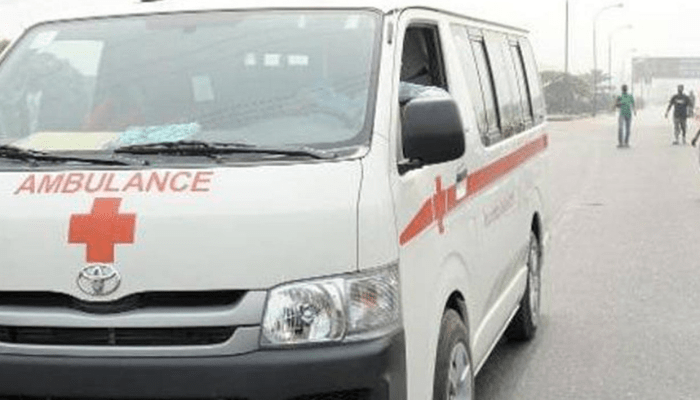
In Nigeria, people die not only from disease but also from delay. A woman in childbirth, a child struck in a hit-and-run incident, several adults critically injured in a bus crash, a driver who dozes off and veers off the Third Mainland Bridge into the lagoon below, commuters and innocent bystanders caught in a fuel explosion – too many perish not because care is impossible, but because it never arrives in time. That is the Nigerian paradox: a country of extraordinary resilience where survival too often relies not on systems but on luck.
Across the globe, even advanced nations have recognised the fragility of emergency systems. London’s Grenfell Tower fire revealed how bureaucratic inertia can be deadly. In South Africa, ambulances queued for hours outside overwhelmed hospitals during the COVID-19 pandemic. In India, oxygen shortages during the pandemic turned preventable emergencies into mass tragedies. Yet, while other countries struggle to respond, Nigeria often does not respond at all. In a nation of 200 million, the most populous in Africa, emergency medical services cannot be treated as a luxury or an afterthought; they are a basic necessity for survival.
The headlines have become tragically familiar. In Sokoto, a crowded boat capsized on its way to the market. At least ten dead, over forty missing. Rescue arrived late, and the medical response was even later. In Mokwa, Niger State, floods destroyed communities, killing hundreds and leaving thousands stranded. Bridges washed away, along with any hope of organised rescue. In Suleja, a tanker explosion killed over 100 young men rushing to scoop fuel. First responders arrived only after the worst was over.
These stories are not only about location; they are about trust, or the absence of it. In Lagos, Nigeria’s wealthiest state, emergency services are seen less as help and more as a joke. People no longer expect an ambulance to come; they expect to be asked for money first. They assume hospitals will turn them away. They expect bystanders to record videos instead of offering help. In the place of real aid, cynicism has taken root, and the silence of sirens has become normal.

Three critical deficits define Nigeria’s EMS collapse: availability, affordability, and coordination. Ambulances are rare, often in poor condition, and concentrated in urban areas. Rural communities have none. Families are routinely asked to pay up front, an absurdity where minutes can mean the difference between life and death. There is no unified national emergency number, no GPS-enabled dispatch system, and no integrated referral system. What exists is fragmentation and fatalism. Of Nigeria’s 1.6 million deaths annually, 10 to 15 percent occur in emergencies.
Read also: Stakeholders discuss solutions for emergency medical services in Nigeria
It may be tempting to blame the government outright, and decades of underinvestment and neglect bear much responsibility. But the EMS deficit is not just about budgets; it is also cultural and systemic. Citizens often record tragedies instead of helping. Media outlets chase sensational headlines over sustained accountability. Healthcare workers face impossible conditions, undermined by a lack of funds, training, and morale. The government, while culpable, is also overwhelmed.
Nigeria’s real challenge is not whether emergency medical services should exist, but how to build them in a context where the government does it alone. The paradox of Nigerian healthcare may hold the answer: with over 60 percent of care already delivered by the private sector, why shouldn’t emergency medical services follow the same path?
A hybrid system is possible. Imagine a Nigeria where a woman in rural Sokoto dials a toll-free line and is answered within seconds; her location is instantly pinpointed. The nearest certified responder, whether a government ambulance, private hospital unit, converted ride-hailing vehicle, or local bus or tricycle driver, arrives within minutes. She is stabilised by trained paramedics, covered by pooled insurance funds, and seamlessly referred to the nearest facility. Her care is not charity; it is a right, supported by coordination, technology, and empathy-driven service.

The government must anchor reform. Only the state can set and enforce standards for ambulances, paramedic training, and response times. It should also provide incentives, through tax relief, co-investment, or matching funds, to encourage private participation. Crucially, the government must integrate all responders into a unified national platform and make performance transparent so citizens can track both progress and failures. Partnerships with groups like the National Union of Road Transport Workers, tech companies, and insurers can extend coverage while ensuring accountability.
The private sector also has a pivotal role. Telecoms can establish a toll-free emergency number linked to GPS dispatch centres. Logistics and ride-hailing firms can pool fleets of ambulances, motorcycles, and boats to extend reach. Insurers can eliminate the practice of upfront cash by embedding EMS in corporate and microinsurance packages. Private hospitals can lead in training paramedics and raising professional standards. For corporations, EMS should be seen not as philanthropy but as strategy: organisations that save lives build trust, loyalty, and long-term productivity.
Youth and citizens must be at the centre of this change. Social behaviour needs to shift from passivity and cynicism to responsibility and action. With more than 70 per cent of Nigerians aged 10 to 35, embedding first responder training in schools, universities, and community programmes would transform preparedness nationwide. Establishing first responder clubs and integrating emergency response into curricula would ensure a generation for whom saving lives is instinct, not an exception.
Civil society and coalitions such as the Healthcare Federation of Nigeria (HFN) are vital to sustain momentum. HFN reframes EMS not as charity but as an essential pillar of universal health coverage. By convening insurers, hospitals, donors, and regulators into coalitions and proposing financing models from pooled funds to subsidised packages, it is using tragedy not to exploit grief but to drive accountability and reform.
Ultimately, EMS reform is not just about fixing systems; it is about reshaping culture. It is about whether we remain a country where a bleeding victim is filmed rather than saved, where hospitals close their gates to the desperate, and where sirens are silent. Or whether Nigerians will choose a different path, one where saving a life is a collective duty rather than a matter of chance.
This article is a partnership between Healthcare Federation of Nigeria (HFN) and BusinessDay to highlight policies and programmes to promote the rebuilding of Nigeria’s health sector. As a private sector-led coalition, HFN advocates for policies and partnerships to strengthen healthcare delivery. This partnership aims to spark meaningful discussions and drive transformative change in Nigeria’s health sector.
The contributors to this article are members of the HFN Editorial Committee: Njide Ndili (President, HFN), Dr. Folajimi Adebowale (CEO, Recon Health Media), and Mr. Pascal Achunine (MD, Health Emergency Initiative).