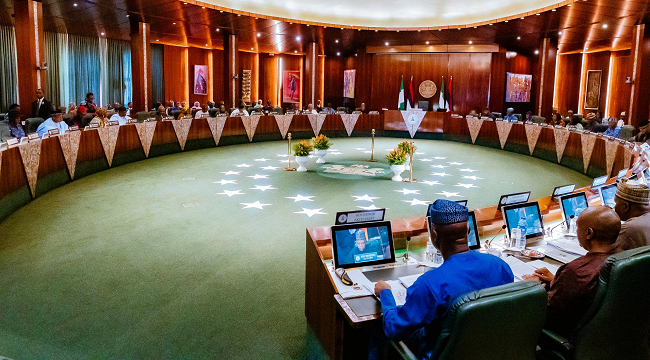
“When cabinet ministers are appointed in September, it will be some months after I took the oath of office,” President Buhari said in his recent article in the Washington Post. To say “some months”, of course, understates the reality. If the president sends his nominations to the Senate in September, and assuming they are properly scrutinised and not treated as shoo-ins, the cabinet may not formally be in place until October. By then, Nigeria would have been without a government for about four or five months since President Buhari assumed office on May 29. Surely, this is anomalous and goes against the grain of normal democratic governance.
The first basic task of any new president or prime minister is to appoint a cabinet and form a government. Barring any political quandary or legislative gridlock, this basic post-election task is performed fairly smoothly in many countries. Even where there is a political or legislative deadlock, in most liberal democracies, public opinion and market reactions would inevitably force the politicians or legislators to get their acts together and ensure a functioning government is formed without undue delay. This was the case in the UK in 2010 when the fear of a market backlash in the face of an economic crisis compelled the Conservative party and the Liberal Democrats to expedite the formation of a coalition government within a week of an inconclusive election. And it was what happened in the US in 2008 when, with the unfolding financial crisis, the US Senate had to fast-track the confirmation of key Obama nominations, such as Tim Geithner as Treasury Secretary, to ensure that the newly elected president had a core team in place to take charge of the country’s economic and security challenges.
So, it is perfectly legitimate to be concerned about President Buhari’s failure to form his government several months after taking office as Nigeria’s leader. Certainly, running a major country like Nigeria for several months without a government is bound to attract negative comments and speculations locally and around the world. And there has been no shortage of such comments in some Western publications. For instance, the US-based Foreign Policy magazine published an article in July titled, “Who is governing Nigeria?”, noting that “Without a government in place, Buhari has resorted to bringing advisors without official titles on his trips outside the country”. Similarly, writing recently in The Times (of London) Richard Dowden, director of the Royal African Society, said: “In Nigeria, Africa’s largest economy, the newly elected president, Muhammadu Buhari, is struggling to establish a government”. The notion that the president, who won a popular electoral mandate and had a smooth democratic transition, is “struggling” to form a government is certainly not good for Nigeria’s image.
Now, President Buhari’s response to these concerns in his Washington Post article is interesting in that it was both dismissive and enlightening at the same time. First, on the dismissive part, Buhari argued that “Obama himself did not have his full Cabinet in place for several months after first taking office”, and that “the United States did not cease to function in the interim”. In other words, the president was saying, “what is the big deal about not having a government in place for several months?” But there are two things wrong with this comment. First, the analogy with the US president is false. The truth is that Obama had most of his key Cabinet positions, including the Treasury Secretary, as well as his own policy aides, in place within weeks of assuming office on January 20, 2009. Some of his other nominations were, of course, caught up in the usually cumbersome and time-consuming Senate confirmation process. By contrast, President Buhari has not named a single ministerial nominee or appointed his own policy team or chief of staff, apart from his media team, more than three months after assuming office.
There was also something blasé about President Buhari’s comment that a country will “not cease to function in the interim” even if it doesn’t have a cabinet for months. Of course, a country will not cease to function, but it may cease to function “properly” as operating without a cabinet could harm market confidence and send negative signals around the world. I would argue, for instance, that one of the main reasons there is currently turmoil in the forex market in Nigeria is that there is no finance minister to assure and calm the markets. Similarly, serious high-level inter-governmental engagements normally take place at the political level, that is, simultaneously involving heads of state and ministers. The fact that President Buhari has been meeting with world leaders, including during his recent high-profile visit to the US, without his ministers, leaves a big hole in the diplomatic process. Above all, running the country without a government for months has implications for good governance and for the reputation of Nigeria.
But that said it now brings me to President Buhari’s explanation as to why the formation of his administration “must” take time because, for me, the president’s explanation countervails much of the criticisms of his failure to form his government to date. In the Washington Post article, President Buhari said the task of appointing his cabinet “cannot and should not be rushed”. According to him: “Nigeria must first put new rules of conduct and good governance”, adding: “I cannot stress how important it is to ensure that this process is carried out correctly”. Clearly, the president believes that Nigeria does not currently have a good governance framework in place and that it is necessary to create that framework first before anything else. So, sequencing is important in the president’s strategy. First, he wants to establish new rules of conduct and good governance framework, and only then would he “install officials who are experienced and capable of managing state agencies and ministries”.
Well, I have to say that I find the president’s rationale for delaying his cabinet appointments more compelling and convincing than his attempt in the same article to argue that not having a cabinet in place for several months doesn’t matter because the country does “not cease to function in the interim”. Of course, as I said above, not having a cabinet in place months after a successful election has implications for good governance and for the reputation of this country. However, I also believe, as the saying goes, that anything worth having is worth the wait. As someone who believes that people in public life should be guided by certain noble standards, as I argued recently in an article on technocrats in government, I applaud the president’s attempt to create ex ante rules and norms to govern ministerial appointments and their behaviour in office even though these rules are taking too long to gestate!
But here is the rub. Would the new governance rules be worth the wait? Well, I believe President Buhari has raised expectations and he needs to fulfil them. He has promised, first, to create a new good governance framework that would govern how ministers are appointed and how they behave in office and, two, to actually ensure that only those who are competent, diligent and incorruptible are appointed into political and public offices. If the long delay in forming his government is the price that Nigerians have to pay for having a governance framework that is credible and fit-for-purpose and for having ministers who will further the general good and uphold the highest standards of propriety, then I believe it is a price worth paying.
However, I believe that the process needs to be transparent. First, Nigerians need to know what the “new rules of conduct and good governance” look like. The new framework cannot be created in the closet and kept hidden from the Nigerian people. Having open and transparent rules would enable Nigerians to judge for themselves whether those who are appointed to the president’s cabinet meet the criteria, and to assess their behaviour afterwards in light of the rules. Secondly, if Buhari wants to create a lasting change, he should also codify the new rules into law. He should send to the National Assembly as soon as possible an “Appointments and Behaviour of Ministers and Public Office Holders bill” (or something to that effect) that covers the rules of conduct and good governance that he is now putting in place. Giving the rules a statutory basis would ensure that there is a long-term legally binding template for good governance in this country, subject, of course, to amendments to build on experience and reflect emerging best practices.
Nothing is, of course, novel about this idea. Every serious liberal democracy has a ministerial code, which sets out rules and standards for government ministers. In the current version of the UK’s Ministerial Code, Prime Minister David Cameron, writes: “In everything we do … we must remember that we are not masters but servants”. He adds that ministers should be “determined to act in the national interest, above improper influence. Mindful of our duty. Above all, grateful for our chance to change our country”. These exhortations set tone for how the prime minister expects his cabinet colleagues to act and arrange their affairs. But the code itself contains specific standards and rules, covering a wide range of issues, and sets out “seven principles of public life”, namely: selflessness, integrity, objectivity, accountability, openness, honesty and leadership. Of course, having such a code in place does not mean that ministers do not sometimes act inappropriately. But ministers are guided by the code daily, and hardly can any one get away with flouting it with impunity.
So, let’s be clear, President Buhari’s failure to form his government for several months after assuming office is far from normal. But these are not normal times, and the president is right to say that lack of a good governance framework is a reason for much of Nigeria’s problems, including corruption. And he believes that it would “neither be prudent nor serve the interests of sound government” to appoint a cabinet without first establishing robust rules of engagement. I agree with him. But he must make the wait worthwhile for Nigerians. The new governance rules must be robust, and the ministerial appointees must be beyond reproach. Only then will the long delay in forming his government be worth the wait!
Olu Fasan