|
Getting your Trinity Audio player ready...
|
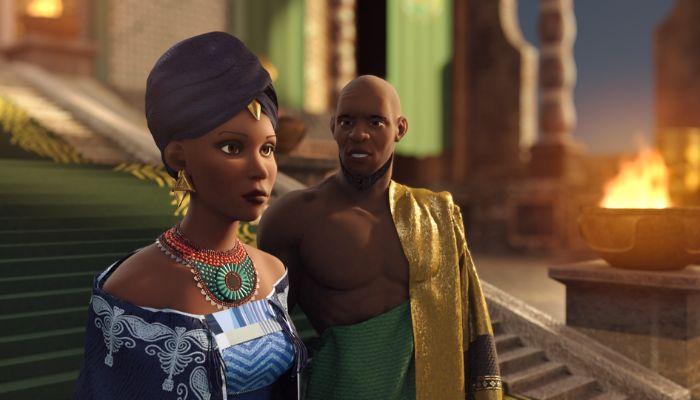
When Disney announced its partnership with Kugali Media in Nigeria to produce Iwájú, an Afrofuturistic animated series set in Lagos, it sent ripples across the global creative space. For many, it was the first proof that Nigeria’s animation talent could compete on a global stage. But for those closer to the industry, it simply confirmed that the nation’s growing animation ecosystem could become a billion-dollar economy if properly recognised and supported.
Globally, animation is booming. The worldwide animation market is projected to double from about $436 billion in 2024 to approximately $896 billion by 2034. That is an annual growth rate of 7.5 percent, showing that the industry is ripe for inclusive growth.
In Nigeria, our studios are already pushing boundaries. Anthill Studios, led by Niyi Akinmolayan, has integrated animation into mainstream Nollywood productions, while Basement Animation and Spoof Animation have produced original series that air across African networks. EVCL and Orange VFX are training potential animators through in-house capacity building, and Maliyo Games’ partnership with Disney Games to produce the mobile game Iwájú: Rising Chef has further proven that global companies are willing to invest in the industry. Notably, Magic Carpet Studios is set to release Africa’s first indigenous 2D feature-length animation, The Passport of Mallam Ilia, in 2026. The film has been in the making for seven years now with an estimated budget of $2 million.
The timing could not be more right. With over 60 percent of Nigerians under age 25, the country has a ready workforce and consumer base for animation content. Streaming platforms like Netflix, Amazon Prime, and Showmax are aggressively expanding into African content. Mobile penetration is increasing, with a growing interest in animation, not only in film but also in advertising, education, and video games. The market is ready, but the ecosystem needs to have more in place, especially regarding stronger structures.

There are also a few hurdles to contend with. Animation production is expensive due to software licensing, hardware requirements and power supply challenges. There is no unified training infrastructure that considers animation a viable career, so animators are either heavily self-taught or trained in isolated hubs. Intellectual property protection is still weak, making it difficult for creatives to invest in local content, and animation lags in terms of government support and funding.
Still, these barriers should not overshadow the progress. Nigeria has a brilliant workforce producing world-class content. The next step is to establish animation, not as an addition to the entertainment industry, but as a standalone pillar in Nigeria’s knowledge industry. That will take intentional policy, investment, and sensitisation.
When this is done, the benefit will be immense. Animation provides highly skilled work in storytelling, design, software engineering, voice acting, and sound design. Nigerian animation could tell African stories on a global stage just like popular Korean music and Japanese anime. It provides potential for diversification at a time when Nigeria needs to reduce its dependence on oil. Also, it can become a tool for education, public health communication, and even digital diplomacy.
Three steps are critical to unlock this potential. First, government and policymakers must go beyond symbolic recognition and embed animation more substantively in the creative economy and national statistics. For instance, while the Federal Ministry of Art, Culture and the Creative Economy (FMACCE) has a page dedicated to animation and has endorsed festivals such as the Lagos International Festival of Animation (LIFANIMA), these gestures remain limited in scope. Second, studios need to be offered funds and incentives, including grants and tax breaks. Third, partnerships and collaborations need to be strengthened between Nigerian creators and international platforms so that talent pipelines from local regions have commercial avenues to flow into. Universities also can contribute by building curricula that set up students with the technical and storytelling proficiency to be successful in the field.
Nigeria has already demonstrated through Nollywood that it can develop a globally recognised creative economy from the grassroots level. Animation offers the next frontier now, and this time, there is no need to begin anew because there are already existing talents, facilities, and international interest. The missing link is the vision to perceive animation not as just “cartoons”, but as a billion-dollar economy that can be harnessed to its optimal level. So, the world is looking on – it is time for Nigeria to animate its future.

Blessing Bolaji is a research assistant intern at the School of Media and Communication, Pan-Atlantic University, and a writer and emerging corporate storyteller exploring how branding, media, and workplace culture shape the careers of young professionals.