|
Getting your Trinity Audio player ready...
|
As someone born and raised in Nigeria to Dutch parents, I’ve claimed Nigeria everywhere I’ve lived — from boardrooms in Amsterdam to classrooms in Michigan to hospitals in Guyana. Nigeria isn’t just heritage to me — it’s part of the engine that drives who I am.
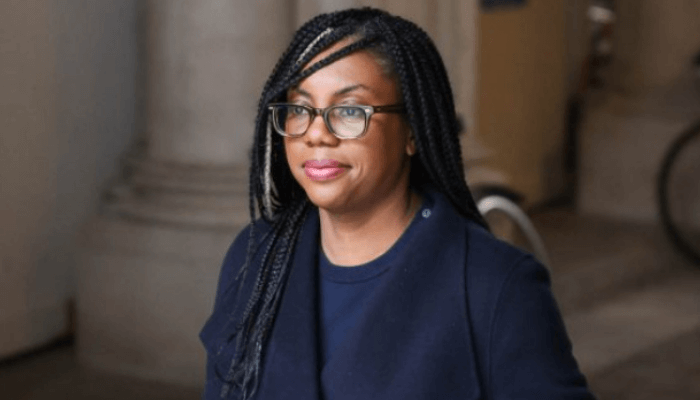
So when Kemi Badenoch was appointed UK Opposition Leader, I was genuinely excited. It felt like another chapter in the powerful story of Nigerian excellence around the world — a woman of Nigerian heritage rising to one of the most visible political roles in Britain. It wasn’t just a win for representation; it was a reaffirmation of something I’ve always believed: Nigerians don’t just belong — we lead.
That’s why hearing that Badenoch has reportedly disavowed her Nigerian identity was so jarring. Not just for me, but for the hundreds of millions of Nigerians in the diaspora and back home who carry Nigeria in their names, their stories, their DNA — even when they’ve never owned a Nigerian passport.
Let’s be clear: identity is personal and complex. But when someone in such a powerful public position actively distances themselves from their heritage — particularly when that heritage is shared by so many who are denied the same platforms — it doesn’t go unnoticed. It sends a signal. And it stings.

In fact, it stings even more because of the irony.
As I explored in a recent editorial about Kojo Choi’s appointment as Ghana’s ambassador, someone like the reverse of Kemi Badenoch — instead born in Nigeria, with no Nigerian grandparent, and of entirely British ancestry — would have little to no legal pathway to citizenship in Nigeria, let alone the right to hold elected office at such a high level. Despite being born in Nigeria and living there over 30 years, even I — a Dutchman — have faced repeated barriers in accessing citizenship or formal belonging. So the fact that Badenoch can rise so far in the UK, with her Nigerian heritage, only to turn away from it, feels like a betrayal of a privilege many don’t even have the right to imagine.
And yet — Nigerian identity is now more visible, more celebrated, and more impactful in the UK than ever.
That was the essence of my recent LinkedIn post, which went viral with nearly 250,000 views, thousands comments, likes and shares and viral reposts across multiple social media platforms and media outlets.. The comments poured in from every corner of the Nigeria, the UK, and the diaspora. The comment section reads like a living anthology of Nigerian pride — and pain. Some celebrated the global reach of Nigerian talent. Others expressed sadness or frustration at the ease with which some discard the heritage many would give anything to reclaim. Many Nigerian-British professionals shared how their identity fuels, rather than hinders, their excellence. Others pointed out how Nigeria has given the UK — and the world — far more than it often gets credit for.
British Nigerian Excellence Isn’t an Exception — It’s a Movement

Across every domain of British life, British Nigerians aren’t just represented — they’re leading:
In academia and science, we see powerhouses like:
● Professor Dame Elizabeth Anionwu, who transformed sickle cell care in the UK;
● Dr. Anne-Marie Imafidon, tech prodigy and Chancellor of Glasgow Caledonian University;
● Dr. Tolullah Oni, public health visionary at the University of Cambridge;
● Dr. Nike Folayan, co-founder of AFBE-UK and Technical Director at WSP.
In business and innovation, names like:
● Tom Ilube, the first Black chair of England Rugby and a tech entrepreneur;
● Obi Nwosu, a pioneer in UK’s cryptocurrency space;
● And firms like Coca Cola Hellenic Bottling, Helios, GTBank, Seplat, and IHS Towers, whose operations, impact, and listings extend from Lagos to London.
In sports, the Nigerian diaspora is reshaping British excellence:
● In rugby: Maro Itoje, captain of England and the British & Irish Lions, leads a long line of Nigerian-descended players including Topsy Ojo, Ugo Monye, Victor Ubogu, and Immanuel Feyi-Waboso.
● In football: Bukayo Saka, Eberechi Eze, Noni Madueke, Ethan Nwaneri — young stars with Nigerian roots lighting up the Premier League and the England national team.
● At the 2017 FIFA U-20 World Cup, six of the 21-man victorious England squad were of Nigerian descent — including Solanke, Lookman, and Tomori, who started the final.
In the arts:
● Actors like Chiwetel Ejiofor, David Oyelowo, Cynthia Erivo, and Sophie Okonedo carry Nigerian heritage into award-winning performances.
● Even Colin Firth and Hugo Weaving, while not Nigerian, credit their formative childhood years in Yola and Ibadan respectively as influencing their careers and their craft.
● In music, the Nigerian touch runs deep — from Sade and Seal to Dave, whose lyrics are grounded in both British and Edo identity.
And of course, there’s Anthony Joshua, whose boxing legacy is always wrapped in the Nigerian flag, and the up and coming Moses Itauma.
Public Life, Leadership, and the Precedent of Chuka Umunna
The Nigerian influence extends beyond commerce and culture:
● John Major, former UK Prime Minister, and, like Badenoch was the Conservative Party Leader, spent part of his early career in Jos as a banker.
● Justin Welby, the former Archbishop of Canterbury, worked in the oil industry in Port Harcourt — experiences he has cited as formative in his worldview.
And before Badenoch, there was Chuka Umunna — son of a Nigerian father from Anambra and a British-Irish mother. Once hailed as “the British Obama,” Umunna was a rising star in the Labour Party and a symbol of modern multicultural Britain. Though he didn’t always foreground his Nigerian heritage, he never disavowed it. His departure from Labour to co-found Change UK was a major moment in recent British politics — one that reflected both the promise and precarity of Black British leadership.
Umunna walked away from his party — not his identity.
Badenoch’s decision feels reversed.
Why This Moment Matters
We’ve seen public figures handle complex heritage with grace. Barack Obama never disowned Kenya or Indonesia. Rishi Sunak has never hidden his Kenyan, Tanzania, or Indian roots. They don’t treat identity as a liability — they embrace it as a strength.
That’s the part Badenoch’s statement misses. At a time when Nigerians are shaping some of the UK’s most celebrated success stories, rejecting that heritage doesn’t look brave. It looks disconnected. In fact, being Nigerian now feels almost trendy in the UK — just look at how the England Lionesses chose Nigeria’s own Afrobeats superstar Burna Boy to help celebrate their Euro 2025 victory in front of Buckingham Palace. Nigerian identity is not something to shed — it’s something to proudly stand in.
We don’t expect perfection from our leaders. But we do expect authenticity. And that starts with owning all of who you are
#NigeriaToTheWorld — Always
I’ll say now what I said in my earlier editorial on Nigerian citizenship: you can’t build a nation — or a life — on exclusion. True identity is legacy, not luggage. You don’t drop it when it’s inconvenient. You carry it because it made you possible.
Kemi Badenoch has every right to define her identity. But the rest of us have the right to call out what’s at stake when public figures turn away from their roots — especially when so many of us have had to fight to claim ours.
To everyone who commented, liked, and shared my post — thank you. Your stories prove what I’ve always believed:
Nigeria isn’t just where we’re from. It’s who we are. And I, for one, will never stop claiming it — proudly, publicly, and permanently.
Dr Wiebe Boer, Chief Growth Officer, JIPA Network & Editorial Advisory Board Member, BusinessDay.