



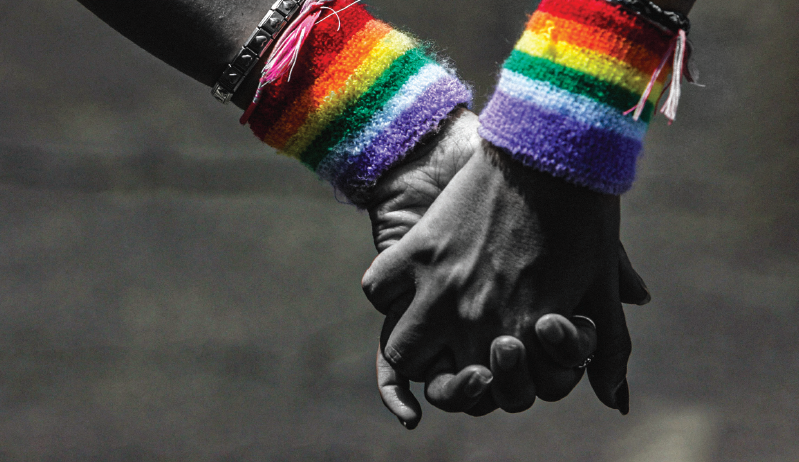
The gender conflict reshaping our world began with what many dismissed as fringe behaviour in Western societies. Today, these movements seek global dominance, and Africa finds itself at the epicentre of this ideological storm. A recent conversation with an old classmate illuminates how profoundly these forces have penetrated African families.
Two weekends ago, my friend arrived at my home in tears — unusual for someone typically vibrant and confident. His voice over the phone had carried an unfamiliar weight when he requested an urgent meeting. His wife had travelled to the UK the previous week for a well-deserved rest after thirty years in banking, staying with their daughter Uche. There, she discovered Uche had secretly married her former Lagos secondary school classmate, Yinka — another woman.
The shock overwhelmed the mother, who refused to break this news to her husband. Instead, she forced Uche to call her father directly. “Daddy, good news. I got married,” Uche announced. “You remember Yinka from secondary school? She’s now my wife. We married six months ago.”
“Married? But Yinka is a woman!” my friend responded.

“Yes daddy. I am the husband. I now identify as a man. I haven’t felt like a woman for years. That’s why I couldn’t marry Tony. God wanted me to be a man — that’s how I feel.”
This conversation encapsulates the crisis confronting African families today.
Traditional African Understanding
Growing up, our upbringing taught us that everything under the sun possessed gender — masculine or feminine. Animals, plants, objects, colours, language, and words all fitted this binary framework. Most African religions consider homosexuality immoral behaviour that undermines marriage and family institutions.
The Holy Bible states clearly in Genesis 1:27: “So God created mankind in his own image, male and female he created them.” When filling out official forms, only two options existed: M or F. This simplicity troubled no one. Therefore, the gender identity teachings infiltrating Africa have caught many unprepared.
Previously, reports of homosexual behaviour were dismissed as Western aberrations, attributed to either absent religious foundations or unchecked promiscuity.

However, these teachings have now penetrated African homes and schools, with elementary curricula introducing children to homosexuality and related orientations. It must be noted that many of these inclusions in our educational systems are funded by Western NGO educational foundations. Recently, such materials appeared in Nigerian schools, raising questions about how education ministries approved them. Television stations broadcast uncensored content during children’s programming, while phones and tablets provide unrestricted access to this material.
Overseas education has accelerated this propagation among diaspora Africans, who then influence continental relatives. They become immersed in LGBTQI+ environments — an umbrella term encompassing Lesbian, Gay, Bisexual, Transgender, Queer, Intersex identities, plus all other unlisted orientations.
Africa’s legal landscape
While homosexual relationships existed in earlier African contexts, particularly in South Africa, current legal frameworks vary dramatically across the continent. South Africa remains the only African nation where LGBTQI+ discrimination is constitutionally illegal. In November 2006, it became Africa’s first country and the world’s fifth to legalize same-sex marriage.
Ten African countries maintain LGBTQI+ anti-discrimination laws: Angola, Botswana, Cape Verde, Lesotho, Mauritius, Mozambique, Namibia, São Tomé and Príncipe, Seychelles, and South Africa. Conversely, Kenya and Nigeria criminalise homosexuality. In southern Somalia, Somaliland, Mauritania, northern Nigerian regions, and Uganda, homosexuality carries death sentences — punishments rooted primarily in religious convictions.
International gender advocacy organisations have systematically penetrated African communities through strategic aid partnerships. These groups have embedded gender ideology within development programmes particularly targeting education and media sectors. These foundations leverage Africa’s economic vulnerabilities, conditioning financial assistance on ideological compliance. African institutions must scrutinise funding sources and attached conditions, ensuring development aid serves genuine community needs rather than advancing foreign social agendas.
The African Gender Framework
African worldview traditionally refuses separation between sex and gender, treating them as synonymous. Being born male means being a man; being born female means being a woman. Dominant gender ideology in Africa recognises only two sexes and two genders that naturally align — males are masculine, producing boys and men; females are feminine, producing women and girls.
Current conflicts where individuals reject gender identification or claim shifting gender identities contradict creation’s original order, religious teachings, and biological reality. Provision exists for intersex individuals possessing both male and female characteristics — genitals, chromosomes, or reproductive organs that do not fit the male/female binary. Their conditions may manifest at birth, childhood, adulthood, or remain hidden.
People identifying outside male/female categories use various terms, with “non-binary” being most common. The LGBTQI+ movement demonstrates clear determination about controlling global discourse around these issues.
Protecting African society
Societies committed to citizen welfare must establish laws preventing people from becoming pawns of those promoting unrestricted bodily autonomy as fundamental rights. Philosophy and religion consistently teach that gender ideology promotion through homosexuality represents unnatural living.
For proper child development and moral maintenance, laws should prohibit propagating confused gender identity issues through school materials and media targeting children. While acknowledging this ideology’s existence, society cannot encourage practices that burden homes, families, and schools already strained by economic hardship and political pressure.
With rising youth populations plagued by unemployment and insecurity, Nigeria and Africa must focus entirely on providing the developmental push our continent requires. We cannot afford distractions that undermine our foundational values and family structures. The time for decisive action is now.





