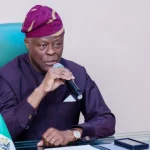
Nigeria is pressing ahead with the Nigeria–Equatorial Guinea Gas Pipeline, a cross-border project designed to transport stranded Nigerian gas to Equatorial Guinea for processing and export, Minister of State for Petroleum (Gas), Ekperikpe Ekpo, has said.
Speaking on the federal government’s achievements in the gas sector, Ekpo described the pipeline as a “strategic collaboration” that would connect Nigeria’s gas resources to Equatorial Guinea’s liquefied natural gas (LNG) facilities, opening new export channels and reinforcing regional energy integration.
He disclosed this during a webinar on Thursday, August 21, themed “Catalyzing Investments for Nigeria’s Upstream Gas Sector: Global Trends, Opportunities, and Challenges”, held to mark his second year in office.
“This project exemplifies our commitment to regional energy interconnectivity and the monetisation of stranded gas assets,” the minister said.

In August 2024, President Bola Tinubu and Equatorial Guinean President Teodoro Obiang Nguema Mbasogo signed an agreement in Malabo on the Gulf of Guinea Pipeline Project, reaffirming a partnership for mutual development.
The agreement covered legislative and regulatory frameworks for the pipeline’s establishment and operation, transit of natural gas, ownership structures, and guiding principles.
Read Also: Tinubu departs Japan for Brazil
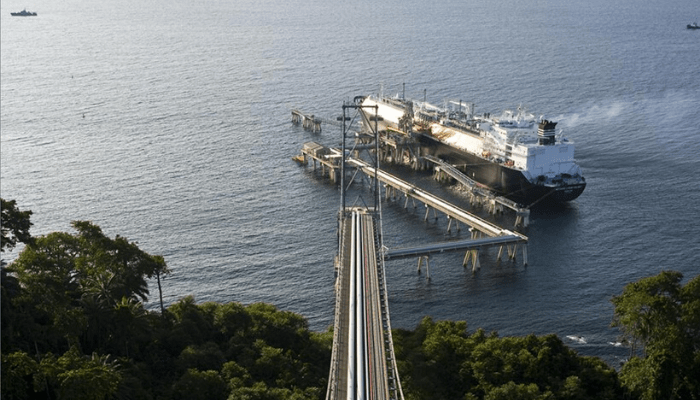
Once operational, the project is expected to give Nigerian gas producers access to Equatorial Guinea’s Punta Europa complex, which houses LNG, methanol, and liquefied petroleum gas (LPG) export facilities.
The initiative aligns with Nigeria’s broader gas development strategy, which seeks to curb flaring, expand domestic use of LPG and compressed natural gas (CNG), and strengthen the country’s role as a reliable supplier to international markets.

Ekpo added that, alongside the Equatorial Guinea link, Nigeria remains committed to the Trans-Saharan Gas Pipeline project with Niger and Algeria, while also advancing domestic industrial ventures such as the Brass Fertiliser and Petrochemical plant.
Nigeria, which holds Africa’s largest proven gas reserves — estimated at more than 210 trillion cubic feet — has in recent years promoted gas as the country’s “transition fuel” to drive industrialisation, reduce dependence on oil, and support global decarbonisation goals.
The minister acknowledged, however, that challenges persist, including financing constraints, infrastructure deficits, and the need for stronger private sector participation. “What we now require is sustained investment and strategic partnerships to unlock the next phase of growth,” he said.