



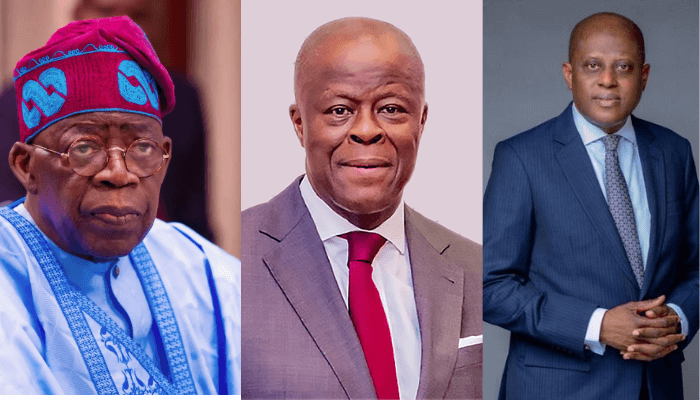
Wale Edun, Minister of Finance and Coordinating Minister of the Economy, on Wednesday held talks with Central Bank Governor Olayemi Cardoso in Abuja, as part of renewed efforts to deepen macroeconomic coordination and restore investor confidence.
The closed-door meeting, hosted at the Central Bank of Nigeria (CBN) headquarters, also included Zacch Adedeji, Executive Chairman of the Federal Inland Revenue Service (FIRS)—a rare alignment of Nigeria’s fiscal, monetary, and revenue authorities.
Although no detailed outcomes were disclosed, the Finance Ministry said discussions focused on aligning policy tools to rein in inflation, boost liquidity, and drive private sector-led growth. It described the meeting as one of the clearest signals yet that the Tinubu administration is moving to close long-standing policy gaps that have undermined Nigeria’s economic resilience.
“The Honourable Minister reaffirmed that close alignment between fiscal and monetary policy is critical to consolidating President Bola Tinubu’s reform agenda,” the ministry noted, adding that priority areas include “ensuring inflation is contained, revenues are mobilised efficiently, and credit flows effectively to productive sectors.”

Read Also: NNPC remittances to FG hit N8 trillion in seven months
The talks come at a pivotal moment for Africa’s largest economy, which continues to face inflation near three-decade highs, a weakened naira, and eroding consumer purchasing power. Nigeria’s annual inflation rate stood at 21.88% in July, with food and energy costs driving the surge, according to official data.
The naira has also remained under pressure across official and parallel markets despite recent CBN measures, including unifying exchange rates, tightening monetary policy, and clearing outstanding foreign exchange backlogs owed to investors and airlines.
Since taking office in 2023, President Tinubu’s government has implemented bold reforms—removing fuel subsidies and floating the naira—to address structural imbalances. While welcomed by global institutions, these measures have led to short-term hardship for households and businesses, heightening the urgency of effective policy coordination.
Analysts argue that stronger alignment between fiscal and monetary authorities is long overdue. Previous administrations often sent mixed signals to markets by combining monetary tightening with fiscal expansion, resulting in inconsistent outcomes.

“Coordination between fiscal and monetary authorities is not optional—it is essential,” said a senior finance official familiar with the discussions. “We must ensure monetary policy is not working at cross purposes with fiscal strategy, particularly in a fragile recovery environment.”
Cardoso, who has emphasised transparency and data-driven policy at the CBN, is seen as a steady hand in navigating Nigeria’s monetary challenges. His meeting with Edun forms part of a series of structured engagements aimed at building a more cohesive economic management framework.
“With coordinated policy efforts and a shared vision for growth, Nigeria can unlock new opportunities for development and prosperity,” the ministry added.





