…need to understand chain of authority in air travel
Air travel is a complex operation that demands cooperation from all parties involved. Passengers and crew members alike must adhere to strict safety protocols to ensure a smooth and secure journey.
However, when passengers step outside the boundary of acceptable behaviour, becoming disruptive or refusing to follow safety rules, airlines and regulatory authorities must act decisively.
The International Civil Aviation Organisation (ICAO) defines an unruly passenger as a passenger who fails to respect the rules of conduct at an airport or on board an aircraft or to follow the instructions of the airport staff or crew members and thereby disturbs the good order and discipline at an airport or on board the aircraft.

From Oshomole’s issue with Air Peace few months ago, to incident involving popular musician, KWAM 1 and ValueJet; and most recently, the assault by Comfort Emmanson on Ibom Air’s cabin crew have exposed the breakdown of law and order in the aviation sector and a need to revisit roles of crew and regulatory bodies in handling unruly passengers
Roles of the crew and passengers in incidents of unruly behaviour
In any air travel incident involving unruly passengers, the roles of both the crew and the passengers are crucial. The crew, comprising pilots, flight attendants, and other support staff, are trained to handle emergencies and ensure passenger safety. Their primary responsibility is to enforce safety rules and protocols, and they have the authority to take necessary measures to prevent any behaviour that could compromise the safety of the flight.
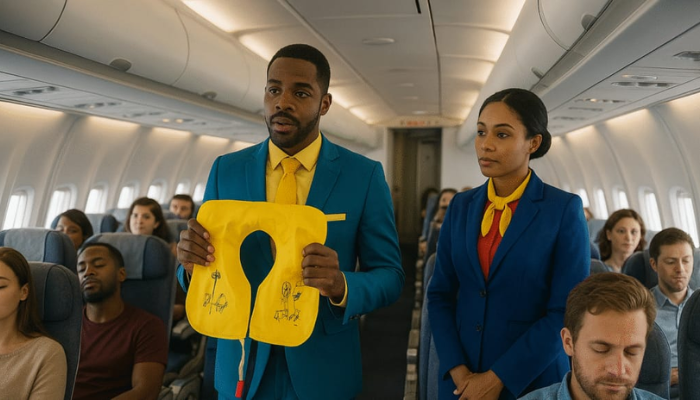
For instance, flight attendants are trained to de-escalate conflicts and manage disruptive passengers. They are also responsible for conducting safety demonstrations, ensuring seatbelts are worn during turbulence, and enforcing electronic device policies during take-off and landing. In the event of an incident, the crew must work together seamlessly to contain the situation and ensure the safety of all passengers.
Read also: Shrinking fleet limits Nigerian airlines’ alliance ambitions

Passengers, on the other hand, have a responsibility to comply with safety instructions and regulations. This includes following crew instructions, respecting fellow passengers, and adhering to safety protocols such as wearing seatbelts during turbulence and electronic devices in airplane mode during take-off and landing. When passengers fail to comply, it can lead to disruptions that may escalate into more serious incidents.
Samuel Caulcrick, the former Rector of the Nigerian College of Aviation Technology (NCAT), told BusinessDay that from experience and global best practices, it’s essential for the flight crew, both in the cockpit and cabin to focus on their primary roles while empowering specially trained professionals to handle untoward behaviours of passengers.
Caulcrick said this allows them to create a safer and more harmonious flight environment, except in the absence of those specialists in-flight; in which case, the captain may seek assistance from passengers to help in diffusing any ugly situation.
“Recent events have exposed a gap in the contractual obligations of every component of the air travel ecosystem. The moment a passenger is issued a boarding pass, for instance, the airline is responsible for the passenger’s safety, comportment, and well-being until the passenger deboards at the destination,” he said.
He stressed that the NCAA has its work cut out, as it has to coordinate ideas from stakeholders and arrive at guidelines for the industry to address this matter that is as old as the industry itself because there will always be friction wherever the public interfaces with regulations.
Ibom Air’s role: Enforcing safety rules
Ibom Air, like any other airline, has a critical role in ensuring the safety and security of its passengers and crew. When faced with an unruly passenger, the airline’s primary responsibility is to enforce safety rules and work with authorities when regulations are violated. In the case of Comfort Emmerson, Ibom Air documented the event, submitted evidence, and allowed regulatory bodies to determine the appropriate consequence.
This approach is consistent with the airline’s mandate, which does not include imposing travel bans beyond its flights. That authority rests solely with regulatory bodies such as the Nigerian Civil Aviation Authority (NCAA) and the Ministry of Aviation. By playing its assigned role, Ibom Air maintains its commitment to safety and regulatory compliance, protecting its brand reputation and ensuring the continued safety of its passengers
Seyi Adewale, the chief executive officer of Mainstream Cargo Limited, told BusinessDay that what are considered as ‘cabin crew’ are actually ‘safety officers’.
“I think it will be instructive to change their tags and lapels to reflect such. There is a significant message this name change will communicate intuitively to passengers rather than the general notion perceived within this environment that they are entertaining flight personnel,” Adewale said.
He noted that in handling an unruly passenger, isolating and ostracising such unruly passengers wherever and whenever they occur is key.
Read also: All phones must be switched off during take-off, landing – NCAA
Regulatory authorities: Acting decisively
The NCAA and Ministry of Aviation have a critical role in enforcing rules and regulations governing air travel. When incidents of unruly behavior occur, these regulatory bodies must act decisively to determine the appropriate consequences and prevent future incidents. This includes imposing travel bans, fines, or other penalties on passengers who violate safety regulations.
For example, in 2020, the NCAA imposed a six-month travel ban on a passenger who physically assaulted a flight attendant on a domestic flight. The passenger’s behaviour was widely condemned, and the NCAA’s swift action sent a strong message to would-be offenders. The NCAA also has the power to review airline policies and procedures, ensuring that they align with international best practices and regulatory requirements.
Seyi Adewale stressed that regulatory authorities such as the NCAA including FAAN must not relent on advertising and communicating conduct acceptable at the Airport through sound and visuals, adding that this must be lavishly done and enforced.
“Upon arriving or departing many international airports in developed economies, you will see and hear intimidating messages on screen, boards, and speakers of conducts not allowable or considered acts of unlawful interference (some that could even be considered acts of terrorism) within the airport area. This is one key way to go.
“Likewise, there should be desks and boards that indicate where and how to report an erring airport official. These regulators needs to maintain a delicate balance and are not seen to appear to have a default position to support or be on the side of the airliners,” he added.
Adewale noted that other than training as widely indicated, the Standard Operating Procedures (SOP) of FAAN and Airliners needs to be updated or revised to robustly include how to deal with or manage difficult situations including Unruly Passengers.
“A negligible number of Passengers will always be unruly but how to tackle them is key so as not to damage the reputation of the airline, regulator, and vicariously the nation,” he said.
The importance of understanding chain of authority
The incident involving Ibom Air and Comfort Emmerson highlights the importance of understanding the chain of authority in air travel. Airlines manage flights and enforce safety rules, while regulatory authorities enforce rules and regulations governing air travel. By understanding this structure, airlines can protect their brand reputation and ensure compliance with regulatory requirements.
What the law says
The Civil Aviation Act 2022 also incorporates the Tokyo Convention 1963, along with other international agreements, to strengthen aviation safety and security in Nigeria.
Specifics of the responsibilities of flight crew would be in accordance with national regulatory requirements. More generally, the Tokyo Convention and the Montréal Protocol 2014 provide that the aircraft commander may, when there are reasonable grounds to believe that a person has committed, or is about to commit, an offence on board the aircraft, impose reasonable measures including restraint which are necessary to protect the safety of the aircraft, or of persons or property therein, or to maintain good order and discipline on board, or to enable delivery of such person to the competent authorities.
Read also: FAAN vows tough sanctions as unruly passenger incidents rise at Nigerian airports
The aircraft commander may require or authorize the assistance of other crew members in doing so. Instructions from a crew member to a passenger are deemed to be given on behalf of the aircraft commander.
Basis in law
The Tokyo Convention makes it unlawful to commit “acts which, whether or not they are offences (against the penal law of a State), may or do jeopardise the safety of the aircraft or of persons or property therein or which jeopardise good order and discipline on board.”
The same convention also provides the authority to the Pilot in Command (PIC) to appropriately deal with an unruly passenger and provides protection, under the law, from any subsequent legal proceedings for actions taken against a perpetrator
“For actions taken in accordance with this Convention, neither the aircraft commander, any other member of the crew, any passenger, the owner or the operator of the aircraft, nor the person on whose behalf the flight was performed shall be held responsible in any proceeding on account of the treatment undergone by the person against whom the actions were taken.”
While the Tokyo Convention contains provisions for the prosecution and offloading of unruly passengers, it has a jurisdictional gap which does not automatically allow most states to prosecute a disruptive passenger who has been removed from an inbound foreign registered aircraft.
The PIC can disembark an unruly passenger in any State without coordination with the local law enforcement authorities.
In this case, the individual is unlikely to face prosecution in that State unless the State itself has enacted enabling legislation allowing it to press charges for the offence.
If the PIC wishes the unruly passenger to face prosecution, he must land in a State that is a party to the Tokyo Convention and formally deliver the passenger to the local law authorities.
For prosecution to be successful, it must be proven that the passenger committed a serious offence under the law of the State in which the aircraft is registered.
Conclusion
The incident involving Ibom Air and Comfort Emmerson serves as a reminder of the importance of cooperation and adherence to safety protocols in air travel. By understanding the distinct roles of airlines and regulatory authorities, passengers can appreciate the measures in place to ensure their safety and security. As the aviation industry continues to evolve, it is essential that airlines, regulatory bodies, and passengers work together to prevent incidents of unruly behaviour and ensure a safe and secure travel experience for all.