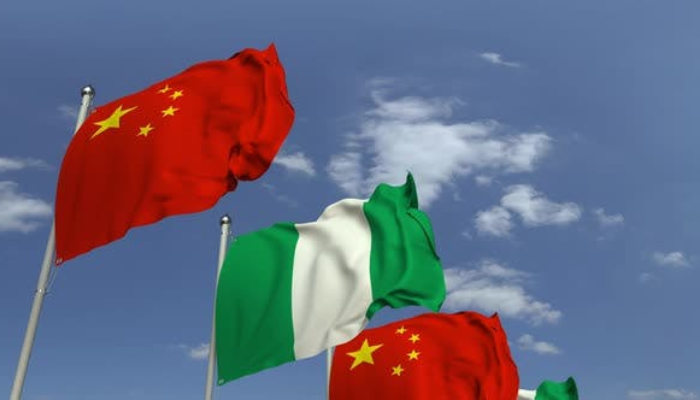
The Federal Government of Nigeria, in collaboration with the People’s Republic of China, has announced intensified efforts to strengthen bilateral relations through knowledge sharing and academic exchange.
The initiative centres on the promotion and dissemination of the Contemporary World Nigeria magazine, a publication designed to foster a deeper understanding between the two nations.
The announcement was made during a one-day seminar titled “Advancing Knowledge Exchange: Strategies for the Promotion and Dissemination of the Contemporary World Nigeria Magazine,” held in Unilag Consult training room. The event was organised by the Institute for Peace and Conflict Resolution (IPCR).
Joseph Ochogwu, Director-General of IPCR, stated that the magazine serves as a “platform for mutual understanding,” publishing research from experts and think tanks in both countries. He emphasised that the partnership “aligns with the upgrade of Nigerian-China relations,” referring to the recent elevation of bilateral ties from a strategic to a comprehensive strategic partnership.

The Contemporary World magazine is a multilingual journal supervised by the International Department of the Central Committee of the Communist Party of China (IDCPC). The Nigerian edition was first launched on 18 November 2022, during a symposium on the culture of harmony in China and Africa.
Ochogwu noted that the publication aims to counter “simplistic narratives and assumptions” by providing “rigorous methodology and intellectual honesty.” He added, “Scholars are the umbrellas to unpack complexities, foster mutual understanding, and generate evidence-based solutions.”
Olalekan Babatunde, Coordinator of the Editorial Team for Contemporary World Nigeria, provided further details about the magazine’s mission and overview. He explained that it covers themes such as “Africa-China relations, African policies, international studies, climate change, food security, and cultural dialogues.” Articles are published in multiple languages, including English, Chinese, Spanish, and Arabic.
Babatunde also announced that contributors are paid an honorarium upon successful review of their submissions. The magazine is sold for ₦1,000 per copy and is available both in print and online.
A key lecture was delivered by Efem N. Ubi, Director of Studies at the Nigerian Institute of International Affairs. He addressed the historical context of Africa-China relations and criticised Western-dominated narratives that often portray China’s involvement in Africa as “destructive and self-serving.”

Ubi argued that “African scholars must have independent perceptions and views of China and their country’s relations with China.” He called for a shift in focus from “China’s interest in Africa” to “Africa’s interest in relating to China,” urging scholars to explore how Africa can “maximise the benefit of its relationship with China.”
He also highlighted the growth in academic exchanges, noting that the number of African students in China now exceeds those in the United States and the United Kingdom. “China has promised to train hundreds of African scientists and establish 24 China-Africa study centres,” Ubi said.
The seminar included contributions from academic discussants who raised questions about trade imbalances, propaganda, and the need for reciprocal scholarly engagement.
Adetoro Olaniyi Banwo, a Senior Lecturer from the University of Lagos, detailed the scale of Sino-African scholarly exchange, highlighting government and provincial scholarships that enable African students to study in China. He also noted exchanges in military training and security cooperation between the two nations. Banwo called for a more balanced trade relationship and for Africans to define their own perception of the partnership based on its tangible contributions.
Olufemi Saibu, Director of the Institute of Nigeria-China Development Studies at the University of Lagos, emphasised that academic collaboration “should be a two-way street.” He urged for better coordination among Nigerian institutions and called for direct physical participation from Chinese partners at such events to transform the dialogue from a “monologue” into a genuine exchange. He pointed to initiatives like China’s university partnership programme as opportunities requiring proactive engagement.
Another discussant, Tobi Oshodi, Lecturer at the Department of Political Science, Lagos State University, cautioned against overly optimistic views of China-Africa relations. He identified three scholarly camps: “Sino-optimists,” pessimists, and a cautious middle group to which he belongs. He argued that while infrastructure and scholarships are beneficial, African countries must carefully assess the long-term impacts of such partnerships on local industries and economies to ensure they are not detrimental.
The IPCR confirmed that similar seminars are planned for other geopolitical zones in Nigeria and cities across Central Africa later this year. The goal is to widen the reach of the magazine and encourage more contributions from African and Chinese scholars.
As Ochogwu stated, “We believe that Africa has the talent, the vision, and the will to lead and to learn. Together, through the power of scholarship and renewed dialogue, we can build stronger, more resilient bridges between Africa and China.”
The Contemporary World Nigeria magazine is now openly calling for contributions for its second and third quarter editions, focusing on policy, security, and bilateral relations. Further information can be found on the magazine’s website.