Nigeria’s health sector stands at a crossroads. For decades, international donor agencies have underwritten critical programs against HIV, tuberculosis, and malaria, as well as broader health system improvements. But with the global landscape shifting, and donor priorities evolving, questions are mounting about what happens when this funding slows or stops.
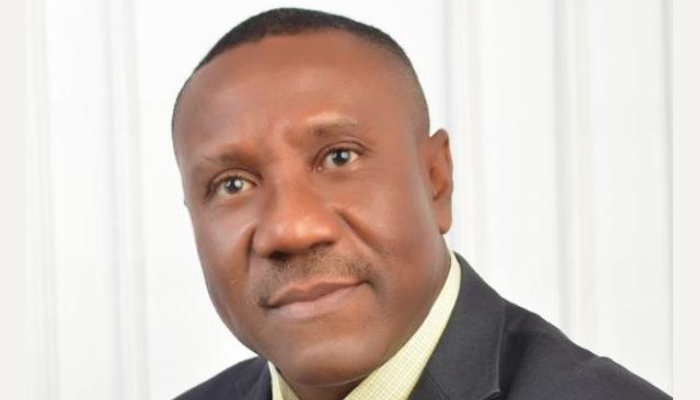
Few people understand the stakes better than Chidozie Ezechukwu, who, as Executive Secretary of Nigeria’s Country Coordinating Mechanism (CCM) to the Global Fund from 2021 to 2023, managed the deployment of the largest grant ever awarded to a single country by the Global Fund: US $890 million. Under his watch, Nigeria not only met ambitious performance targets but also built systems that continue to deliver impact today.
“The real measure of success,” Ezechukwu says, “is whether the systems you build keep working after the donor funding is gone.”
Donor dependence and its limits
International donors currently account for a significant share of Nigeria’s public health financing in certain areas. For example, the Global Fund alone has invested over US $4.6 billion in Nigeria since 2003, targeting the “big three” diseases and strengthening supply chains, laboratories, and data systems. While these contributions have been transformative, they were never meant to be permanent.

“The original idea was that countries would take on more of the financial burden over time,” explains Ezechukwu. “But in many cases, including Nigeria, the pace of domestic scale-up has been too slow. This leaves programs vulnerable if donor priorities change.”
World Bank data backs this up: out-of-pocket spending by Nigerians still accounts for more than 70% of total health expenditure. Without more domestic budget allocation, millions remain at risk of catastrophic health costs.
Building resilience through systems
One of the hallmarks of Ezechukwu’s CCM leadership was focusing donor investments on system-wide improvements rather than siloed disease programs. For example, funds allocated for HIV or TB often supported broader laboratory capacity, staff training, and digital supply chain systems that now benefit multiple areas of care.
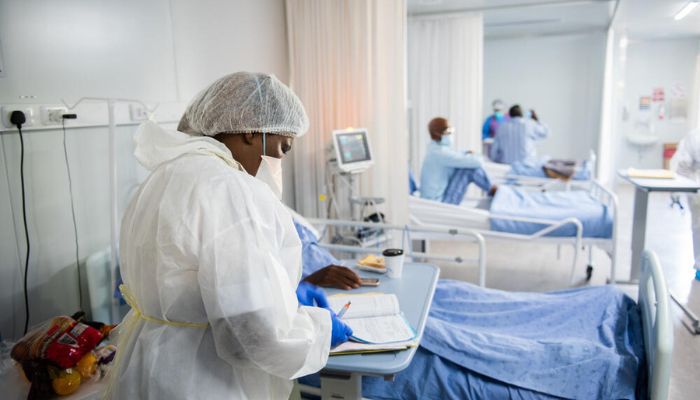
During the COVID-19 pandemic, this approach paid off. Nigeria’s TB diagnostic network, strengthened with Global Fund resources, was quickly repurposed for COVID-19 testing a strategy later highlighted by the U.S. Centers for Disease Control and Prevention as a model for resource efficiency.
Similarly, oxygen infrastructure built with COVID-19 Response Mechanism funds now supports routine emergency care, including maternal and child health services. “When investments are designed with cross-cutting value, they outlast the program they were originally funded for,” Ezechukwu notes.

The transition question
Nigeria’s ability to secure another record allocation, US $993 million for 2024–2026, shows that its credibility with donors is high. But Ezechukwu warns that continued reliance on such large external grants is risky. Many global health initiatives are shifting focus toward other priorities such as climate-related health threats and emerging diseases.
He argues that Nigeria must prepare for an eventual “donor transition” by institutionalising the governance, accountability, and performance systems that have made its donor-funded programs successful. This includes:
• Ring-fencing a fixed percentage of national and state budgets for health.
• Integrating donor-funded personnel and infrastructure into permanent civil service structures.
• Maintaining independent oversight mechanisms with civil society participation.
Lessons from the Global Fund experience
Ezechukwu’s tenure offers concrete lessons on how to make large-scale funding work:
• Align with national priorities: Every Global Fund grant cycle under his leadership was mapped directly to Nigeria’s national health strategies, avoiding the duplication or fragmentation that plagues many donor projects.
• Invest in sustainability from day one: Projects were designed to transition to domestic funding streams rather than shutting down when grants ended.
• Use data to drive accountability: ERP-based dashboards enabled near real-time tracking of performance indicators, allowing for rapid problem-solving.
These principles, he believes, are equally applicable to Nigeria’s domestic health spending. “If we applied the same governance discipline to our own budgets, the results would be just as strong,” he says.
A narrowing window
The urgency is not abstract. The Global Fund’s next replenishment cycle will take place in a competitive environment where multiple global crises are vying for attention and resources. At the same time, Nigeria’s population is growing rapidly, projected to exceed 250 million by 2050, putting additional strain on healthcare infrastructure.
“If we don’t use this current period of strong donor support to build self-reliance, we may find ourselves in a crisis when the aid tap runs dry,” Ezechukwu warns.
For policymakers, the question is whether Nigeria will seize this moment to reconfigure its health financing model. For Ezechukwu, the answer lies in political will: “The systems work. The governance frameworks are proven. The challenge is whether leaders will take ownership and commit the resources needed to keep them running.”
The Global Fund experience showed what’s possible when leadership, vision, and accountability converge. Whether Nigeria can replicate that success with its own money will determine the future of its health system, and the health of its citizens for decades to come.