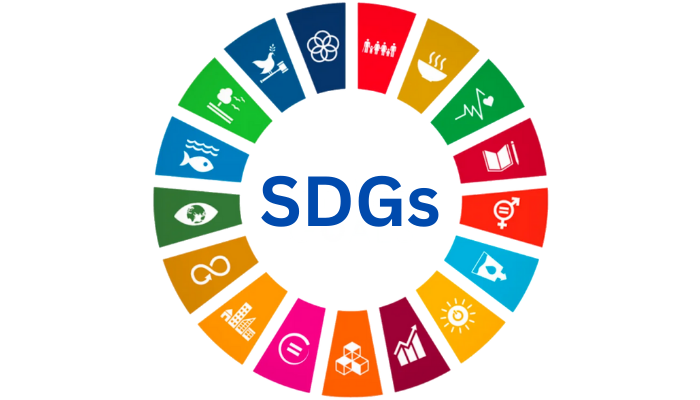
When the Sustainable Development Goals (SDGs) were designed by the United Nations in 2015, they were adopted based on the principle that “no one should be left behind”. According to the OECD, an “estimated 65 percent of the 169 targets behind the 17 SDGs will not be reached without the engagement of local and regional governments.” In Nigeria, the true measure of the deliverables on the SDGs will be on the ability of the 774 Local Government Areas (LGAs), as the government closest to the people, to achieve the seventeen-development agenda in their rural communities. When 2030 comes, it will be about what happens to “no poverty, zero hunger, good health and well-being, quality education, gender equality, clean water and sanitation, affordable and clean energy, decent work and economic growth, and other goals” in rural and underserved communities in the 774 LGAs where more than 65 percent of Nigerians live and where development delivery, or absence of it, shapes the destiny of more than one hundred and twenty million Nigerians.
Notwithstanding that many SDG tasks fall under the development demands at the local government areas, there are few local government areas in Nigeria with formalised and operational SDG implementation offices, except for the focal persons that serve merely for positional purposes, without formalised and functional structures to coordinate SDG-related activities. While Nigeria has established institutional structures at the federal and sub-national level, the localisation of the SDGs in local governments in Nigeria has remained unrealised. Yet, 133 million Nigerians, about 63 percent of the population, still live in multidimensional poverty, and the figure climbs to almost 72 percent in Local Government Areas, with the high poverty rate continuing to reflect deprivations not only in income but also in nutrition, schooling, sanitation, energy access and digital inclusion.
When the Supreme Court delivered what many described as a landmark and transformative ruling in July 2024, recognising the constitutional autonomy of the 774 local government areas in Nigeria, the wisdom of the court was a step towards decentralising government delivery of development to the people at the grassroots and in rural communities. Unfortunately, implementation has lagged. One year after the ruling, as of July 2025, state governments were still holding back an estimated N4.5 trillion in Federation Account Allocation Committee (FAAC) allocations that were meant for development at the LGAs. To facilitate good governance for the security and well-being of the people in rural areas in Nigeria, the local government areas require a great degree of autonomy from state governors, whose constant and outright constitutional overreach causes the LGAs to veer from the desired commitment to good governance, delivery of quality development outcomes and pursuit of the greatest good for the greatest number of their people.
“While widening the tax net is an approach for revenue increase, the degree of fiscal irresponsibility through abuse of contract and procurement processes is a bigger issue in the development financing gap in Nigeria.”

Understandably, the federal government through the National Economic Council’s “Nutrition 774 Initiative (N-774) which is intentionally aligned to activate nutrition programming in every LGA with community-led governance, real-time tracking and multisector funding support; the Federal Ministry of Communications’ “Project 774 Connectivity” which aims to connect all LGA secretariats to reliable internet by 2027, already piloted across eight states and 45 LGAs; among other federal government and states led initiatives are designed to achieving the 2030 SDGs deadline, but the real work for the actualization of the global goals will be done in rural areas, underserved communities and ungoverned spaces across Nigeria through the LGAs.
So, can all the SDGs be met in every LGA in Nigeria by 2023? The honest answer is NO. But we can make significant and measurable progress, especially in education, health, nutrition, energy and inclusion – if the federal government takes its efforts on local government autonomy to a constitutional conclusion that helps to resolve the structural challenges of local government autonomy. To operationalise the Supreme Court ruling requires a new constitutional life through the amendment of Sections 7, 8 and 162 of the 1999 Constitution of the Federal Republic of Nigeria – enabling constant and regular local government council elections and financial and governance autonomy to the LGAs.
Scaling through this structural challenge will enable LGAs to focus on meaningful change in local governance, accelerate the impact of the SDGs through local action powered by open government, identify and prevent corrupt practices while fostering a culture of honesty through community oversight, and prioritise people in local government policy choices. LGAs must not embrace open government strategies as a checkbox exercise but as a necessary tool to amplify transparency, foster civic engagement, build an inclusive government, promote innovation in participation, efficiently respond to citizens’ feedback, and facilitate sector-specific local partnerships for the SDGs.
Given the existing development financing gap across the international system, local government leadership in all the LGAs must rethink their SDGs financing strategies. While widening the tax net is an approach for revenue increase, the degree of fiscal irresponsibility through abuse of contract and procurement processes is a bigger issue in the development financing gap in Nigeria. If the LGAs will achieve 40 percent of the SDGs in their communities, it requires a radical rethink in their approach to budget-line choices, contract and procurement process integrity, accountability, and commitment to public-private partnership for public good.
Beyond financing and structural challenges in localising and implementing the SDGs in LGAs, credible and disruptive local government governance is required to foster actual ownership of the global goals in local communities. The Association of Local Government of Nigeria (ALGON), in understanding that the local government is the closest government to the people, must promote and practise the best public service delivery culture. Local government chairmen, ward councillors, supervisory councillors, traditional leaders, civil servants in local government administrations, local government political appointees and the security operatives in local government areas must approach SDGs implementation in their LGAs as stakeholders rather than as beneficiaries. To achieve the SDGs in LGAs, everyone must be involved.

God bless the Federal Republic of Nigeria.
Ekpa, Stanley Ekpa, a lawyer and leadership consultant, wrote from Abuja via ekpastanleyekpa@gmail.com.