



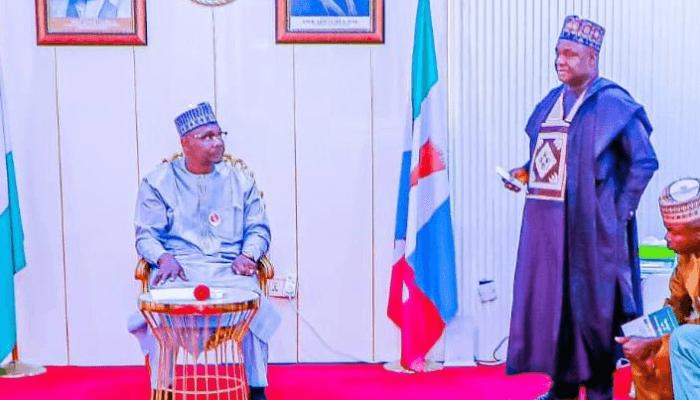
On the May 30, 2025, was exactly one year since Governor Abdullahi Sule of Nasarawa State appointed Ahmed Ibrahim, a distinguished academic from the Nasarawa State University, Keffi, as the Statistician General of the newly established Nasarawa State Bureau of Statistics (NSBS).
Governor Sule, who assumed office in May 2019, has executed numerous developments and people-oriented projects over the past six years, including the completion and revitalization of the abandoned initiatives and projects by the previous administrations. His commitment is not to waste public funds on unrealistic projects, but to add value to government investment that are beneficial to the people.
Also, the administration of Governor Sule launched a people centered programme and policies that have significantly improved on the lives of the citizens, despite Nigeria’s challenging economic situation. His influence and background in the private sector alone have attracted major investments to the state, particularly in mining, agriculture, education, environment, and housing. These strides have contributed in no small measure to the state’s economic growth. His dream is to leave the state as better as he met it as governor.
Despite these accomplishments, Governor Sule felt unfulfilled, as no state attain it development goal without a coordinated system, driven by data. He recognized a critical gap, and the absence of a centralized, credible data management system in the state, and first compiled Ministries, Departments, and Agencies (MDAs), who have been operating in silos, often with unauthorised and unreliable data dissemination to key into the revolution that is navigate the digital future with numbers.

Hitherto, this lack of a coordinated statistical system in the state posed a major obstacle, hindering government not enjoying supports and intervention, especially when development partners and donors requested credible data for planning and interventions.
In address this challenge, Governor Sule initiated a bill for the establishment of the Nasarawa State Bureau of Statistics, and domesticated the National Statistical Act of 2007 to empower the State Bureau function optimally. The bill to establish the Bureau received legislative approval without much delay on August 20, 2023. In fact, it was giving accelerated passage due to its importance of public interest and was signed into law the following month, that was in September, 2023 by Governor Abdullahi Sule. This historic move marked the beginning of Nasarawa State’s journey toward data-driven governance, and top among states championing Digital Policy and Innovation.
It is interesting to note that, since the creation of the state in 1996 and its subsequent transition to democratic rule in 1999, there had been no organized structured of statistical record to measure the state’s progress as it is today. There are cases where in the absence of credible data, some organizations/individuals allegedly resorted to falsifying figures to meet donors’ targets, while funds earmarked for data collection were often misappropriated. No one is bold to take responsibility, which left the state lagging in many areas.
However, with the establishment of the NSBS, data collection is now governed by stringent verification processes to ensure accuracy and accountability, under the leadership of Statistician Ahmed Ibrahim.

Ahmed Ibrahim’s first year as Statistician General, has been defined by strategic partnerships, capacity building initiatives, and the institutionalization of reliable data systems. Under his leadership in the last one year, the Bureau has become the state’s central agency for collecting, analyzing, and disseminating statistical information. A dependable agency surrounded with people fronting the magic for sound, reliable and interpretable statistics.
On assumption into office, Ibrahim introduced a five-point agenda aimed at transforming the Bureau into a model for other states. The agenda included the establishment of a Statistical Research Unit for timely data collection in all MDAs, developing a functional, accessible database for the state, training and retraining Bureau staff for optimal performance, strengthening the capacity of DPRS units at state and local government levels, enhancing collaboration with MDAs for accurate data collection.
It is in view of this that, Dr. Ibrahim wasted no time in reaching out to state and federal governments institutions, including international organizations to support surveys in critical sectors such as education, healthcare, and agriculture. These collaborations have positioned the Bureau as a hub for credible data, attracting support from public institutions including: The Central Bank of Nigeria (CBN), Lafia Office, National Bureau of Statistics (NBS), National Commission for Refugees, Migrants, and Internally Displaced Persons, Abuja, the National Population Commission (NPC), Abuja, while state institutions such as the office of the SSG, Head of Civil Service, Human Capital Development, NS-ACReSAL, NASIDA, and Ministry of Finance, Budget and Planning among others are not left. Indeed, Dr. Ibrahim, a renown academic understood the power of collaboration, hence the steps taken.
The Bureau has also hosted delegations from academia and development agencies, including Prof. K’tso Nghargbu, Nasarawa State University, Keffi, team of researchers from Nasarawa State College of Education led by Dr. Abdulkadir Egya Odula, and the UNICEF’s Kaduna Field Officer, Gerida Birukila. These engagements focus on bridging gaps in data collection and improving transparency.
One of the Bureau’s early milestones was a 2-day training workshop conducted in collaboration with NBS and the Office of the Senior Special Assistant to the President on SDGs. The training, held within three months of the Bureau’s establishment, helped focal persons across MDAs on producing indicators to track progress on Sustainable Development Goals (SDGs). In addition to the in-house staff development, the Bureau has conducted capacity building sessions for Directors of Planning, Research, and Statistics (DPRS) across MDAs and the state’s 13 local government areas. These trainings emphasized the need for functional and effective DPRS units, which are critical to strategic planning and data management.
Notably, many DPRS units had become dormant due to interference from executive heads of MDAs. Dr. Ibrahim’s efforts aim to revitalize these units and to ensure regular data submission to the Bureau on a monthly and quarterly basis top priority of his leadership.
To further enhance operations, a 7-man sectoral subcommittee was established to produce an annual statistical report focusing on agriculture and environment. Additionally, a Consultative Committee on Statistics was inaugurated, consisting all heads of DPRS to support timely data generation.
The Bureau has also launched the collection of the Consumer Price Index (CPI) across the state and has initiated Nasarawa’s first-ever State Gross Domestic Product (SGDP) survey, covering 2019–2023. The SGDP survey, facilitated by NBS and funded by the World Bank, aims to quantify the state’s economic activity and identify potential growth sectors.
This is just as the NBS and the Nigeria Food Pricing has conducted a six months survey, using crowdsourcing and AI on 10 different foodstuffs in the market. The survey was being carried out on fixed market days, stores, supermarkets and roadside vendors across the state.
These surveys, which are at various stages of computation are expected to yield comprehensive insights by the end of 2025, supporting evidence-based policymaking, guiding investment priorities, and aligning the state with national development goals.
Ultimately, these initiatives will enhance Nasarawa’s competitiveness alongside other economically viable states such as Lagos, Ogun, Kano, Kaduna, Rivers, Anambra and Ibadan, especially given the state’s proximity to Nigeria’s capital, Abuja.
Ibrahim’s leadership has set a strong foundation for a transparent, data-driven future for the state. With his relentless efforts, the NSBS is now positioned as a credible institution for managing data across public and private sectors, thereby promoting good governance and sustainable development, hence why World Bank, UNICEF, NBS among other are comfortable partnering the state to meet it target.
It is now a statement of fact that, Governor Sule’s vision to institutionalize statistics in Nasarawa State is now a reality. For this bold step, he will be remembered by statisticians and citizens alike for enabling the practice of data science in governance, through the establishment of the Bureau of Statistics. Even as his lieutenants are poised to build a robust database, to measure the state economic and development Growth, to guide policy makers in decisions making, and to attract support and interventions from development partners and donors.
1. Governor Abdullahi Sule listening when the State Statistician General, Ahmed Ibrahim recently led other management members on a visit at the Government House in Lafia.
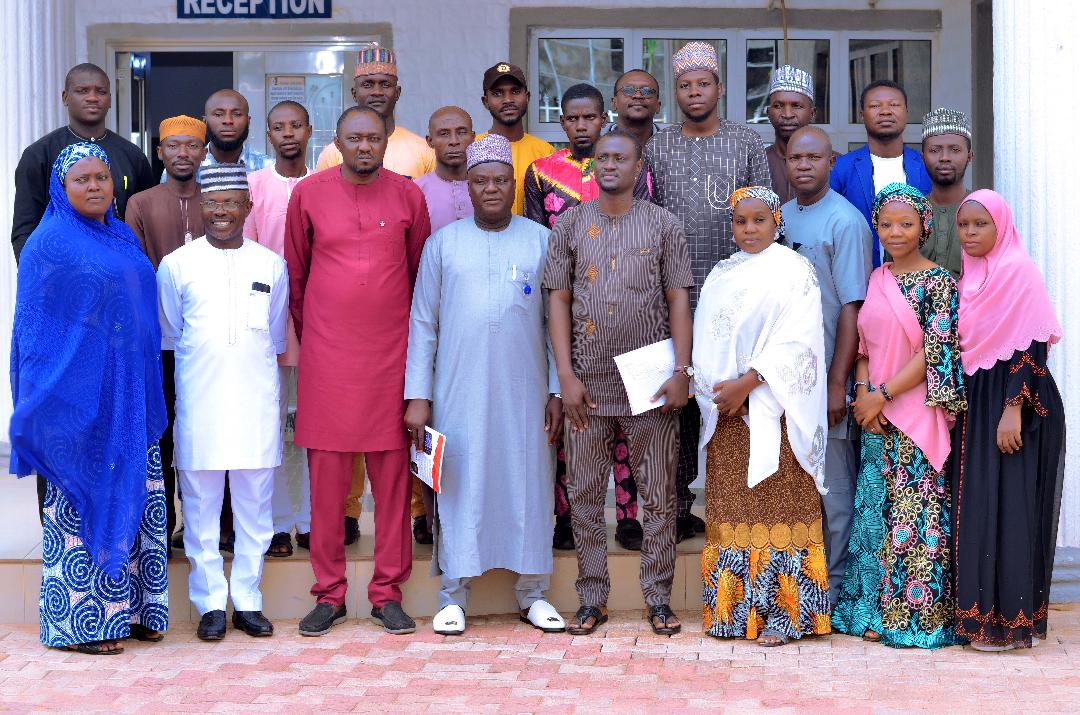
2. Group photograph after one of its training in Lafia
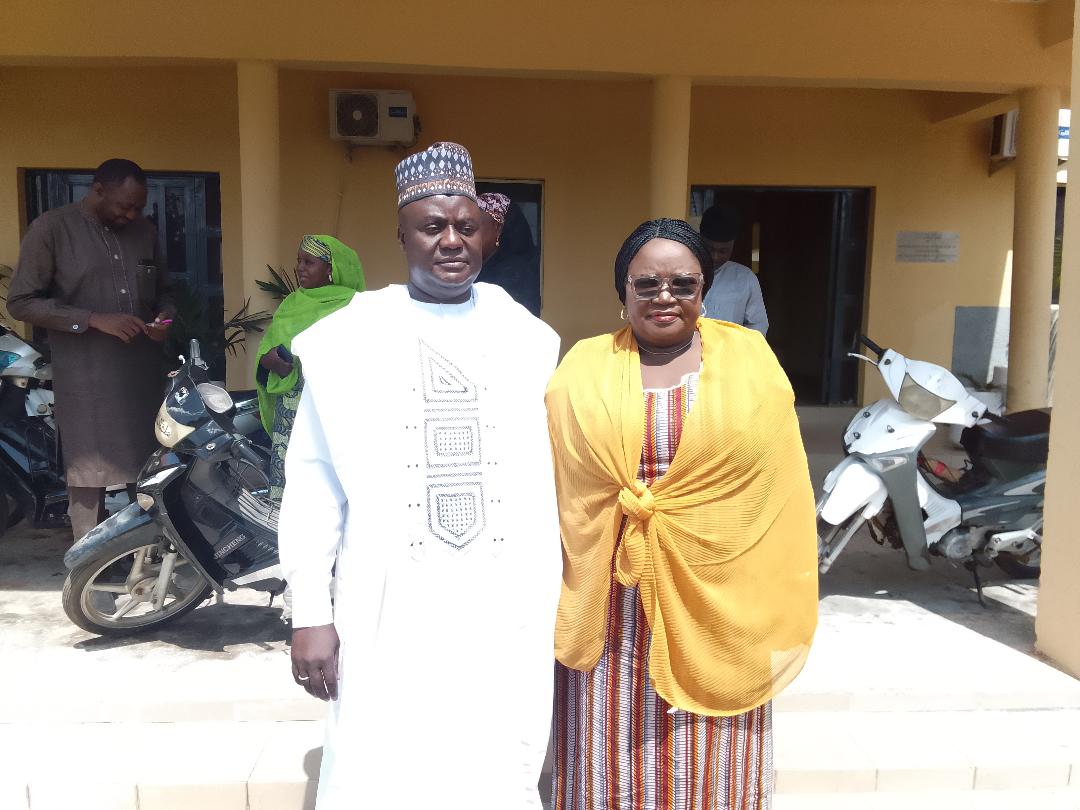
3. Ahmed Ibrahim with the UNICEF’s Kaduna Field Officer, Gerida Birukila, during her visit for strategic partnership with the Bureau.





