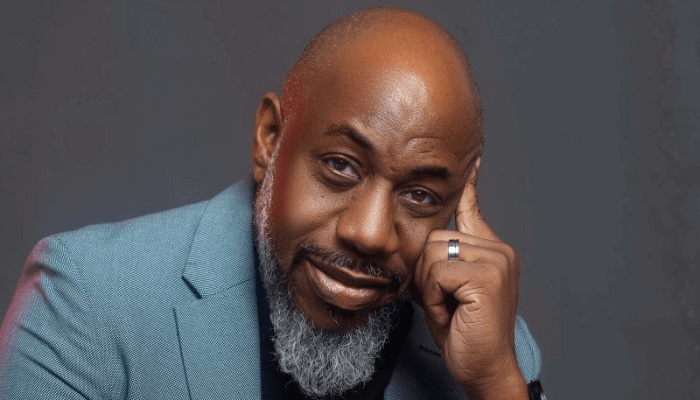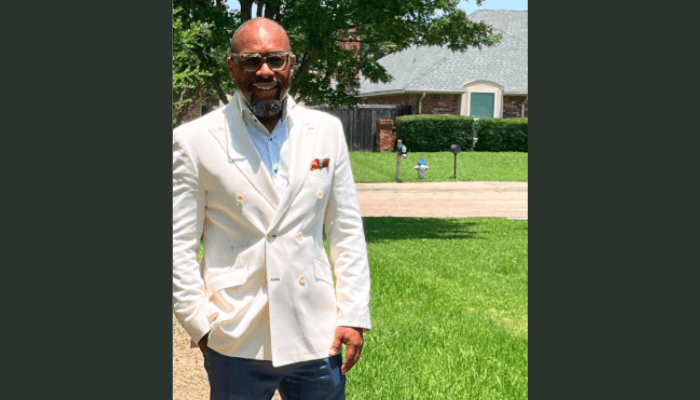
Yemi Edun is the founder and managing director of Daniel Ford International, a leading London-based property consultancy. With nearly 30 years of experience, he has sourced over £650 million in real estate for high-net-worth and corporate clients. Named to the 2025 list of Britain’s Most Influential Black People for the fifth consecutive year, Edun is also expanding into community housing through Daniel Ford Developments. A dedicated philanthropist, he supports youth sports and the arts and is the author of ‘The Number One Mission’, with all proceeds donated to charity. In this interview with KENNETH ATHEKAME, he spoke on the National Diaspora Merit Award and discussed how his firm has gained a reputation for helping clients manage multigenerational wealth. Excerpts:
You are in Abuja currently. May we know why you are in the country?
I’m here for the National Diaspora Merit Award, which is part of the Diaspora Day celebrations as one of 22 awardees this year, recognised specifically for “Philanthropy and Being a Role Model to Other Nigerians in the Diaspora.”. I only recently learned about the awards and the associated Diaspora Day, which has been around for almost two decades, honouring Nigerians abroad who’ve made outstanding contributions across sectors like healthcare, STEM, leadership, media, philanthropy, and more.
Congratulations on being awarded. What does this honour personally mean to you?

Thank you. For me, this honour is a powerful reminder that the contributions Nigerians make abroad still hold weight at home. It reinforces the importance of staying focused and continuing to create value. One thing I’m particularly proud of is how our No. 10, our office, has grown into more than just a workspace. It’s become a hub for meaningful conversations and practical solutions. For those who may not be familiar with us, we are a full-service real estate firm specialising in London property, handling everything from acquisition to management, maintenance, and accounting.
How do you see this award reflecting the broader contributions of Nigerians in the diaspora globally?
I think this award does a great job of showcasing the incredible contributions Nigerians in the diaspora are making around the world. Just by being part of this event, I’ve met so many pioneering, innovative individuals doing remarkable work across different sectors. Great societies are built on a culture of recognising excellence, because it inspires even more of it, and that’s exactly what this initiative achieves. We’ve also tried to play our part: from donating prosthetic limbs and wheelchairs through our charity, A.C.E., to speaking to over 13,000 students at Unilag’s E.I.B.I.C programme, and becoming one of the leading sponsors of chess and table tennis in Nigeria.
You’ve consistently been listed on the UK Power List. What do such recognitions represent to you in terms of legacy and responsibility?
The Powerlist recognises the most influential people of Afro-Caribbean heritage in the UK and recently marked its 25th anniversary. I’m proud to be the first person from the real estate industry to be included. That visibility has made a real impact; we have seen a significant increase in internship requests at Daniel Ford from young people who now see a path they hadn’t considered before. But beyond the recognition, there’s a Yoruba saying: marry someone whose needle has a thread, meaning someone who is traceable, that also has someone they are responsible and accountable to. That idea really resonates with me. Being on the list is a reminder of the responsibility to the community and a call to keep contributing to something bigger than oneself.

Your charity, A.C.E, has done considerable outreach work over the years. Some people speculate about political ambitions. Can you clarify your motivations and the non-political nature of your philanthropic work?
That’s by far the most surprising question I get, and honestly, it’s part of what inspires me to keep going. There’s a need to separate community support from political ambition. When we do that, more people feel empowered to get involved, and more lives can be positively impacted. None of us can do it all alone. For me, the motivation has always been simple: to help those who need it most. And it goes beyond our direct efforts; we also focus on creating platforms that allow others to give. Even as far back as 7years to 10 years ago, we helped raise over £200,000 for the University of London’s Central Saint Martins Fine Art programme, and a similar amount for the Kanu Heart Foundation’s charity football match in 2018. It’s about building sustainable avenues for giving, not just making one-off gestures.
Your book, ‘Number One Mission’, made quite an impact. What inspired you to write it, and how do you view its relevance today?
Real estate often intersects with history, and as Nigerians operating in the London property space, we have a unique vantage point. I’ve always said, if we don’t tell our own story, who will? History belongs to those who take the time to record it. I believe it’s our collective responsibility to document our era, not just for those watching from afar, but for future generations as well.
The Number One Mission traces Nigeria’s diplomatic history in relation to London, covering notable moments like the Dikko Affair. The book has sparked many important conversations, some of which are still unfolding and perhaps deserve a second volume.
But beyond storytelling, there’s a deeper purpose. Many charitable efforts struggle because they lack sustainable funding. That’s why 100% of the proceeds from the book go toward our wheelchair donation initiatives through A.C.E. So, the book isn’t just about documenting history; it’s a vehicle for impact.
Your firm has become known for helping clients manage multigenerational wealth. Talk us through this?
Yes, absolutely. We’ve had the privilege of supporting multiple generations within the same families, helping them buy, manage, and preserve wealth over time. More than anything, we’ve found that the way we’ve handled the parents’ assets has often served as a teaching tool. It communicated important values and principles to the next generation, many of whom were eager to get started themselves. Markets may shift and values may change, but our role remains the same: to guide our clients through every phase with clarity, consistency, and trust.
How is your product offering evolving to meet the needs of clients preparing to pass assets to the next generation?
We’ve been expanding the estate planning side of our business significantly. It’s something that, sooner or later, we all have to confront. I experienced it personally just a few months ago with the passing of my mum. That moment put the plans we had in place to the test and reinforced how essential it is to have those conversations early. So beyond setting up the legal and practical frameworks, we also help families navigate the difficult, but necessary discussions around legacy, transition, and long-term stewardship. It’s a sensitive area, but one that’s becoming increasingly important.
Tell us about your new development in Canada Water. How did you incorporate both British and Nigerian sensibilities into the design, space, and location?
Real estate, or buildings more broadly, are a way of leaving your DNA on a city. With our Canada Water development, we wanted to blend both British and Nigerian sensibilities. That meant combining a prime London location with design features Nigerians are accustomed to back home, like ensuite bathrooms in every bedroom and a dedicated guest toilet. These aren’t standard in the London development market, but they consistently come up in conversations with clients. Because we engage with buyers daily, we have a clear understanding of what’s missing and try to bridge those gaps through thoughtful design.
Integrity is often cited as the foundation of your business. How do you maintain this standard while operating in such a competitive space?
For us, integrity is non-negotiable, it’s absolutely critical to the longevity of our business. It’s not just a value; it’s how we see ourselves. So regardless of how competitive the market gets, we know we must always uphold that standard. Just as important is knowing what to say no to. Saying no is often what protects your standards over the long term, and we’re very intentional about that. It’s what allows us to build lasting trust with our clients.
You’ve been careful with strategic partnerships. Could you speak to the value of collaboration and why recent partnerships, such as with UPDC Plc, matter to you and your clients?
Reputation is gold. We’ve spent years building ours, and in a field as broad as real estate, not everyone operates to the same high standards. That’s why we’re extremely selective about who we partner with. When we collaborate with another business, our clients extend the trust they have in us to that partner, and we take that responsibility very seriously. A good example is our recent partnership with UPDC, the property development arm of UAC. As a publicly listed company, they’re held to strong governance protocols, which gives our clients added confidence. The same applies to our collaboration with Mixta on the Lakowe Lakes development. Further afield, we continue to build strategic alliances, whether it’s working with Savills on auctions or with the Berkeley Group on off-plan properties. The guiding principle is simple: if it delivers real value to our clients, it’s worth pursuing.
Your engagement with first-year students at Unilag’s EIBIC programme was a significant investment in youth. What was the motivation behind this, and what impact did it have?
We felt very strongly about this initiative, and the feedback from the students affirmed that it was the right move. University is one of the most formative stages in a person’s life, so it’s crucial that students are exposed to the right ideas and examples early on.
We poured our hearts into giving those just starting their university journey the clearest possible vision of what’s achievable, not just professionally, but personally. One of the professors put it perfectly: “It’s better to have a skill you don’t need than to need a skill you don’t have.” That mindset captures exactly what we hoped to instill.
Mental health is often overlooked in business circles. Why did you choose to host Betty Irabor’s Dust to Dew, and what kinds of conversations has it sparked within your network?
Mental health is an invisible challenge; someone right next to you could be struggling, and you’d have no idea. In many of our communities, these conversations are still considered taboo. But often, all it takes is the right voice to deliver the right message, and something powerful can be unlocked. That’s exactly what we saw. The impact of the Dust to Dew talks went far beyond what we anticipated. What started as a single conversation in Lagos grew into something much larger, from a Gen Z-focused event in Archway to a gathering at The Hyatt Hotel in Blackfriars. What we initially envisioned as a London-only series has now evolved into a full UK-wide initiative. We always say there’s a difference between a house and a home. A home is about what truly happens inside, and that’s the kind of space we’re working to create: one where our community is properly built up on the inside.
The Daniel Ford Youth Table Tennis Championships is now in its third year. What inspired your continued sponsorship of this initiative?
It’s incredibly important to nurture the talent around us, and that’s exactly what we’re doing through this initiative. The inaugural winner of the Daniel Ford Youth Table Tennis Championships went on to become the West African champion, and three of our past winners have gone on to win at International Table Tennis Federation (ITTF) events. That kind of progression is exciting to witness, and it reinforces why continued support matters. We’d love to see even more of these success stories in the years to come.
You’ve also backed chess talents like Deborah Quickpen. What drives your commitment to supporting youth through sports?
The richness of life lies in its diversity, and initiatives like this help build a more complete and inclusive community. They give young people a platform to express their God-given talents and shine in their own unique way. Their success is not just personal; it reflects on all of us. When they perform well, it puts us, as a community and a nation, on the map. It’s something we can all be proud of.