Nigerian sports have experienced a surge in global recognition, thanks to the growing impact of patriotic Nigerians in the diaspora who are proudly flying the national flag and helping the country dominate both continental and global competitions.
From basketball to football, the influence of athletes of Nigerian descent, born or raised abroad, is becoming increasingly significant, with their contributions leading to historic feats and titles across major international tournaments.
D’Tigress: African Queens Built Abroad
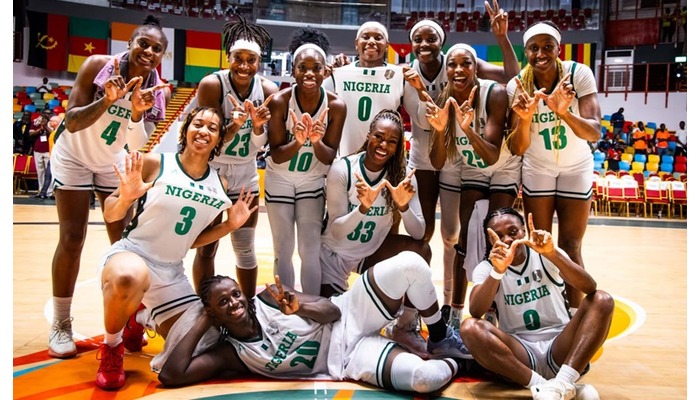
Nigeria’s senior women’s basketball team, D’Tigress, is a shining example of diaspora strength. Largely made up of foreign-born Nigerian athletes, the team recently clinched a record-breaking fifth consecutive FIBA Women’s AfroBasket title and seventh overall at the 2025 edition of the tournament.

Their unbeaten streak now stands at 29 games, a remarkable run dating back to 2015.
Head coach Rena Wakama, born in Raleigh, North Carolina, and currently the assistant coach at the Chicago Sky in the Women’s National Basketball Association (WNBA), led D’Tigress to their 5th Women’s AfroBasket title in Ivory Coast. Despite her U.S. upbringing, Wakama’s roots trace back to Okrika, Rivers State, and her commitment to Nigeria has been unwavering.
Her tactical brilliance earned her the Best Coach of the Paris 2024 Women’s Basketball Tournament by FIBA, while D’Tigress point guard Ezinne Kalu was named to the Olympics Women’s Basketball All-Second Team, highlighting the squad’s global class.
Read also: D’Tigress lifts 4th consecutive AfroBasket in Kigali
Interestingly, the majority of the D’Tigress players who won the 2025 AfroBasket title were either born abroad or are of Nigerian descent, an embodiment of Nigeria’s rich talent pool outside its borders.

D’Tigers and the Diaspora Engine
The men’s national basketball team, D’Tigers, also leans heavily on diaspora talent. Most of the players were born in Nigeria but moved abroad at a young age, where they developed their basketball careers before committing to represent their home country.
Super Falcons: A Blend of Local and Diaspora Strength
The 2025 Women’s Africa Cup of Nations (WAFCON) showcased how the Super Falcons are benefiting from a healthy mix of homegrown and diaspora talents.
Players like Michelle Alozie, born in California to Nigerian parents from Imo State, currently play for Houston Dash in the NWSL.
Ashleigh Plumptre, born in Leicester, has Nigerian heritage through her Yoruba grandfather from Lagos and currently stars for Al-Ittihad in Saudi Arabia. Both players played pivotal roles in Nigeria’s historic 10th WAFCON title, helping the team maintain four clean sheets and conceding the fewest goals in the tournament.
Read also: Queens of Africa: Celebrating Super Falcons’ historic 10th WAFCON crown
Experts Speak: Diaspora Influence Must Be Balanced
Muda Yusuf, Director and CEO of the Centre for the Promotion of Private Enterprise (CPPE), praised the diaspora’s contributions to national development beyond sports.
“They are already contributing a lot. Many send money home, invest in real estate, and even support talent development here in Nigeria,” Yusuf said.
He noted that the $100,000 cash reward offered by President Bola Tinubu to D’Tigress and the Super Falcons would also stimulate the local economy.
A Call for Balance in Talent Development
Veteran sports analyst Deji Omotoyinbo acknowledged the value of diaspora players but warned against total dependence on them.
“They are Nigerians and qualified, no doubt. But we must find a balance,” he said.
“We can’t afford to neglect homegrown talent. Over-reliance on diaspora athletes could dry up our local talent pipeline.”
Omotoyinbo praised President Tinubu’s rewards but advised authorities to intensify grassroots development and invest more in sports academies.
Rewarding Champions and Inspiring a Nation
Felix Awogu, another respected voice in Nigerian sports media, applauded the President’s $100,000 reward for the Super Falcons and D’Tigress. He pointed out that while the amount may seem large due to the current exchange rate, the emotional and inspirational value it carries far outweighs the monetary figure.
“These girls brought joy to millions. For once, we’re rewarding true warriors. Let’s celebrate them,” Awogu said.
He also lauded diaspora athletes for choosing to represent Nigeria, often ahead of more lucrative opportunities abroad, stating:
“They could have stayed away, but they came back to lift the green and white. That’s the ultimate act of patriotism.”
Nigerians in the diaspora have proven to be an invaluable asset to the country’s sports success. Their skills, exposure, and discipline developed abroad have propelled Nigeria to the top in Africa and beyond.
However, sports experts agree that while this global talent is a gift, it must complement, not replace, the development of grassroots sports infrastructure and local athletes.
If managed wisely, the partnership between homegrown and diaspora talents could make Nigeria not just a continental powerhouse, but a global sporting superpower.