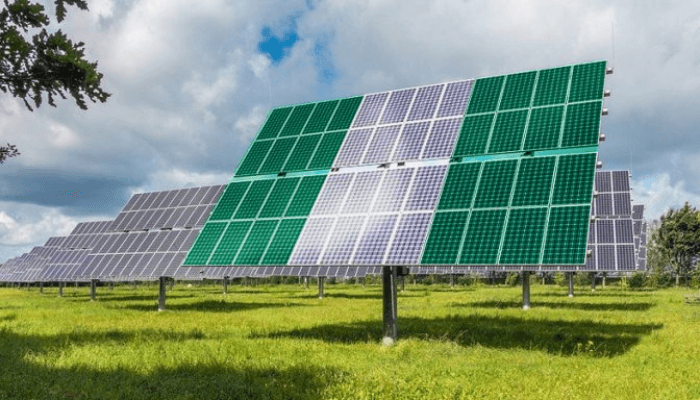
The federal government has launched the National Public Sector Solarisation Initiative (NPSSI). This is in a bid to reduce the cost of governance and power critical infrastructure with clean, reliable energy, while moving away from diesel dependence and reducing the public sector’s carbon footprint.
Under the Memorandum of Understanding signed by Rural Electrification Agency (REA), the Budget Office of the Federation, Infrastructure Corporation of Nigeria (InfraCorp), and the Ministry of Finance Incorporated (MOFI) in Abuja, the government-led initiative is designed to accelerate the deployment of distributed solar energy solutions across Nigeria’s public sector institutions, including schools, hospitals, security posts, government offices, and more.
Speaking during the event, Abba Abubakar Aliyu, the Managing Director/CEO of the Rural Electrification Agency, noted that the NPSSI is part of a broader strategy to position Nigeria as the renewable energy hub of Africa, while promoting innovation, local manufacturing, and sustainability in energy infrastructure financing in Nigeria.
Read also: IFC, Canada announce $5m investment in Nigeria’s solar energy sector

According to Aliyu, at its core, this initiative was birthed from a strategic national priority: the urgent need to power critical infrastructure with clean, reliable energy, while moving away from diesel dependence and reducing the public sector’s carbon footprint.
He said, “What makes the initiative truly remarkable is the collaborative spirit behind it. We are witnessing a new era of inter-agency synergy, driven by creativity, fiscal responsibility, and a shared determination to reduce the cost of governance while meeting our national energy transition goals.
“The signing ceremony for the National Public Sector Solarisation Initiative (NPSSI), Ministry of Finance in Abuja, not only strengthens the alliance and collaboration between the government and the private sector in the energy sector but also aims to advance the nation’s drive for localised renewable energy infrastructure and reverse unsustainable energy financing mechanisms.”
According to Aliyu, phase 0 of the NPSSI is fully funded by the Federal Government of Nigeria to the tune of N100 billion, while subsequent phases will harness innovative and blended financing models, leveraging private capital from both local and international long-term funders, all under structures that eliminate sovereign guarantees and contingent liabilities.
Read also: Nigeria, Netherlands partner to advance solar energy, rural electrification

Also speaking at the event, Tanimu Yakubu, the Director-General of the Budget Office of the Federation, emphasised the significance of the initiative in addressing Nigeria’s long-standing energy gap and strengthening the fiscal efficiency of public sector operations.
He explained that “solarisation has come of age as a necessity” and NPSSI will provide an added opportunity to optimise “the demonstrated ability of public institutions to pay for clean, sustainable energy, which is what the capital market needs to ensure bankability.”
In his remarks, Lazarus Angbazo, MD/CEO of InfraCorp, commended the initiative as a model for the future of infrastructure financing in Nigeria.
He explained that for decades, the sector has relied solely on public financing, adding that while government is indispensable, government is not enough to solve the energy challenge, hence the need to optimise the Federal Government’s NPSSI as a pathway to drive localisation of energy capability and supply chain integration.