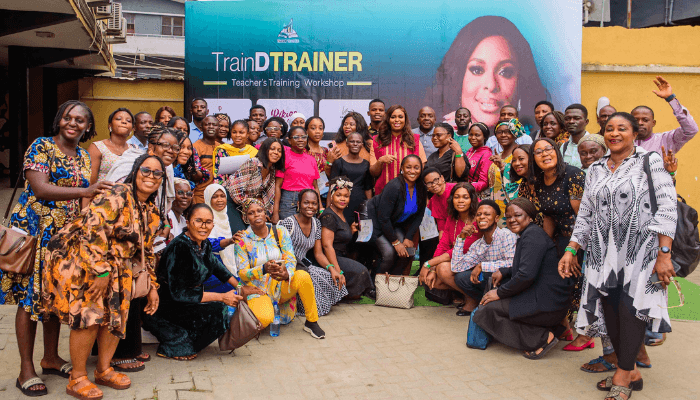
Temitope Ajao, a primary six teacher at Community Primary School, Ewu Tuntun, Oshodi, in Lagos, had heard of ChatGPT and used it a few times. But like many Nigerian teachers, his understanding of Artificial Intelligence (AI) was limited to surface-level use.
This changed when a social media ad led him to an AI teacher training seminar in Lagos. Curious and eager not to be left behind, he registered. By the end of the session, Ajao said he could write better prompts, explore other tools like Bard and Gemini, and teach his pupils more creatively and in line with global education standards.
Ajao is just one of millions of Nigerian teachers waking up to the urgent need to integrate AI into the classroom. With 10.5 million children aged 5–14 currently out of school, and only 915,000 teachers available for 31.7 million learners, according to the Universal Basic Education Commission (UBEC), Nigeria’s education system is stretched thin.
“Without proper measures, the country risks preparing children for a world that no longer exists,” said Onyekachi Onwudike-Jumbo, founder of Train the Trainer and an AI director. “We can’t keep using 2019 teaching methods to prepare kids for 2030 jobs. The future of work is evolving, and education must evolve with it.”

Onwudike-Jumbo convened the “Train the Trainer” workshop to empower African teachers, especially Nigerians, integrate technology into real learning. It was also part of a broader movement to reskill the teachers and ensure they are not left behind in the global education race. “AI will not replace teachers,” she said, “but it’s a fact that it will replace teachers who don’t know how to use it.”
Her team has been hosting both physical and virtual AI training sessions for educators in cities across the country, and the Lagos training follows similar sessions in Port Harcourt and Owerri.
Building the 21st-century classroom with what we have
Educators were trained at the workshop on how to use AI tools like ChatGPT, Bard, Gemini, and WhatsApp bots not only to create lesson plans but to personalise them, check for bias, and adjust based on student learning styles.
“You can’t keep teaching 40 students the same way,” the founder told BD Weekender. “You need to understand who they are and what sparks their curiosity.”
There was also a focus on low-cost, high-impact innovation. The teachers were shown how to teach complex tech concepts like algorithms, data classification, and binary logic, using bottle caps, sticks, grains, seeds, and even broom fibres.

The seminar also debunked common AI myths. Teachers were taught how to prompt AI tools to align lesson plans with Nigeria’s curriculum and WAEC standards. They also explored tools to detect bias, plan differentiated lessons, and practised blending experiential learning with low-tech methods.
They were urged to cross-check outputs, use multiple sources, and teach students to question responses critically. “AI isn’t perfect,” the convener said, “but when used well, it can make you more effective and save time.”
Remilekun Durojaye, a teacher and administrator at Dammyville Private School, said her goal was to learn better ways to move beyond “copy-paste AI use,” and she wasn’t disappointed. “We now understand how AI can help us teach better and reach every child in class,” she said.
Closing Nigeria’s digital divide with innovation and intent
Even as Nigeria makes progress in digital connectivity, with broadband penetration at 45.6 percent and 107 million internet users, rural schools remain largely disconnected.
The National Broadband Alliance aims to hit 70 percent penetration by 2025, but infrastructure and cost challenges remain steep. AI could help bridge these divides if teachers are trained to use it effectively.
“The truth is, education is a shared responsibility, but many don’t prioritise training teachers, the people who create all other professions,” Onyekachi said. “We want to reach every teacher and make training one less thing they have to worry about.”