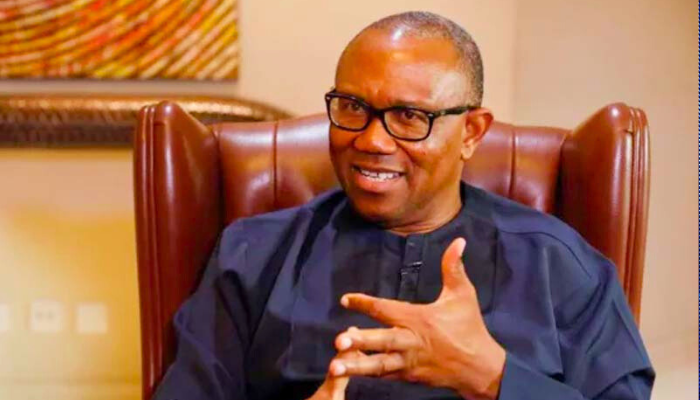
So much noise is being made nowadays in the polity ahead of a new round of elections billed for 2027. One wonders why there is so much fuss. Politicians are busy diverting people’s attention from their real demands in line with electoral promises. Offline and online, the promise made by Peter Obi, presidential candidate of the Labour Party (LP) in the 2023 general election, has continued to generate rumpus. But the taste of the pudding is in the eating.
As the zoning fire rages…
The gentlemanly agreement of rotating presidential candidates between Nigeria’s north and south was to enthrone fairness. That fact must be clearly understood.
Although it ought to be a non-issue as the country prepares for another round of elections in 2027, politicians are still pushing, saying that it is not binding as it is not enshrined in the constitution and that, as a result, the position should be up for grabs by anybody and everybody.
Since the return to civil rule in 1999, power has rotated between the north and south under two political power blocs – the People’s Democratic Party (PDP) and the All Progressives Congress (APC).

Under this arrangement, the parties agree to split their presidential and vice-presidential candidates between the country’s north and south.
The practice began as a way to ensure that neither the northern nor the southern part of the country is ever permanently excluded from power, as well as to allow for balanced regional representation in national leadership positions.
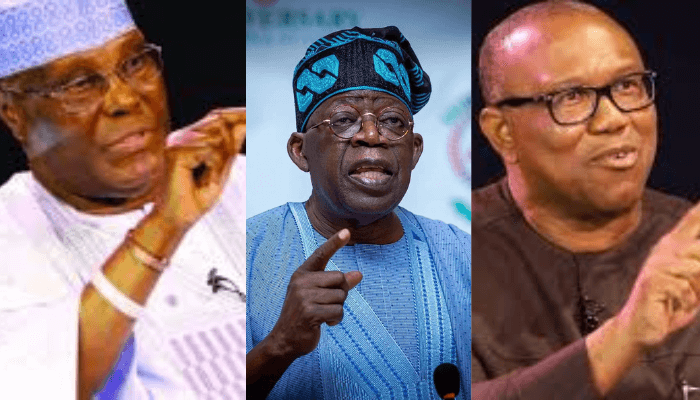
But it would seem that some politicians have begun to kick against the arrangement for some reason. For instance, in the build-up to the 2023 general election, the PDP was embroiled in a crisis over zoning. Whereas the majority of its members from the southern part of the country were rooting for a candidate from among them, Atiku Abubakar, a former vice president, said the ticket was open to everyone.
Atiku may have fought on the backdrop that since the 1960s, the Northeast has had the opportunity to preside over the country once, from 1960 to 1966.
The geopolitical zone has, however, enjoyed a vice presidential opportunity twice – during the Olusegun Obasanjo presidency when Atiku occupied the position, which is currently being occupied by Kashim Shettima.

Ahead of the last general election, Atiku had told newsmen, “Where the president comes from has never been the problem of Nigeria—neither will it be the solution.”
Read also: PDP set to bounce back as rebuilding process begins in Akwa Ibom
He also said that “there is no such thing as a president from southern Nigeria or a president from northern Nigeria,” he said.
According to him, “There is only one fact: a president from Nigeria, for Nigeria and for Nigerians.”
The argument for many Nigerians is that, from verifiable facts, the zoning arrangement may not have favoured the regions that produced the president in the past, perhaps with the exception of the current presidency.
Many have argued that the Obasanjo administration did not favour the South West as it were, and neither was the late Umaru Musa Yar’Adua administration a blessing to his part of the country, nor were Goodluck Jonathan nor Buhari a messiah to their people.
The only arithmetic sustaining the zoning arrangement is that what is good for the goose should also be good for the gander in a pluralistic society like Nigeria.
Until good governance becomes evident in Nigeria to the point that the spirit of ethnicity dies on account of the positive impact on the people, the noise may even grow more deafening.
A look at Nigeria’s leadership table since 1960 gives a fillip to the agitation of some zones to have a bite at that cherry, even if it means for one day.
Abubakar Tafawa Balewa (1960-1966), North East (Bauchi); Nnamdi Azikiwe (1963-1966), South East (Anambra); Johnson Aguiyi-Ironsi (Military, 1966), South East (Abia); Yakubu Gowon (Military, 1966-1975), North Central (Plateau); Murtala Mohammed (Military, 1975-1976), North West (Kano); Olusegun Obasanjo (Military, 1976-1979), South West (Ogun).
In the Second Republic: Shehu Shagari (1979-1983); Northwest (Sokoto).
Muhammadu Buhari (Military, 1983-1985), North West (Katsina); Ibrahim Babangida (Military, 1985-1993): North Central (Niger); Ernest Shonekan (1993), South West (Lagos); Sani Abacha (Military, 1993-1998), North West (Kano); and Abdulsalami Abubakar (Military, 1998-1999), North Central (Niger).
In the current Fourth Republic, Olusegun Obasanjo (1999-2007), South West (Ogun); Umaru Yar’Adua (2007-2010), North West (Katsina); Goodluck Jonathan (2010-2015), South-South (Bayelsa); Muhammadu Buhari (2015-2023), North West (Katsina); and
Bola Ahmed Tinubu (2023-present), South West (Lagos).
From the foregoing, the agitation of the Northeast and Southeast cannot be overemphasised in Nigeria, a country held bound by ethnicity and religion.
Much ado about Peter Obi’s one-term promise
The doubts arising from Peter Obi’s promise may have arisen from the trust deficit entrenched in the country. Politicians have driven themselves to a point where their words are worthless.
During electioneering campaigns, they come to the people with all manner of promises which they know they will never fulfil. Pure deception! As soon as they are inaugurated, they forget the people. They discard their manifestoes and dump the documents containing their promises into the trash can.
The question Nigerians should be asking themselves is, how many years are actually being put into governance out of four years? In Nigeria, governance only happens in two years; the remaining two years are for pure politicking.
If a politician, therefore, should come up to say that he/she would not engage in that wastage, why would such a person be abused and referred to a psychiatric hospital?
Bad politics is seriously tearing the country further apart.
If a professor of Governor Chukwuma Soludo’s standing is making a statement that should not be ascribed to a complete illiterate, all in the name of politics, where is the hope for Nigeria?
No man should judge another man by his own standard, and that is largely what Soludo and some others who have risen in condemnation of Obi may have fallen foul of.
Politics all over the world is a slippery and risky game, but the extent it is going to in Nigeria is as perilous as it is condemnable.
When Christ told the Jews that he would destroy the temple and rebuild it in three days, the leadership and the people were mad at him.
They doubted how that could be possible. They did not understand it. It was only the disciples who had studied the nature of their master who knew what he was talking about. It is wrong to tar every politician with the same brush.
Read also: Peter Obi reaffirms one-term presidential vow
Sincere Anambra people, who had followed Obi’s style of politics and who are not given to the bitter politics of their governor, truly attest to the sincerity of purpose of their former governor.
Today, while Nigerians should be spending time to see how to move the country forward, they are engaging themselves in unfruitful debates over one man’s promise that is still in the realm of the future and probability.
It wagers belief that every political discourse these days is centred on the personality of Peter Obi, whereas there are one thousand and one pressing national issues that should be on the front burner.
We have suddenly, inadvertently, elevated Obi to the status of a demi-god by the way he is put at the centre of every discourse in the political space. It is so bad that no political meeting ends these days, in all political parties, even where he is not a member, without his name being mentioned.
Today, he trends in the social media space, perhaps, more than any other politician in the country.
In one of the responses to a piece posted on Facebook on Peter Obi’s promise to do just one term of four years if elected as president in 2027, one Peter Anyasi said, “I think that the ongoing national conversation about the genuineness or otherwise of former Governor Peter Obi’s promise to serve for only one term of four years if elected president in 2027 is a very unhelpful distraction.
“In my view, our concern at this stage should be whether Obi will fit the bill if elected president and not if he will keep his promise to serve for four years or eight years. If elected, let his performance in the role guide the Nigerian electorate to decide whether or not they would consider him worthy of a second term.
“It should be clear to any unbiased judge that the context in which Obi must have made his alleged promise of a four-year term is being cleverly edited out of the conversation by those who unjustly wish to raise questions about his honesty. Obi, like Goodluck Jonathan before him, must have made the alleged promise as a compromise to his fellow politicians who are also interested in the presidency. Rather than crucify him, we should applaud his humility. At least, he has not insisted that it is his ‘turn.’”
It must be pointed out that if the Nigerian masses were getting the quality governance they had expected in 2023, the noise about tenure or no tenure wouldn’t have arisen.
Succinctly put, if the people of Nigeria were living a quality life and had moved from the unfortunate state they were plunged into in the eight years of Muhammadu Buhari to a better experience, a Peter Obi would not be promising a four-year term to fix things. Even if he said so, Nigerians would have pointedly told him that they were happy and satisfied with what is on the ground.
On the contrary, what is on the ground may not have convinced many citizens that the promise made has been kept. “For if there had been nothing wrong with that first covenant, no place would have been sought for another” (Hebrews 8:7).