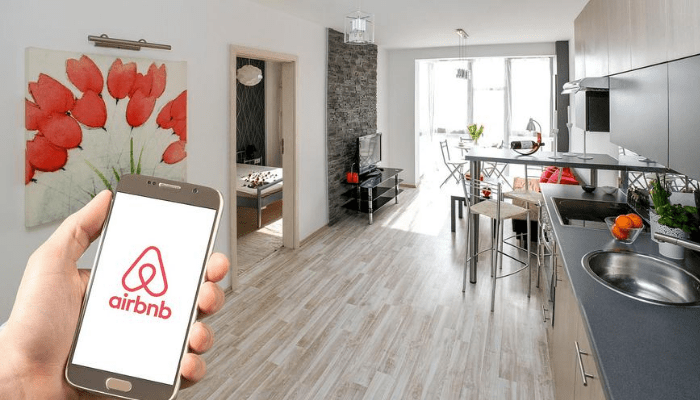
The rise of short-term rentals in Nigeria
Airbnb officially launched in Nigeria in 2016, targeting Lagos and Abuja, Nigeria’s economic and political centres, respectively. However, before its official entry, short-term letting informally was already taking root within affluent areas like Lekki, Victoria Island, and Maitama.
In accordance with Airbnb’s Africa Insights Report (2022), Nigeria is ranked among the five fastest-growing markets for Airbnb in Africa, alongside South Africa, Kenya, Morocco, and Egypt. Listings in Lagos alone grew by over 40 percent between 2018 and 2022, while host earnings in 2021 were approximately $5 million USD. Other cities, such as Abuja, Port Harcourt, and Ibadan, have also witnessed steady growth in short-term renting activities.
Several factors account for this rapid growth, and these include:

-The growing number of tech-savvy millennials and Gen Z travellers is driving the demand for flexible and budget-friendly places to stay.
-A growing wave of expatriates and Nigerians from the diaspora are coming back home for short visits.
-Increased rate of tourism, which has fast become Nigeria’s greatest PR export; its attractive, vibrant cultural and economic centres.
There’s a clear need for options beyond the pricey and often fully booked hotels. And that’s where platforms like Booking.com, VRBO, and local startups such as Fibre.ng and Short Let Rentals Nigeria are playing a significant role in the rapid growth of the short-term rental market.
Opportunities created by short-term rentals

Helping the tourism industry
Flexible and budget accommodation choices foster both local and foreign travel. Particularly for long-term stays, travellers looking for a quiet stay-at-home experience choose Airbnb-style flats. Partly owing to the availability of short-let accommodations, Nigeria’s domestic tourism expanded by 13 percent in 2023, according to the Nigerian Tourism Development Corporation study.
Property development and urban renewal
Particularly for the short-term market, the short-let explosion has driven fresh real estate projects, including serviced apartments, studio flats, and high-grade condominiums meant specifically for it. Modern furnishings, 24/7 power supply, and security systems have become common features that property owners in places like Victoria Island, Ikoyi, and Lekki are installing to fulfil short-let criteria.
Birthing business startups
New business possibilities have emerged from the short-term rental market—from property management companies and cleaning services to concierge services and furnishings companies for short lets. Hundreds have found work both directly and indirectly thanks to Nigeria’s gig economy.
“As the industry grows, it is likely that we will see increasing regulation from the government in the form of licensing, taxes, and safety regulations. While this could increase costs, it should also help boost trust among customers.”
Challenges facing the short-term rental market
Security enterprises
Security remains a pressing issue. The obscurity associated with short-term guests makes it delicate to track individuals who may engage in felonious conditioning. There have been reported cases of fraud, property vandalisation, and, in extreme situations, violent crimes in short-let lodgments. Drivers have responded by introducing stricter identity verification processes, hookups with private security enterprises, and the use of CCTV and smart cinches, but trust remains a major chain.
Market saturation and competition
In high-end locales like Lekki and Victoria Island, the proliferation of short-let apartments has led to fierce competition among hosts. An oversupply pitfall is depressing nocturnal rates and residency situations. According to a 2024 check by PropertyPro.ng, the average residency rate for short lets in Lagos fell from 78 in 2021 to 64 in 2023, suggesting growing competition and the need for hosts to differentiate their immolations with superior client service, amenities, and pricing.
Quality and standardisation issues
One of the significant arguments against short-term reimbursement parcels in Nigeria is the inconsistency in quality. While some parcels meet transnational norms, others are inadequately maintained, misleadingly announced, or warrant introductory amenities. The absence of an assiduity-wide quality assurance framework means guests frequently rely solely on online reviews, which can be manipulated. Accordingly, many bad guests can tarnish the character of the broader short-let ecosystem.
Future prospects for short-term rentals in Nigeria
Even with some obstacles, short-term rentals in Nigeria have a bright future ahead. A few trends are likely to shape how things unfold:
Increased regulation:
As the industry grows, it is likely that we will see increasing regulation from the government in the form of licensing, taxes, and safety regulations. While this could increase costs, it should also help boost trust among customers.
Professionalisation:
Many property managers are seeking the services of property management companies to ensure constant quality in their offerings.
Technology adoption
Premium short-let apartments now come with smart home technologies, artificial intelligence-powered guest screening, dynamic pricing algorithms, and digital concierge services.
Diversification
Beyond Lagos and Abuja, Ibadan, Enugu, Asaba, Calabar, etc., are emerging cities gaining interest from investors capitalising on first-mover advantages in less saturated markets.
Conclusion
For forward-thinking investors and entrepreneurs, the short-term rental market in Nigeria is a goldmine but one that requires strategic planning, quality commitment, and adaptability to the evolving regulatory and consumer landscape.
Oladipupo Timothy Clement is a highly accomplished real estate and business coach with a career spanning over two decades. He is the founder and CEO of Lifepage®️ Property & Investments Limited, a leading real estate company in Nigeria.