



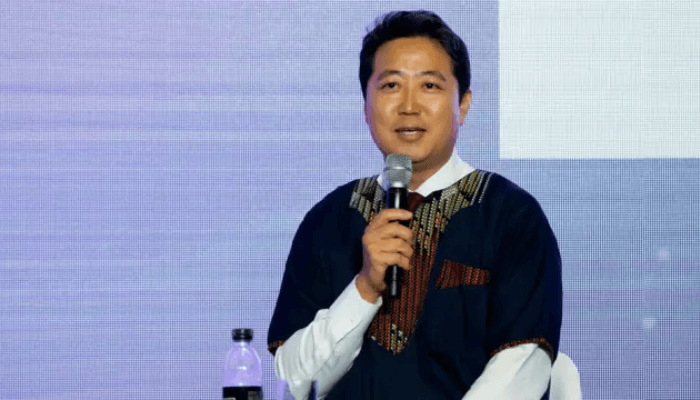
The appointment of Kojo Choi as Ghana’s ambassador to South Korea has stirred debate—some celebrate it as a strategic masterstroke, while others question his legitimacy on the grounds of ethnicity or origin. But the appointment is not merely symbolic; it presents a mirror through which other African nations, including Nigeria, might reflect on the meaning of citizenship and national belonging.
For Nigeria, the question is timely and deeply personal—not just for me, but for the country as a whole. What does it really mean to be Nigerian? And more importantly, who gets to decide?
The cost of belonging
Born and raised in Nigeria, I have dedicated more than 30 years to the country, building institutions and companies and promoting its culture. Yet, by law and perception, I remain a foreigner, an outsider. The path to Nigerian citizenship through naturalisation is one of the most difficult in the world. Residency alone isn’t enough. Birth within Nigeria’s borders is irrelevant. Even marriage to a Nigerian woman doesn’t provide a shortcut. The journey requires 15 years of residency, endorsements from a local government chairman, a traditional ruler, and a state governor, and finally approval by the president and cabinet.

The system reflects a contradiction: Nigerians are globally accepted and celebrated, yet domestically, the nation enforces an exclusionary idea of identity. I once had a cabinet member describe the dismissive tone in conversations surrounding naturalisation—foreign women married to Nigerian men are accepted without issue, but other male and female applicants from the Middle East, Asia, or Europe are met with suspicion, disdain, or mockery.
This mindset filters through societyRepresentation without inclusion and policy. The annual presidential naturalisation ceremonies are filled with elderly applicants—people who waited decades, not only for approval but also for acceptance.
While Nigerians rise to prominence globally—as leaders in politics, business, healthcare, education, entertainment, and sports, representing countries other than Nigeria—those in Nigeria without ancestral ties to Nigeria find themselves shut out, regardless of how long they’ve lived in or contributed to the country.
I speak from experience. At age 16, after fulfilling residency requirements, I walked to the immigration office in Jos proudly holding my Nigerian birth certificate and other documents. Fluent in Hausa, immersed in Nigerian culture, yet visibly different. I was denied on the spot and laughed out of the office. Years later, I qualified to represent the University of Jos in athletics, only to be dropped from the team because I wasn’t “Nigerian enough.”
Even as a radio DJ on Radio Plateau known by my Hausa name, Yohanna Maigona, listeners couldn’t believe someone who looked like me could represent them. A viral fake political campaign poster in 2022 reignited the same duality—half celebratory, half vitriolic.

Writer with General Yakubu Gowon in Jos in 1996

Legal citizenship vs. Cultural belonging
Nigerian citizenship is fundamentally rooted in ancestry, not birthright. That’s not necessarily unjust; it reflects deep cultural and historical traditions. But it creates systemic exclusion. Whether seeking public office, government appointments, or land ownership, what matters is not where you live or contribute, but where you are “from.” And for many Nigerians, this means being confined to ancestral origins they may never have even visited.
Even the right to own land can be restricted based on perceived origin. In many rural areas, and even some urban ones, traditional rulers act as gatekeepers. Their sign-off is essential to complete a land purchase. If they view you as “not from here” due to your ethnicity or background, your request can be denied—regardless of how long you’ve lived in the area, what you’ve contributed, or how deeply rooted you are in the community. Meanwhile, someone with ancestral ties to the area but no real connection or track record may be given priority.
And here lies a profound irony: many of these so-called “traditional” rulers are not traditional at all. During colonial rule—and again during periods of military governance—royal houses were often invented where none had existed, or where they did exist, the ruling families were replaced with those deemed more cooperative by colonial administrators or military leaders. Entire dynasties were sidelined or erased; others were installed with new titles and territories to fit indirect rule models or post-independence political arrangements. Today, these colonial-era constructs often wield cultural and legal power to define who “belongs” and who does not.
These rulers now act as gatekeepers of “indigeneity”—granting or denying access to land, recognition, and opportunity—while holding authority that is historically manufactured and often disconnected from the very traditions they claim to protect. In doing so, they reinforce a fragmented and exclusionary understanding of citizenship in Nigeria.
This rigidity fractures national cohesion. We have federal legislators who campaign in regions they barely know. Citizens who cannot represent the places where they were born, educated, or spent their entire lives. We are residents of a country that does not truly belong to all of us.
The recent withdrawal of a federal indigeneship reform bill—aimed at making it easier for Nigerians to claim indigene status in states where they have lived and contributed for years—further illustrates how fragile and contested the idea of national belonging remains. The bill was withdrawn after strong opposition, including from ethnic and regional associations. Ironically, some of these groups represent identities that themselves have been fluid and redefined over time—ethnicities shaped by history, language evolution, and colonial or religious administration. Yet they now defend fixed definitions of who belongs, reinforcing barriers that limit national unity and inclusion. The backlash reveals how deeply ingrained the idea of ancestral entitlement is and how far we still have to go in expanding the notion of citizenship beyond heritage to shared experience. Without this, Nigeria is not yet a nation, and there is no such thing as true Nigerian citizenship.
The challenge—and opportunity—of reform
This is not simply about allowing a handful of European or Asian residents to naturalise. It’s about enabling all Nigerians—regardless of tribe, region, or ancestry—to claim equal ownership of the entire nation. It’s about the right to belong where you choose, not where your forefathers did.
This would mean a significant reimagining of what it means to be Nigerian. And yes, it could disrupt inherited identities. But Nigeria has done this before.
Consider the Tiv and Jukun, two groups in central Nigeria whose identities have evolved dramatically. In the 1800s, missionaries like Bishop Samuel Ajayi Crowther, during expeditions up the Niger and Benue rivers, noted their shared roots and overlapping cultural practices. They were seen as related people, perhaps even the same. Over time, colonial boundary-making, missionary education, Bible translation, and administrative segmentation helped harden their identities into separate ethnic groups. Today, the Tiv and Jukun are often portrayed as distinct and, tragically, sometimes in conflict. But this division is not immovable; it is historical, not eternal.
Similarly, the Yoruba identity was consolidated through missionary translation work—especially by Crowther, who unified various dialects into one written Bible, borrowing the Hausa term “Yeribe” (Yoruba) to label a collective identity. What once were Oyo, Ekiti, Ijebu, and other subgroups became Yoruba. A similar story holds for the Igbo, with Rev. Thomas Dennis helping codify a standardised language and identity through Bible translation.
If these identities could be forged and refined through shared history, so too can a Nigerian identity—one rooted not just in ancestry, but in lived experience and collective belonging.
Imagine Nigeria
In 2024, I released a track titled Imagine Nigeria with Ruby Gyang, Jesse Jagz, and Benaiah Jerry—a tribute to the country that raised me, where I spoke my first words in Hausa, built my career, and raised my children. My wife, a Trinbagonian with Nigerian DNA, and I made our lives here.

I may never be officially or fully accepted as Nigerian. I may never be able to formally represent Nigeria, as Ambassador Choi now has the opportunity to do for his adopted home of Ghana. But what it means to be Nigerian for me and everyone else is still evolving—and perhaps, that evolution is the most Nigerian thing of all.
To those reading this with the requisite Nigerian ancestry to legally have citizenship, whether born here or not, technically, under the current system, many of you aren’t really fully Nigerian either. Yet at the same time, we all are, or at least we can be.
Let’s imagine a Nigeria where citizenship means more than bloodline. Let’s build it together.
Dr Wiebe Boer is a Nigerian-born scholar, author, and business executive known for his leadership in business, philanthropy, innovation and development initiatives across Africa. He currently serves as Chief Growth Officer of the Caribbean focused healthcare company the JIPA Network.





