In political philosophy, the concept of inclusion is not merely about access—it is about agency, about restoring dignity to those whom the state has historically rendered invisible.
Exclusion, on the other hand, is not always loud or overt. Sometimes, it creeps in through budget lines, strategic policy omissions, and infrastructural silences.
In Nigeria, the railway map has long been a telling cartographic metaphor for exclusion, most glaringly for the South-East region, the acclaimed late former President Muhammadu Buhari’s ‘Dot Republic’. And now, under President Bola Ahmed Tinubu, comes a dramatic policy U-turn that offers a glimmer of redemption for one of the most marginalised regions in Nigeria’s infrastructural story.
Philosophically, societies are judged not only by the roads they pave but by the roads they consistently ignore. Psychologically, entire communities learn to distrust the state when they are constantly bypassed. Sociologically, such sustained neglect breeds not just underdevelopment but alienation, radicalism, and bitterness. Politically, it hardens fault lines and fractures national cohesion. These forces collided during the Buhari administration, where regional favouritism became practically codified in federal railway expansion plans.

From time immemorial, human societies have been shaped by the psychological need for belonging and the political imperative for inclusion. Philosophers from Aristotle to Rawls emphasised that a just society is one in which all parts feel seen, heard, and served. Conversely, exclusion, that is, deliberate or structural, triggers what psychologists call existential invalidation – the feeling that one’s identity, value, and presence do not matter to the community or polity. In sociology, Emile Durkheim’s theory of collective solidarity insists that a fragmented society, one in which certain regions or groups are systemically left behind, cannot sustain social cohesion. Exclusion becomes not only an economic liability but a cultural and political fault line. Nigeria, tragically, has embodied this exclusion.
For decades, the South-East has borne the weight of infrastructural neglect, political alienation, and symbolic sidelining. Under President Muhammadu Buhari, this condition metastasised into state policy. Projects were designed, funds were borrowed, and tracks were laid, just not in the South-East. Ironically, this marginalisation was supervised by Chief Rotimi Amaechi, who served as Minister of Transportation. But history, though slow, sometimes bends toward justice.
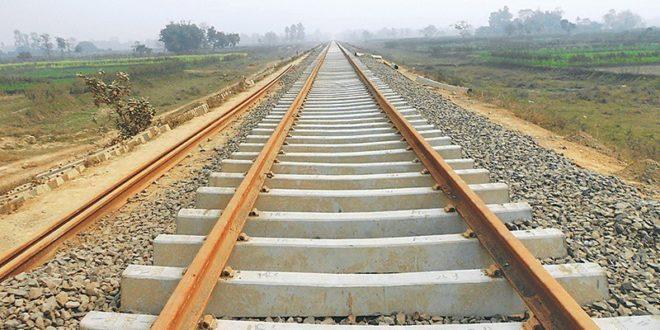
The recent approval of a $3 billion investment by President Bola Ahmed Tinubu’s administration for the reconstruction and modernisation of the Eastern Rail Line is more than just economic policy; it is a philosophical shift, a political recalibration, and a social reckoning.
On 23 July 2025, the Nigerian Senate approved Tinubu’s $21 billion foreign borrowing plan, with the Eastern corridor’s upgrade featuring as a cornerstone. The project will stretch over 2,000 kilometres from Port Harcourt through Aba, Enugu, Makurdi, Jos, Bauchi, Gombe, and terminate in Maiduguri, linking long-neglected commercial and agrarian hubs across the South-East and North-East. It will transition the line from narrow gauge to modern standard gauge, create over 150,000 jobs, and revitalise economic zones dormant since the 1980s. This is not just a rail project. It is a federal apology laid on steel tracks.
To understand the magnitude of this course correction, we must revisit the deliberate exclusion of the immediate past administration. Under President Buhari and Transport Minister Amaechi, Nigeria launched an aggressive railway modernisation plan funded by multi-billion-dollar Chinese loans. Projects like Lagos–Ibadan and Abuja–Kaduna were delivered. Yet, the Eastern corridor, the very backbone of Nigeria’s pre-1970 rail economy, was systematically ignored. The approval of a $3 billion investment for the reconstruction and modernisation of the Eastern Narrow-Gauge Rail Line is, therefore, not just an infrastructural project; it is a powerful political, psychological, and symbolic statement.

For the first time in Nigeria’s post-independence history, a federal government is committing such funds to a transport corridor that serves the South-East and North-East.
Ironically, while domestic corridors rotted, a $1.9 billion rail line was planned and launched from Kano to Maradi in Niger Republic. That foreign extension, still incomplete in 2025, was prioritised over repairing internal trade arteries in Nigeria’s South-East. The absurdity of this policy was challenged at a 2022 budget hearing by Dr. Pat Asadu, a member of the House of Representatives for Nsukka/Igbo-Eze South.
Dr. Pat Asadu, then chairman of the House Committee on Ports, confronted Amaechi with precision and principle: “We are now looking at the difference between ‘Project D,’ which is the construction of 284 kilometres Nigeria–Maradi railway standard world-class line against ‘Project C’, the Port Harcourt to Maiduguri eastern rail network defined as narrow gauge. For a segment of this country that is known for trade and commerce, I believe the economy of the South-East is bigger than that of Maradi. What policy guide would make the Ministry of Transportation put 284 kilometres railway from the end of the north to Maradi and then construct a narrow gauge in the South-East?” Asadu concluded passionately. “This decision is why Nigeria’s integration will always be challenged because things are done with so much impunity.” It was an intervention dripping with frustration and logic, a challenge to what many saw as the strategic statecraft of exclusion.
Amaechi’s response was technically thin and politically evasive. He repeatedly emphasised the strategic reasoning behind the Maradi project and downplayed perceived inequity: “The construction of the Kaduna-Kano railways to link up the Abuja-Kaduna rail line has commenced. Survey and design for Ibadan-Minna-Abuja is ongoing. Construction of the 284 kilometres Nigeria-Maradi (Niger Republic) standard gauge rail line enables interconnectivity with countries in the West Africa sub-region for the promotion of trade and commerce. This important contribution by Nigeria would be mutually beneficial by adding to the economic growth of the two countries, Niger and Nigeria.”
He went further to argue even unconvincingly: “The standard and narrow gauge have the same load capacity. The only difference is speed – about 20 km/h.”
This technical defence, addle-headed as it was ludicrous, sought to justify the use of narrow gauge on domestic corridors and prioritise regional integration beyond Nigeria’s borders. The explanation rang hollow. In the eyes of many Nigerians, it was not about trade or engineering specifications; it was about equity. The South-East, long viewed with suspicion in federal politics, was again being structurally punished.
The optics of exclusion deepened when the same Buhari administration commandeered the siting of the Federal University of Transportation in Daura, President Buhari’s hometown in Katsina State. Chief Amaechi claimed it was part of CCECC’s Corporate Social Responsibility (CSR), negotiated during the Lagos–Ibadan railway deal.
“I insisted that I will only sign [the railway contract if three things were done; one, train our children in China; two, build a railway factory in Nigeria; three, build a University of Transportation in Nigeria.
“Daura is in Nigeria, not in Mali or Biafra or Niger Republic. I have no regrets siting the University in Daura…”
While Amaechi framed it as a patriotic trade-off, critics saw it as symbolic nepotism. Why Daura, a town with no rail traffic and low economic relevance to the transport sector? Why not Enugu, Aba, Jos, or Makurdi, all strategic nodes along the Eastern corridor, desperately needing technical manpower? Perhaps, only Amaechi, the poster-boy for what was largely viewed as the institutional marginalisation of the very region he hailed could provide the answers.
These pertinent questions, which were drowned out by the cacophonous din of Buhari’s echo chambers only justified critics’ claims that the project reeked of symbolic cronyism cloaked as CSR. Indeed, CSR, they had argued, must be purposeful, not patronage dressed in diplomacy.
In real terms, public commentators saw the rail to Maradi as emblematic of regional favouritism. They pointed out the rail’s economic misalignment with priorities like Aba–Enugu or other South-East hubs; yet, the government chose to export development across borders!
Even more puzzling was the semantic quarrel that erupted between Buhari’s then-spokesman, Garba Shehu, and Rotimi Amaechi. While Shehu insisted that Nigeria was not laying railway tracks “into” Niger Republic but rather “towards” it, Amaechi clarified bluntly before lawmakers that “The rail will end at Maradi.” In Shehu’s words, “Nigeria isn’t building rail line into Niger, but only to the designated Border point.” Shehu emphasized that, according to the 2015 Nigeria–Niger corridor agreement, both countries would build tracks up to a border meeting point, not into each other’s territory.
When asked whether that point was Maradi specifically, he clarified that he only had documentation referring to it as a “designated point,” not necessarily within Niger’s interior.
In stark contrast, Minister Amaechi repeatedly affirmed that the rail project will terminate in Maradi, Niger Republic. In multiple interviews, he stated: “The Federal Executive Council approved approximately $1.96 billion for the construction of a railway extending through Kano, Katsina, Judges, Jibia, Dutse, and culminating in Maradi.” Also, he disclosed that he personally traveled to Niger Republic to request permission to build within Maradi, asserting the project needed host-nation acceptance since Nigeria was using its own funds. He reiterated that Niger’s insecurity and poor road infrastructure compelled them to trade via Benin, Ghana, or Ivory Coast, and that rail through Maradi would make Nigeria a competitive logistics hub.
Clearly, there was a clear semantic and substantive contradiction here. While the presidency emphasized border-limited construction, Amaechi spoke openly about completing the line into Maradi. Indeed, the cognitive dissonance was surreal. As if to quell the backlash, Buhari himself rationalized the project by invoking filial ties, claiming, “My cousins, and my family members, my people are in Niger Republic.” It was an astonishing justification, where federal infrastructure became an extension of personal geography. He further argued that colonial borders over-simplified cultural realities, citing Hausa, Fulani, and Kanuri people living on both sides of the border, and that this infrastructure was necessary to support regional integration, trade, and joint security cooperation (notably in the fight against Boko Haram).
Within that context, semantic discord in messaging – presidency undercutting Amaechi, semantic framing vs. operational reality, political optics – stuck out like the proverbial sore thumb. Shehu’s comments contradicted Amaechi’s public statements, creating uncertainty about the actual scope of the project. Also, he focused on diplomatic phrasing (“border point”), while Amaechi was blunt about actual rail paths, terminating in Maradi. Buhari’s invocation of kinship drew heavy criticism. Many observers viewed it as a cultural justification for a project that disproportionately benefited Niger while domestic corridors like the Eastern line remained neglected. Justifying that cross-border reach by appealing to personal ties and cultural unity was a rationale seen by many as ethically shallow and regionally divisive. This divergence underscores how infrastructure policy in Nigeria was shaped not just by technical planning but by political narrative manipulation, regional loyalties, and symbolic economics. While the South-East clamoured for inclusion in national rail expansion, Amaechi was busy defending the decision to construct a multi-billion-dollar standard-gauge railway from Kano to Maradi in Niger Republic – a foreign country with no trade volume or demographic urgency comparable to Aba, Enugu, or Onitsha.
By contrast, nonetheless, the Federal Government’s $3 billion allocation to the Eastern corridor is a restorative gesture. It answers the economic, political, and emotional needs of a region consistently ignored. If executed as promised, it could reduce freight costs and travel time across Eastern and Northern Nigeria; reopen inland ports and factories in Aba, Enugu, and Jos; empower agrarian communities in Benue, Gombe, and Bauchi; create over 150,000 jobs and build regional technical capacity; heal a festering wound in Nigeria’s post-war federal architecture. Senator Victor Umeh called it the “first sincere infrastructural intervention” in the region, crediting both President Tinubu’s political courage and Senator Akpabio’s facilitation. Even skeptical business leaders in the southeast have cautiously expressed hope. Yet, hopes must be tempered by Nigeria’s history of abandoned projects and opaque contract management. To succeed, the Tinubu administration must ensure transparent contract bidding; deliver on timelines without excuses; monitor Chinese contractors and local subcontractors for compliance; engage communities to prevent land disputes or sabotage; train local engineers and operators to sustain the line.
To conclude, it must be pointed out that inclusion is not a gift; it is a right. Therefore, there is no basis to expect the people of southeast extraction to hurl themselves aerially, celebrating the eastern railway corridor upgrade, which other sub-nationals in Nigeria have been enjoying as a fundamental right. In political theory, legitimacy flows not only from elections but from equitable governance. A people feel part of a nation when they can touch, see, and benefit from state presence. A rail line may look like concrete and steel, but it is also a symbol of justice. In Nigeria, where every region carries historical grievances, symbolic justice is often more powerful than rhetoric.
By funding the Eastern Railway, Tinubu has made a bold departure from the weaponised neglect of the Buhari years. But words and budgets are not enough. The real proof will lie in construction, completion, and connection. A Nigeria, where no region feels left behind, is not just a dream; it is a democratic obligation. If Tinubu can lay these tracks not only across cities but across hearts, he would have done what many before him dared not: govern with equity. It is, more profoundly, a long-overdue policy reversal and a reckoning with one of the most brazen episodes of infrastructural apartheid in Nigeria’s post-civil war history. Tinubu’s intervention, therefore, is not just about steel tracks; it is a test of federal sincerity, a corrective lens on political discrimination, and a fragile new beginning. Kudos to President Bola Ahmed Tinubu’s administration!
.Agbedo is a professor of Linguistics, University of Nigeria, Nsukka, Fellow ofthe Netherlands Institute for Advanced Study, and Public Affairs Analyst