|
Getting your Trinity Audio player ready...
|
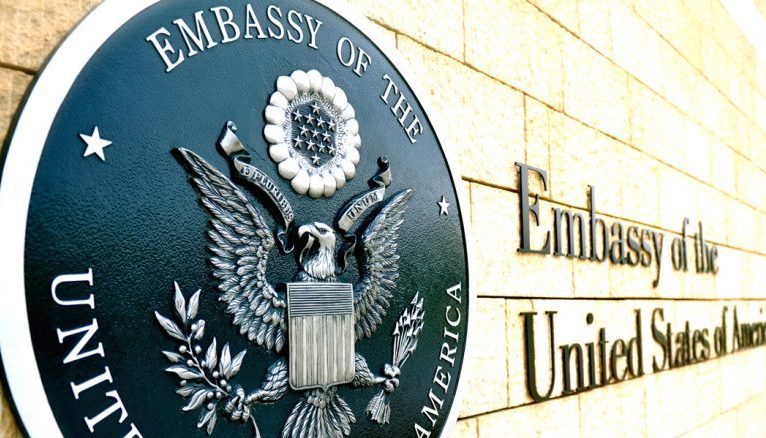
The United States Consulate in Lagos has unveiled a new journalism fellowship aimed at grooming a new generation of Nigerian reporters dedicated to integrity, impact, and public accountability.
Named after the late Adejumobi Adegbite—a respected journalist and U.S. Consulate information specialist who died in 2023—the initiative seeks to continue his unfinished dream of supporting early-career journalists. The fellowship was launched on Wednesday at the American Corner in Lekki, Lagos.
“Journalism is not just a profession; it is a public trust,” said Rick Swart, U.S. Consul General in Lagos, during his first public address since arriving in Nigeria. “This fellowship matters because it safeguards the principles that sustain our democracies—transparency, accountability, and informed citizenship.”
Read also: Nigeria refuses to accept Venezuelan deportees from United States, says Tuggar

Honouring a journalist’s legacy Adegbite, who began his career in 2006 at The Guardian newspaper, was known for his integrity and relentless pursuit of truth. Before joining the U.S. Consulate in 2021, he held key communications roles at the British High Commission, ECOWAS, the Gates Foundation, and USAID projects. At the time of his death, he had been designing a mentorship programme for young journalists—an idea that has now materialised into the fellowship bearing his name.
To bring the vision to life, the Consulate partnered with the Foundation for Investigative Journalism (FIJ), led by Fisayo Soyombo, a prominent investigative journalist and U.S. government exchange programme alumnus.
The Adegbite Fellowship for Young Journalists will span 12 months, featuring quarterly in-person training sessions and ongoing mentorship. Participants will gain skills in investigative reporting, data journalism, legal safety, ethical storytelling, and multimedia techniques.
Over 80 applicants from across Nigeria applied, but only a select few—reporters from cities as far-flung as Yobe, Ibadan, and beyond—were admitted into the inaugural cohort. According to Swart, this highly competitive process underscores the quality and potential of the chosen fellows.
“You were selected not just for your talent, but for your commitment to the core values that define responsible journalism,” he told the group

Swart warned that while journalism is more connected than ever, digital platforms have also enabled the spread of disinformation and sensationalism. “The erosion of trust in the truth itself is a global challenge,” he said. “Whether in Nigeria or the United States, democracy depends on citizens having access to factual, reliable information.”
He described the fellowship as a direct response to this challenge—an effort to connect emerging reporters with mentors who can help them navigate the modern media landscape with courage and skill.
The U.S. Consulate reiterated its long-term commitment to supporting Nigeria’s press freedom through training, exchange programmes, and partnerships. Journalists were encouraged to reach out to the Consulate’s Public Diplomacy Section for future opportunities.
“I’m personally grateful to many of you,” Swart added, noting that news reports by Nigerian journalists had helped him understand the country before his arrival. “I hope this is just the beginning of a relationship between the U.S. Mission and each of you.”
As the first cohort embarks on their year-long journey, the fellowship stands not only as a tribute to a late colleague—but as a timely investment in the future of journalism in Nigeria.