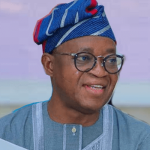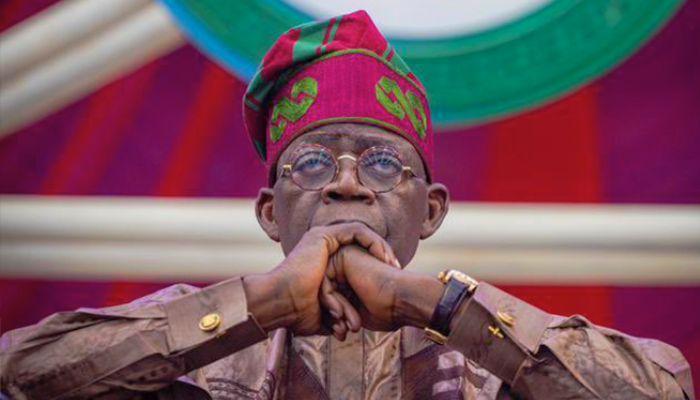
Against the background of ambition often overriding vision, rhetoric erasing actual achievement and a certain limited number of people standing out in the theatre of Nigerian politics not only because of titles but also their ability to influence a new political culture based on service, pragmatism and effective delivery, stand out two individuals. President Bola Ahmed Tinubu and Senator Solomon Olamilekan Adeola, alias Yayi are in an alliance that is not accidental where purpose and philosophy have been aligned in the forge of reform and tempered with the years of political apprenticeship and implementation.
This is not the tale of co-incidence, this is not the story of fake alliance, this is the story of a master and his rogue understudy, two characters whose ideological similarity and strategic philosophies have demarcated the directions of governance in Nigeria. Tinubu, the man behind the political and economic turnaround of Lagos state, has gotten transformed to the overseer of the restructuring of the Nigerian economy. A formidable creature of legislation, technocrat estranged, Adeola is soon to be the polestar of a new generation of leaders not only by nasty resultatist aping but by wise devotion.
The doctrine of Tinubu is founded on the pragmatic progressivism. His political ideas, usually misconstrued by the nostalgic lyrical people, are based on the idea that change cannot be without pain and without poetry. He has no rule of the rule of rigidity of manifestos, but of elasticity of opportunity. It is not a case of subsidy removal, harmonization of the exchange rate and the new tax laws coming to act only to satisfy someone or to cool tempers, but rather it is all about shoving the reset button to make things get back in order, a system that had long become unhinged in favor of consumption over production. His way of thinking is a reminder of the political realism of Machiavelli and the swashing cut of the Thatcher and Deng Xiaoping in economic front, all based on the core of the Nigerian problem of pluralism and resource competition. He goes after results and not applause. And his accomplishments, 2,500 kilometres of new expressways, six regional development commissions who had been funded with more than ₦3 trillion, and the systematic representation of all the geopolitical zones, are not anecdotes, they are facts.
Tinubu is the architect, if you can use those terms; and Yayi is the engineer who makes the blueprint more perfect at the subnational level. On all the above grounds, Yayi is initially based in the Ogun West region but his powers are spreading to the Ogun Central and East. The strategic involvements he has had in infrastructure, schools, hospitals as well as economic empowerment have not only shaken the vested interests besides stirring up ample enthusiasm among the masses. His arrival in the form of a visiting dignitary is no longer present in Egba, Remo and Ijebu but of a developmental partner. Road construction has been done. Schools renovated. Healthcare centres that are equipped. Youth trained. They are not pie-crusting on proportionate largess of the constituency but the good basis of a state-wide revival.

This has disrupted the political establishment that was used to complacency followed with false promises. It is not merely a meteoric rise of Adeola, but it is a planned and well-deserved rise. His legislative record especially as the Chairman of the Senate Appropriations Committee is characterized by financial prudence, pro-people tax measures and national unity. He rose not by numbers, but by quality making him inject content in the senate debates and producing laws that directly impact the lives of people. Such widespread influence has seen him supported by communities beyond his immediate constituency by having the local leaders of other parts of Ogun urging him to take on even greater leadership. It is to be heard in the elders at Egba down to all youth forums, a groundswell not of manipulated fervour but of real endorsement. And that is currency that is rare in Nigerian politics.
The explanation of the synergy such as that of Tinubu and Adeola is not an act of political loyalty but rather philosophical synchronizing. Tinubu’s mentorship is unmistakable in Adeola’s political conduct. Their relationship, similar to the Yoruba riddle of the elephant and the calf, speaks out of more than proximity, it speaks out of pedagogy. In an animal fable, the elephant battles up the young calf on twisting paths of the forest, perils of the river and the beat of existence. The political elephant, Tinubu, has given them, the map, and now Adeola is creating his own paths and is guided well but does not rely on anyone.
This patronage comes across. Tinubu is not preoccupied with sentiment. He gives power through performance. The fact that Adeola rose to be a statewide figure is not the acting of a party decree, but the result. His capacity to make a cross-party cooperation on ethnicities and classes is attributed to the blueprint of coalition building of Tinubu himself, whose success in having governors of PDP, LP, APGA and NNPP all come together in the same developmental project is legendary. They have startled those who were well used to armchair antagonism by their critics. Others accuse a lurch to one party state. But Nigeria is not a monopolister democracy with 18 political parties taken to be active there. Instead, what is emerging is the redefinition of pluralism; one informed by performance and not party, and community rather than sameness.
Adeola is presently a moving target of political attack not that he has fallen in Ogun State, but that he has risen further. The old guard, which can not compete with his delivery, tries to undermine his level of ambition by making it sound desperate. However, the Ogun West Initiative testily responded that Yayi is not indeed desperate, but, ready. The twenty years of service in the public of Lagos to Abuja have not only informed his competent- it has hardened his credibility. Credibility is no longer a luxury in today Nigeria. It is survivalism.
The greater lesson behind this is that the survival of Nigeria could very well lie in not some recycled idealism, but rather on sober managerialism. Tinubu and Adeola demonstrate that, leadership is not what a person starts with but what he or she is able to deliver the people under its care. They reign by touch: they can be experienced in better roads, up-swelling schools, healthier clinics and increasing businesses. They do not sell dreamy sky; they level ground. It is this type of leadership that Nigeria which has endured decades of poor leadership and lost potentials, is now in need of.

That is the strength of this master and maverick combo. One has made national policy as a strategist of instinct and a builder of patience. The other puts that philosophy to practice with great precision, heart, and uncanny knack of sailing the waters of grass-roots involvement. They are not only tied by politics but pedagogically. It is not strategic in so much as it is organic.
The bottom line, in the last analysis, at the national level, or at the state frontier, it is no longer who is the loudest in speaking, but who performs, who gets performance. Tinubu and Adeola have demonstrated that leadership cannot be earned in the chambers of declamations but the trenches of the development. They are not just a new form of politics but they re-stipulate politics as we understand it.
Yayi, like Tinubu. Not only master and maverick, but guide and mirror. And in that reflection, the Nigerians see into the future: a land not of illusions in governance but rather in one where governance is a reality on the tangible, equitable and sustainable ground.
.Somorin writes from Crescent University, Abeokuta