|
Getting your Trinity Audio player ready...
|
As the dust settles on fuel subsidy removal and the Dangote Refinery begins shaping domestic supply dynamics, a critical question now stares Nigeria’s downstream operators in the face: what next?
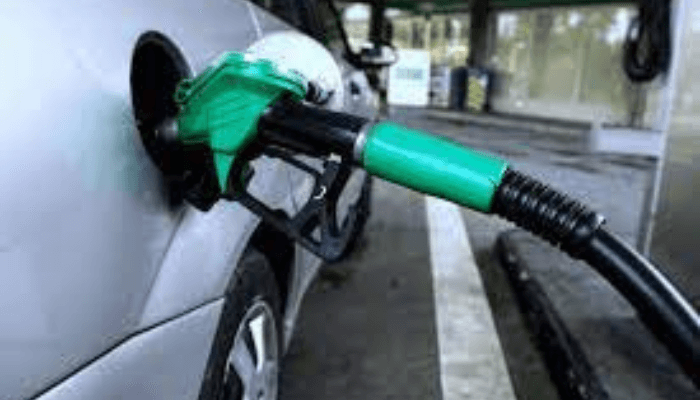
For decades, Nigeria’s fuel stations have operated under a minimalist model—bare-bones service pumps, basic canopy structures, and cash-only transactions. The goal was simple: move volumes, compete on price, keep margins lean, and whenever there was scarcity of petroleum products, cash out big time. But in a deregulated market where supply is increasingly centralised and pricing power may shift toward larger integrated players, that model is becoming obsolete.
Meanwhile, across the Atlantic, a quiet transformation has taken hold. The retail fuel giants have redefined what a fuel station means. These companies are no longer just in the business of selling petroleum products; they’re in the business of experience and convenience.
The new fuel retail paradigm

In the United States, convenience stores attached to fuel stations generate a significant portion of total revenue—sometimes more than the fuel itself. These stations offer:
· 24-hour food courts and barista-style coffee bars
· Loyalty apps and contactless payment systems
· Clean, well-lit restrooms that attract families and truckers alike
· Branded merchandise, EV chargers, and even co-working lounges

These are not indulgences. They are strategic responses to a shrinking fuel margin and a rising demand for convenience. They are proof that fuel retail is no longer just about fuel—it’s about frictionless living.
“But those who evolve, by offering food, fintech services, high-quality facilities, and digital integration, can turn each station into a community hub and revenue centre.”
Why Nigeria can’t afford to ignore this shift
In Nigeria, most independent and major marketers still operate with a 1990s playbook. Many stations lack basic amenities, digital infrastructure, or even standardised branding. The value proposition is reduced to “how much per litre?” or “can I fill up?”
But as the market matures—and Dangote begins controlling more of the wholesale flow—differentiation will no longer come from the depot. It must come from the value-added services on Non-Fuel Retail (NFR).
This is both a threat and an opportunity. Those who fail to pivot will become increasingly irrelevant, especially in urban areas where consumer expectations are rising. But those who evolve, by offering food, fintech services, high-quality facilities, and digital integration, can turn each station into a community hub and revenue centre.
It’s worth noting that this transition is not unique to the U.S. Similar trends are taking root in Europe, South Africa, Brazil, Indonesia, and parts of the Middle East. Retailers there understand the “last-mile ”effect”—whoever controls the final customer touchpoint holds strategic leverage, even in a price-volatile environment.
Moreover, EVs, while still nascent in Nigeria, will eventually demand a different business model. Charging takes longer than fuelling. Stations will need to offer experiences that justify a 30-minute stop. The future of fuel retail is sticky—built on services, not just speed.
To prepare for this transformation, Nigerian downstream operators must prioritise:
· Convenience retail: Co-branding, partnering with food vendors, pharmacies, and logistics pickup/drop-off services
· Clean, secure, and tech-enabled facilities: restrooms, lighting, cameras, and digital payments
· Customer loyalty programs: Build recurring footfalls through apps and fuel rewards
· Rebranding and consistency: Present a professional, modern image that earns trust
Regulators, too, have a role to play. Incentivising innovation, simplifying licensing for retail diversification, and standardising safety and service benchmarks can help drive this evolution.
The age of single-line revenue stations is ending. In its place rises the multi-format retail hub—where fuel is only the entry point. Nigeria’s fuel marketers are not being asked to copy foreign models blindly. They are being asked to respond to a global shift with local intelligence and urgency.
The pump is no longer enough. The question is simple: are we ready to go from station to destination?
Olugbenga Olaoye is a seasoned professional with extensive experience in the oil and gas industry. He is a PhD candidate specialising in energy economics and holds a master’s degree in public service from the Clinton School of Public Service, USA, and an Executive MBA from the Lagos Business School. He writes from Fort Worth, Texas.