As climate challenges intensify, small and medium enterprises in Nigeria have been urged to integrate climate initiatives into their business models to drive long-term and sustainable growth.
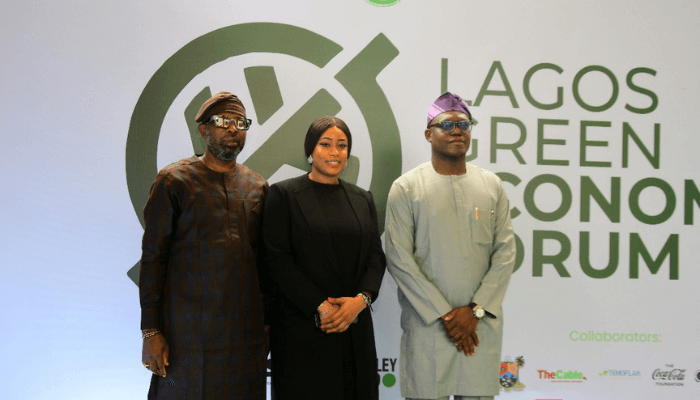
The experts who made the call at the inaugural edition of the Lagos Green Economy Forum, held recently in Lagos, stress the need to create a roadmap and financing mechanism to motivate SMEs to commit to climate action and sustainability.
Tokunbo Wahab, commissioner for Environment, Water Resources, Lagos, noted that it is vital that small businesses are included in the climate action and sustainability conversations.
He said that this will help educate them on their contribution to climate change, steps to take and provide them with the skills to make the right decisions to grow sustainably while tapping opportunities in the green space.

Pointing out the need to address the issues of SMEs, he said, “Lagos has well over 8,000 SMEs and driving sustainability is one way of bringing more people into it.”
“The steps we have taken as a city to drive sustainability is first of all by providing opportunity for SMEs to get financing to transition from fossil fuel to green power or green electricity where you have solar panels, and things like that,” said Wahab who was by Tunde Ajayi, general manager, the Lagos State Environmental Protection Agency (LASEPA).
“We have the Employment Trust Fund where they can get funding, this helps them to scale faster, there is the Ministry of Wealth Creation, where there are a lot of funding opportunities, these help them to scale faster, so all these put together help them drive sustainability,” he added.
Speaking also, Korede Oluwole, convener of the event, said that the event is meant to serve as a platform for conversations on sustainability transition for SMEs.
Oluwole noted that SMEs need to learn what sustainability is, “Basically, that is why we have gathered here, to have that conversation with the small businesses in Nigeria.”

Speaking on how large corporations are supporting SMEs to transition, Oluwole disclosed, “There is no way a large corporation can function or operate optimally without the strong input of SMEs.”
“What some of them have been able to do is to acculturate all the SMEs that work for them, their vendors, their suppliers, because the Financial Reporting Council of Nigeria has given the mandate that by 2030, companies should start reporting their Environmental prospects, so they are doing a lot in doing that,” he added.
Sola Obadimu, director-general of the Nigerian Association of Chambers of Commerce, Industry, Mines, and Agriculture (NACCIMA), stressed that immediate action from SMEs on climate issues is critical.
Obadimu noted that the organised private sector reaffirmed its support and readiness to collaborate on initiatives that promote green jobs, attract climate finance and empower cities and communities for a long-time resilience and sustainability.
He appreciated the organisers of the event, noting that it is apt and timely.
The event gathered large corporations to share experiences with SMEs on how they have incorporated sustainable business practices in their supply chain processes, which has resulted in extending and institutionalizing such practices in vendors’ businesses.