



In 2014, Nigeria made global headlines not because it struck oil or built something new, but because it changed the way it measured its economy. With that update, known as GDP rebasing, Nigeria suddenly became Africa’s largest economy.
It wasn’t magic. It was statistics. And now, it has happened again.
Between 2019 and 2024, Nigeria’s economic size on paper has grown sharply not because more factories opened or exports soared, but because the government updated how it counts economic activity.
This process, once again, revealed something important: the country’s economy is much larger than previous figures showed.

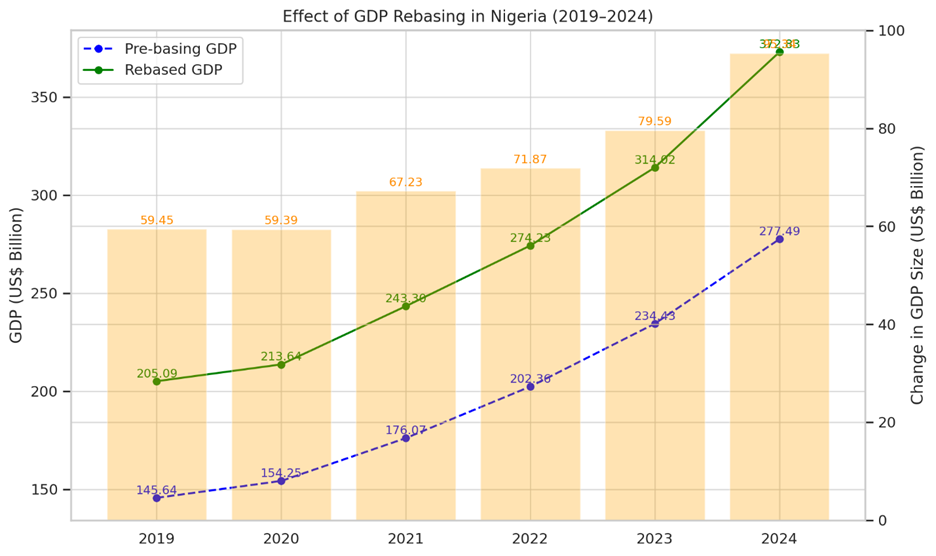
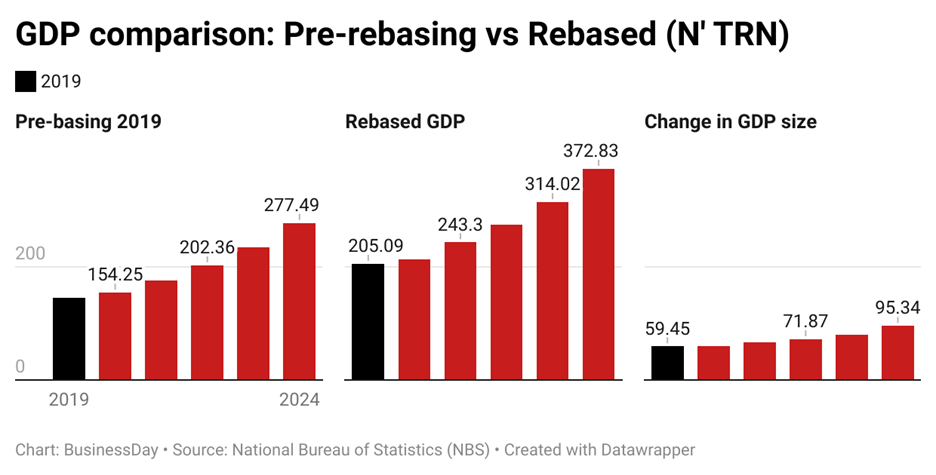
Take 2019, for example. Under the old method, Nigeria’s GDP was estimated at N145.64 trillion. But with the new system, that same year was valued at N205.09 trillion a difference of over N59 trillion. By 2024, that gap had widened to more than N95 trillion.
So, what exactly changed?
The rebasing gave attention to parts of the economy that had been ignored. It included fast-growing sectors like fintech, logistics, mobile payments, creative services, and e-commerce areas that weren’t fully captured before. These businesses have been operating for years, but they were left out of the official count. Now, they’re part of the picture.
The difference between the old and new numbers has grown every year. In 2021, the rebased GDP was N67 trillion higher than the older figure. In 2023, the gap reached nearly N80 trillion. That tells us these “new economy” sectors aren’t just active they’re growing fast.

What does this mean for the country?
First, it changes how the world sees Nigeria’s economy. A bigger GDP makes the country’s debt appear more manageable compared to its income. It can also improve investor confidence and help the government make better economic decisions.
But here’s the key point: unlike in 2014, this rebasing didn’t move Nigeria up the ranks. The country now sits as the fourth-largest economy in Africa, behind South Africa, Egypt, and Algeria. That’s not because Nigeria’s economy is weak, but because other countries have grown fast too, some with more stable currencies or stronger export earnings.
So, while the numbers look better, the position hasn’t changed.
Still, this rebasing matters. It shows us a clearer picture of where Nigeria’s economy is today. It puts long-ignored industries on the map. It gives the government and private sector better tools to plan for the future.
Rebasing didn’t bring in new money. It didn’t reduce hardship. But it did show that Nigeria’s economy is more dynamic, more digital, and more diverse than old numbers suggested.
Sometimes, the biggest change isn’t what’s built but what’s finally seen.





