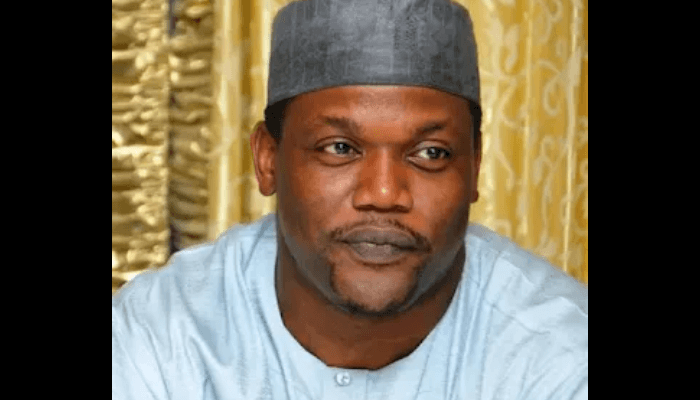
Muhammed Babangida draws attention to fake news
A supposed rejection and confirmation of Muhammed Babangida’s appointment as the Chairman of the Bank of Agriculture dominated social media on Monday.
The first issue was a letter announcing the younger Babangida’s rejection of President Bola Ahmed Tinubu’s appointment. As the buzz around the development grew, Babangida issued a press statement affirming his acceptance of the offer.
Babangida was the primary focus following President Tinubu’s appointment of ten persons from the North into leadership positions in federal parastatals.

Meta Platforms (Facebook, Instagram, WhatsApp) Threaten to Quit Nigeria
Amid over $290 million in regulatory fines and requests concerning local data-transfer approvals, Meta indicated that it might withdraw all its major platforms from Nigeria.
This sparked massive concern among creators, brands, and users about censorship, platform access, and the digital economy.
Read also: Muhammed Babangida accepts BOA chairmanship
Natasha Akpoti-Uduaghan in a physical clash with Senate security

The Senate deployed a robust security response to the attempt by suspended Senator Natasha Akpoti-Uduaghan to resume duty following a controversial declaration by Justice Binta Nyako of the High Court. The security presence included police, the DSS, and the Civil Defence.
On 22 July 2025, suspended Senator Natasha Akpoti-Uduaghan arrived at the National Assembly complex in Abuja to resume legislative duties, defying Senate warnings. She parked outside the main gate and entered on foot, flanked by activists including Aisha Yesufu and supporters chanting solidarity slogans.
After being denied entry, Akpoti-Uduaghan condemned the Senate’s actions as “contempt of court” and declared the 10th National Assembly under Godswill Akpabio “the worst Nigeria has ever had.”
She asserted that a 4 July 2025, Federal High Court judgment by Justice Binta Nyako invalidated her six-month suspension. Citing Sections 287 and 318 of Nigeria’s 1999 Constitution, she argued that the court’s “decision” (not merely an “order”) was binding on the Senate.
The Senate insisted the judgment was “advisory,” not mandatory. Spokesperson Yemi Adaramodu stated that the ruling contained “no express order” for her recall and emphasised that internal disciplinary procedures must be concluded first. The Senate also noted that Akpoti-Uduaghan had not complied with a separate court order to pay ₦5 million for contempt and issue a public apology.
Akpoti-Uduaghan claimed that Senate President Akpabio—not the Senate institution itself—filed the appeal against her reinstatement, listing the Senate as a respondent.
Aisha Yesufu confronted security, declaring, “National Assembly is meant for everyone!” She framed the blockade as a form of political persecution.
Akpoti-Uduaghan accused the Senate of engaging in a personal vendetta and institutional weaponisation.
She linked her suspension to a sexual harassment petition filed against Akpabio a day before her punishment. She called her suspension “fraudulent,” alleging that the disciplinary document had been forged.
She also accused Akpabio of using the Senate to “settle scores” and warned that Nigeria’s democracy was at risk if lawmakers disregarded the courts.
The Ethics Committee maintained that her suspension resulted from violating seating protocols during plenary, not her harassment allegations.
Constitutional Crisis: The clash highlights tensions between judicial authority and legislative autonomy. Legal experts debate whether courts can compel the reinstatement of parliamentary proceedings.
The spectacle eroded trust in the Senate, with critics citing hypocrisy (lawmakers defying courts). Akpoti-Uduaghan’s supporters vowed continued protests.
The senator plans to challenge the blockade in the appellate court, seeking clarity on the binding nature of the Federal High Court’s judgment. She also intends to continue constituency work during the suspension.
Natasha Akpoti-Uduaghan’s confrontation with the Senate underscores a crisis of institutional integrity. While she positions herself as a defender of judicial independence and ethical governance, the Senate frames its resistance as upholding procedural sovereignty. The resolution—whether through courts, political negotiation, or public pressure—will set a precedent for legislative accountability in Nigeria.
From Eze Ndigbo to Onyendu Ndigbo in Ghana
South-East traditional rulers pronounced discontinuation of the title of Eze Ndigbo by Igbo leaders outside Igbo land at the weekend.
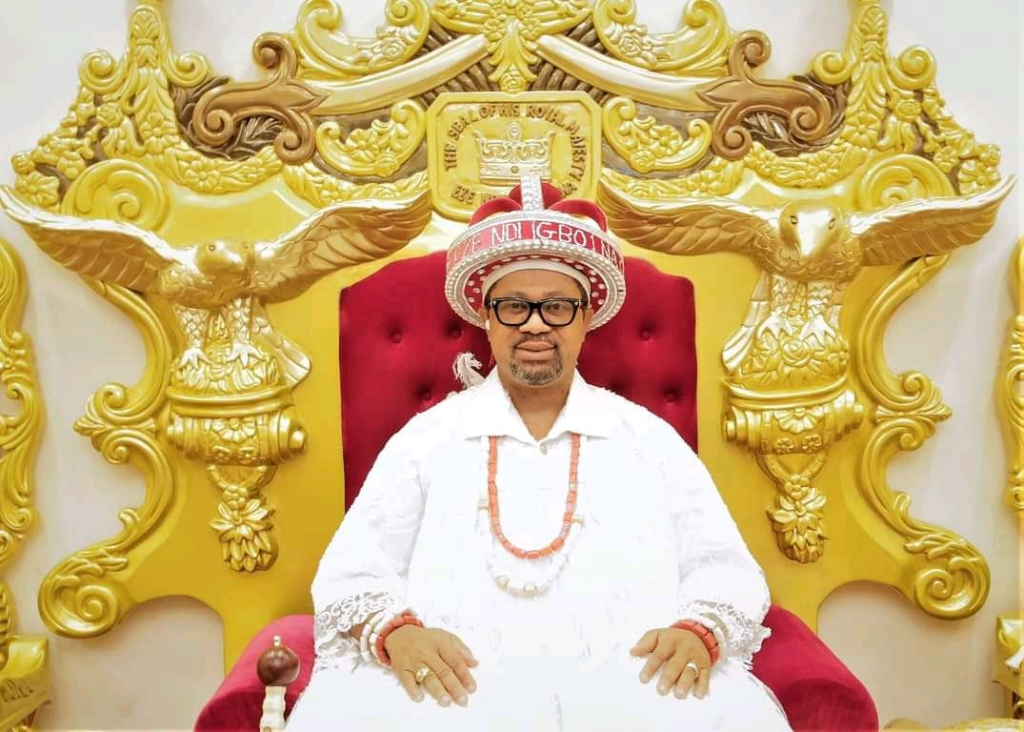
Analysts interpret the move as an effort to douse tensions in Ghana over the Eze Ndigbo, His Royal Majesty (HRM) Eze Dr. Chukwudi Jude Ihenetu.
Ghanaians mounted protests across media platforms against the alleged plans of Ihenetu to establish an Igbo kingdom.
Until the pronouncement, His Royal Majesty (HRM) Eze Dr. Chukwudi Jude Ihenetu served as the traditional and cultural leader of the Igbo community in Ghana, holding the title Eze Ndigbo Ghana (King of Igbo People in Ghana). Crowned on August 30, 2012, he operates from his palace, Obi Ukwu Obieziokwu, in Accra, which functions as a hub for Igbo cultural activities and community governance. Protests erupted in Ghana after images of his palatial residence circulated, igniting debates on cultural sovereignty. The council’s directive challenges his continued use of “Eze,” though he has not publicly transitioned to “Onyendu”.
The South-East Traditional Rulers Council justified their decision on these pillars:
The term Eze is sacred, requiring ancestral rites and governance over a physical territory in Igboland.
Diaspora leaders cannot fulfil these traditional prerequisites.
All Igbo leaders must adopt the new title in all public representations.
Online searches yielded extensive information about Ihenetu as Eze Ndigbo.
Key Aspects of the Role
Origins and Legitimacy
The position was instituted by the Late Chief Emeka Odumegwu Ojukwu (Eze Ndigbo Gburugburu) to preserve Igbo culture in the diaspora.
Unlike hereditary kingship in Nigeria, the diaspora title is merit-based. The Igbo community in Ghana selects leaders based on their contributions, leadership, and commitment to unity.
Cultural Preservation Efforts
Organises annual events, such as the Igbo New Yam Festival (begun in 2010), to highlight traditions, language, and communal values.
Promotes the use of the Igbo language in the palace and educates younger generations on their cultural roots, especially in mixed-parentage families.
Community Leadership
Focuses on conflict resolution, business mediation, and ensuring Igbos comply with Ghanaian laws.
Conducts town-hall meetings to educate new migrants on respecting host-country regulations and promoting peaceful coexistence.
Socio-Economic Contributions
Ihenetu owns the Chi-bert Group of Companies (spanning transport, farming, telecommunications, and oil), creating jobs for Ghanaians and Nigerians.
Ihenetu’s Legacy and Challenges
Achievements: Improved Nigeria-Ghana relations, reduced ethnic clashes, and enhanced cultural visibility over his 12-year reign.
Advocacy: Positions the role as apolitical, emphasising cultural unity and humanitarian support for all Africans.