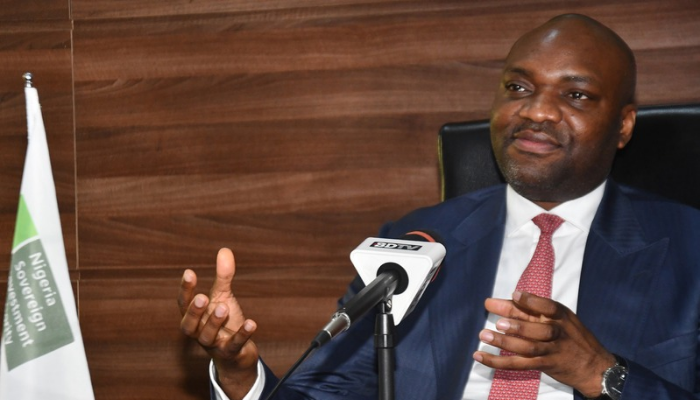
African sovereign wealth funds are emerging as key players in capital mobilisation across the continent, using long-term capital to support strategic investments in infrastructure, industry, and climate resilience, says Aminu Umar-Sadiq, MD/CEO of the Nigeria Sovereign Investment Authority (NSIA).
At NSIA, Umar-Sadiq oversees the strategic deployment of Nigeria’s $3 billion sovereign wealth fund. He brings deep experience in public finance, asset management, private equity, and infrastructure investment. Before becoming CEO, he served as executive director in charge of the Nigeria Infrastructure Fund. His global finance background includes roles at Morgan Stanley and Société Générale in London, as well as Denham Capital, a private equity firm focused on energy and infrastructure.
Umar-Sadiq sits on several boards, including InfraCredit, Development Bank of Nigeria (DBN), Nigeria Mortgage Refinance Company (NMRC), and UNCTAD’s Sustainable Investment Advisory Council. He holds bachelor’s and master’s degrees in engineering sciences from the University of Oxford (St. John’s College) and has completed multiple executive education programs. In this exclusive interview with Onyinye Nwachukwu, Abuja Bureau Chief, and Anthony Ailemen, State House Correspondent at BusinessDay, he explains how Nigeria’s sovereign fund is leading a shift toward homegrown, sustainable financing models capable of driving long-term economic transformation across Africa. Excerpts…
NSIA’s latest financials (and, in fact, since inception) show a strong performance despite a challenging macro environment. What are the key drivers behind these results, and how sustainable are they given current global market conditions?

One of NSIA’s key strengths is our consistent positive financial performance since inception, regardless of prevailing global or domestic macroeconomic conditions. This performance is driven by several factors.
First, by law, NSIA is structured as a diversified fund. We manage three separate and ring-fenced funds: the Stabilisation Fund, the Future Generations Fund, and the Nigeria Infrastructure Fund. Each of these has distinct mandates, strategic asset allocations, and permissible investment instruments. This legal and structural diversification helps cushion the overall portfolio from concentrated risk.
Second, the strategic asset allocation for both the Stabilisation Fund and the Future Generations Fund is broadly defensive. This means that, irrespective of market volatility, these portfolios are designed to prioritise capital preservation, ensuring resilience in downturns.
Third, the Future Generations Fund itself is highly diversified. It is roughly allocated as follows: 25 percent to private equity and venture capital, 20 percent to hedge funds, 30 percent to long-only equities, and 25 percent to other diversifiers, including assets such as gold, healthcare, and other uncorrelated alternatives. This multi-asset strategy further enhances stability and long-term performance.
Finally, through the Nigeria Infrastructure Fund, we focus on identifying value dislocations in critical infrastructure sectors. We conceptualise, develop, and implement projects across areas such as healthcare, agriculture, and energy, with a particular focus on renewable energy and technology.

This disciplined approach to fund structuring, asset allocation, and project origination ensures that, at any point in time and across macroeconomic cycles, NSIA is positioned to deliver strong and sustainable returns.
“On the domestic infrastructure side, the fund provides a good hedge, generating steady cash flows from our subsidiaries. These cash flows help offset some of the volatility and risks arising in the global environment, thereby anchoring stability through our local operations.”
You mentioned, like we do know, that the NSIA operates three ring-fenced funds: the stabilisation, future generations, and infrastructure funds. Can you walk us through how each is performing, their current size, and what your medium-term outlook is for each bucket?
As I mentioned, we have three separate and ring-fenced funds. The first is the Stabilisation Fund, which offers stabilisation support to our country during times of economic duress. The objective of this fund is twofold: capital preservation and liquidity. This informs the kind of instruments that we have in the fund, which consists largely of investment-grade corporate bonds and treasuries. As of March 2025, this fund is about $430 million, and by law, a 20 percent allocation of any new funding is channeled to this fund.
We also have a Future Generations Fund, which is about $1.30 billion. This is a long-term fund that invests in both growth and real assets on behalf of future generations of Nigerians. It has a strategic asset allocation that takes into account alpha requirements, volatility expectations, and correlation requirements, and based on these, builds a strategic portfolio. Its asset allocation is defensive by design, and it largely consists of global private and public equities, hedge funds, and other diversifiers.
Finally, in order to offer a balance between managing funds on behalf of future generations of Nigerians and those of the current generation, we have the Nigeria Infrastructure Fund. This is where our direct investment propositions typically occur across all the sectors that I mentioned. This fund is about $1.3 billion as of March 2025.
If you reflect over the last decade, what NSIA has been particularly adept at is the creation of institutions. What we typically do, working with strategic partners, is determine areas within infrastructure sectors where we believe we have both the catalytic capital and the knowledge base to create pioneering propositions. An example would be InfraCredit, where we felt that through the creation of that institution, we could both motivate local currency capital into the infrastructure sector on the one hand, while deepening the capital market on the other diversifiers. Over the last six to seven years, we have managed not only to create what is now an important institution in our financial sector but also succeeded in mobilising both domestic and global capital towards infrastructure.
We also co-conceptualised the Nigerian Mortgage Refinance Company and the Family Homes Fund, which is focused on affordable housing within the country. Additionally, we co-conceptualised an oncology and diagnostics proposition that we are very proud of, called MedServe. It began with a co-located oncology centre in Lagos and two diagnostic centres in Kano and Umuahia, and we are currently proliferating the model across the country. Hopefully, over the next two to three quarters, we will have a much-expanded MedServe, growing from one to four oncology centres and from two to 13 diagnostic centres.
These are some of the businesses that we have co-created within the infrastructure sector.
Can you provide an update on the current size and value of Nigeria’s Sovereign Wealth Fund? Additionally, could you speak to how NSIA is currently balancing its investment portfolio between domestic and international assets? There was a period when the Authority appeared to shift focus more towards local investments—where does that balance stand today?
The sovereign wealth fund is the combination of the three funds. As of today, it stands at about $3 billion. The mandate of the sovereign wealth fund is somewhat dual: to ensure that we manage and continue to save on behalf of future generations of Nigerians, while at the same time deploying capital to enhance Nigeria’s infrastructure. That balance is very important, and it is one that our board continues to pay particular attention to.
How does the Authority balance its dual mandate—delivering financial returns and supporting national development—particularly in a volatile global and domestic environment?
If we start with the Infrastructure Fund, what NSIA has managed to do is not only lead direct investments and the creation of institutions within Nigeria but also leverage that knowledge to support the government in implementing complex and consequential projects. I believe this is one of the key elements that sets NSIA apart.
If you reflect on the last half-decade and examine the number of presidential initiatives that NSIA has had the privilege of supporting, it becomes clear that we are consistently applying our key learnings, insights, and operational capacity from executing our own projects to serve the federal government.
Take, for example, the Presidential Fertiliser Initiative, which was essentially a backward integration strategy for the local production and supply of NPK fertiliser. We implemented this program with pride on behalf of the government. The results are tangible: the resuscitation of the blending industry in Nigeria, an improved supply of blended NPK to farmers, an increase in the number of blending plants from the inception of the programme to the present, and the effective elimination of fertiliser scarcity. These outcomes represent a significant point of pride for the institution.
Another example is the Presidential Infrastructure Development Fund, where we played a key role in supporting the government on three nationally strategic projects: the Second Niger Bridge, the Lagos-Ibadan Motorway, and two phases of the Abuja-Kaduna-Kano Road. These projects are executed for the account of the government, but we have leveraged our expertise, creativity, and the investment experience gained from managing our own portfolio to deliver for the country.
In addition to these, we have made significant strides in pioneering transformative infrastructure projects on behalf of the government, both through the companies I previously mentioned and through direct interventions.
Read also: NSIA chief urges African SWFs to attract global capital, drive social impact
Back in April, you emphasised that NSIA’s strong financial performance was driven not merely by exchange rate gains but by the underlying investment strategy and the efforts of your team. Could you walk us through the specific strategic decisions and portfolio adjustments that contributed to these results? What key sectors or asset classes were instrumental in delivering such performance?
The core of our work lies in the strategic asset allocation we implement to mitigate downside risks in the economy. Whether these risks stem from inflation, geopolitical tensions, or other macroeconomic challenges, our strategic asset allocation is designed to reduce potential negative impacts.
A significant amount of time is spent with our Investment Committee, our Board, and our investment advisors to ensure we are continuously adjusting asset allocations, particularly for the Stabilisation Fund and the Future Generations Fund, to respond effectively to evolving risks.
Balance sheet management is also critically important. We consistently take both short- and long-term views of the domestic environment to determine how best to manage our balance sheet and optimise performance accordingly.
On the domestic infrastructure side, the fund provides a good hedge, generating steady cash flows from our subsidiaries. These cash flows help offset some of the volatility and risks arising in the global environment, thereby anchoring stability through our local operations.
Given the current global geopolitical and economic tensions, do you foresee any emerging risks that could impact NSIA’s portfolio performance? How is the Authority positioning itself to mitigate potential downside—in terms of hedging strategies, asset diversification, or geographic reallocation?
There are always emerging threats, but our job is to mitigate them. The presence of such threats doesn’t make us nervous, because we believe we have the right combination of tools and a long-term horizon to address them effectively.
The first of these threats would be the ongoing tariff discussions, which have significant implications for global trade. This impacts many of our investments, both globally and locally, as Nigeria is also affected. As a result, we expect valuation issues to arise in that context.
The second is inflation. We must consider how tariffs could contribute to inflationary pressures, particularly for an institution like ours that holds a considerable portion of its assets in US dollars. This is a critical factor to monitor.
The third, naturally, is on the local front. A significant share of our capital is allocated to investments within Nigeria. This raises important questions: What will happen to the naira? What will happen to domestic demand? How will asset valuations within Nigeria be affected? There are also currency mismatch concerns; for example, financing part of a project in US dollars while receiving revenue in naira. Mitigating such mismatches is a key focus.
The investment landscape is constantly evolving and filled with such challenges. But once again, I believe the institution has the experience, creativity, and inventiveness to navigate and manage these risks. That is our job.
There has been growing discourse around the idea of de-dollarisation. Do you believe this is a path Nigeria should consider pursuing?
The first thing to note is that when you consider the thesis around US exceptionalism, the United States remains the dominant economy globally. It would take a great deal for that to change, and as such, some level of exposure to the US is always beneficial.
However, within the context of a sovereign wealth fund that operates with a long-term horizon, it is equally important to pursue diversification. By definition, you must ensure that the portfolio has reasonable exposure to a diversified pool of investments to remain defensive and mitigate downside risks.
The US will likely continue to be a leading destination for investments, but there is clear wisdom in ensuring meaningful exposure to other markets, particularly developed ones, to maintain balance and resilience.
NSIA has increasingly shifted focus toward non-oil sectors—from healthcare to renewable energy and agriculture. What are the most significant strides you’ve made in this diversification push, and which sectors hold the most promise in our growth and development journey in the near term?
That’s an extremely important question. As a country, we are blessed with significant natural resources beyond oil and gas. When you consider any sustainable growth pathway for Nigeria, the need for industrialisation cannot be overstated. Nigeria must begin to manufacture, whatever the sector may be. We need to invest in industrial zones that facilitate the setup of manufacturing propositions. That’s the first priority.
The second relates to our natural resources, particularly in the mining sector. It is a clear opportunity, given the abundance of minerals beneath our soil. However, substantial policy support is required to attract the kind of private capital needed to fully unlock the sector’s potential. This is especially true for bulk minerals, which require efficient transport infrastructure such as railways from mine sites to export points.
We also need credible geological data and reserve maps so that investors have a clear understanding of where to explore. In addition, the fiscal regime must be competitive. Those willing to invest in the sector face significant upfront capital expenditure, so the fiscal framework must provide sufficient incentives to justify those investments. Despite these challenges, the mining sector remains very promising.
In agriculture, it is worth questioning why a country like Nigeria does not have large-scale commercial farms. There are pros and cons to this. On the downside, in a country with such high unemployment, large-scale commercial farming can be less labour-intensive, reducing job creation. However, scale is essential for improving efficiency and lowering costs. Nigeria has what it takes to feed itself. It has favourable weather, abundant land, and a large population. What we need is to optimise the quality of inputs, improve extension services and training, and enhance productivity. There is no reason a country like ours should not be self-sufficient in food production.
As for our focus areas, as I mentioned, we are making significant investments in healthcare through MedServe, which we launched about a year ago. Over the next two quarters, we expect to have at least three operational oncology centres and 12 diagnostic centres.
In agriculture, we remain deeply involved in the Presidential Fertiliser Initiative and continue our joint venture with OCP Morocco, where we are developing an ammonia plant in Ikot Abasi, Akwa Ibom State.
Regarding infrastructure, through the Presidential Infrastructure Development Fund (PIDF), we have a robust pipeline of infrastructure projects that we are excited to roll out over the next couple of years.
Could you elaborate on NSIA’s involvement in the health and agriculture sectors, where it’s understood that the Authority has made significant strides?
The way we looked at dimensioning the health sector, for instance, was to focus on three sub-sectors: the tertiary sector, like oncology, cardiology, and so on; diagnostics; and then medical manufacturing. We felt like those three sub-sectors of the overall healthcare space would allow us to basically earn returns whilst at the same time making an impact. About five years ago, we decided to undertake a proof-of-concept project. We started off with a co-located oncology centre at LUTH. We also put in place two diagnostic centres, one in Umuahia and the other in Kano. Over the next two years, we then sought to perfect the business model: to understand what is the best pricing strategy, what is the best governance structure, how do we train, how do we ensure that we are getting the best patient experience, and so on.
When we perfected that model, we then decided to proliferate—to go big—because for NSIA, scale is always paramount. We decided to go from one to four oncology centres and then from two to twelve diagnostic centres, and we’re in the process of rolling those out over the ensuing year. The hope is that, starting with oncology, we’re able to do three things.
The first thing is to reverse medical tourism. It’s extremely important that those who, unfortunately, are in stage two, three, or four of cancer and who always have to find both the funding and the time to go to other climes are able to find the same quality of care at a relatively affordable price in Nigeria. That’s also very important. The second is that you can’t treat without diagnosing. We felt that it’s important that we are also in the diagnostic space and proliferate those across the country so that we can make sure that, irrespective of where you are, you are within a state or two of what we believe are world-class diagnostic centres. We hope to conclude that over the next few quarters, and essentially what we are looking to do is to make sure we have world-class healthcare available to Nigerians at a reasonable price. We’re very, very proud of that, and it’s one that we look forward to launching in short order.
In the agricultural sector, we have two areas that we’ll talk about here. The first is around the Presidential Fertiliser Initiative, and the thesis is very simple: how do we move away from importing blended NPK and, in the process, stop exporting jobs, putting pressure on our foreign exchange, and destroying our local blending industry? As you know, with NPK, urea was already being produced in Nigeria, but the phosphate and the potash were not. So we felt, let us procure the raw materials that we have in Nigeria from Nigeria. Let us, yes, import the two raw materials we don’t have, which are the phosphate and the potash, and let us seek to resuscitate our hitherto moribund blending plants by actually undertaking the blending here in the country. That has been a stunning success for the government.
We decided to take this a step further. One of the things that we import is diammonium phosphate from OCP of Morocco. It’s a combination of ammonia and phosphate, and we felt that, given the input into the production of ammonia is natural gas, which Nigeria has in copious amounts, why don’t we and OCP co-invest in an ammonia plant, leveraging natural gas to produce the ammonia such that, by combining it with phosphoric acid, we’re able to make ammonium phosphate and therefore backward integrate into now having urea phosphate, and, of course, with limestone available in Nigeria. That’s a project that we have been on for a while. As you know, developing and implementing a large-scale project takes a lot of time, and so we’re in the process of implementing that.
We continue to be very active in the agriculture space. We have a number of projects in the pipeline that we’re excited about (in the storage space) that we are working on with Africa Finance Corporation (AFC). This is important because we record a significant amount of post-harvest losses, and it’s important that we have, once again, large-scale cold storage and warehousing bunkers to allow farmers to actually store their produce so that they can sell over a period of time and also better manage the price, whether it’s at harvest or non-harvest time. We are very active in the agriculture space, and we look forward to rolling out a number of these initiatives over the next couple of years.
The NSIA has successfully implemented the Presidential Fertiliser Initiative since its launch in 2016. However, you’ve previously alluded to the Authority’s planned exit from the impactful program. Could you shed light on NSIA’s current level of investment in the PFI and how and when you expect the transition or exit to be finalised?
The Presidential Fertiliser Initiative is highly impactful. We have always, from inception, been very clear that we essentially wanted to have the blenders stand on their own two feet as quickly as possible, such that NSIA can exit. At the inception, NSIA essentially financed the entire project, from the acquisition of the local raw materials, the imported raw materials, the transportation, and the cost of blending, and then we sold them at the farm gate of the blenders.
After a period of three years, when the blenders then had positive cash flows and could begin to access banking products like bank guarantees and so on, NSIA then took a step back and focused largely on the importation of the raw materials. This was such that the blending plants themselves could access bank guarantees and buy the imported raw materials using the bank guarantees, but also, through the cash flows that they had earned in the previous years, undertake the transportation themselves.
The next stage, given that these blenders are now well-to-do, is for us to allow the sector to actually thrive on its own. As you know, the Ministry of Finance Incorporated (MOFI), which is actually the owner of the vehicle against which NSIA had an operator agreement with, has been operationalised with an experienced board and management team. They will then take the PFI from where it is now to the next level, and we are excited by that.
For this kind of transitioning, a detailed amount of planning is required to ensure that the handshake is firm. We have agreed with the Ministry of Finance Incorporated on a two-year transition period, starting from the beginning of 2024 to the end of 2025. So, in 2024, the NSIA led the PFI, with MOFI essentially in tow, observing. But this year, MOFI is essentially leading the program, with NSIA in tow. And the expectation is that by the end of this year, MOFI would very much be in good stead to drive the next wave of the PFI moving forward, and so far, so good.
NSIA actually invested in PFI in twofold. We invested our own equity, but also through the Real Sector Support Facility of the Central Bank of Nigeria. The program has repaid both NSIA investments as well as the Real Sector Support Facility that was taken from the Central Bank. The program is now completely debt-free.
On a personal note, your leadership journey to this role has been described as both impressive and understated. What experiences prepared you most for leading the NSIA, and what continues to motivate you in this role?
I’m a fervent believer in having the institution first, in actually putting the institution forward on a primary basis before any of the actors within the institution, because I think that, irrespective of who is leading, the institution needs to be able to thrive. And so, I’ve never felt a need, as you say, to put myself out there.
I think that I have had a very interesting odyssey professionally. I have a background in engineering, with a bachelor’s degree and master’s degree from the University of Oxford, UK. I started off in investment banking with Morgan Stanley and then private equity with Denham Capital Management, which is a natural-resource-focused private equity fund based in the US. I returned home just over a decade ago to join the NSIA.
For me, my heart was always back home here in Nigeria, to leverage whatever skills and experience I had garnered in the UK, and via an on-the-ground credible platform, which I found in NSIA, for the betterment of the country. I was always very, very clear about that, irrespective of what it would cost in terms of pay cut or whatnot, because I always felt that Nigeria needs us. And who better to actually drive that growth, that betterment of Nigeria, than Nigerians? So I’ve always been very, very clear on that.
You’ve delivered commendable results, from leading the infrastructure unit of the NSIA to your current role as the managing director. What would you say have been the key challenges you’ve faced along the way, and how have you navigated them?
For us, the important thing is scale; we have to be able to go big. It’s only when you go big that you can really move the needle. It’s important that consistency of capital contribution continues to be the case so that the Authority has the capital it needs in order to drive projects at scale.
If you take InfraCredit, for example, the model has been proven. What was a $25 million investment by NSIA has now mobilised over $300 million. But when you compare that to the scale that Nigeria needs, there is still some way to go. That’s just an example of how you’re doing something very well, but in the absence of the capital you need to scale, you really can’t move the needle in the context of infrastructure in Nigeria.
So, if you were to constrain me to one issue, which I must salute the government for actually supporting us in and surmounting, it would be the capital problem. As you know, the NSIA has a clause in the PIA that gives it royalty by price. So, when the oil price is above $50, there’s a certain amount that accrues to NSIA. We continue to work with the Coordinating Minister of the Economy to find other modalities for that augmentation of NSIA’s assets under management so that we are able to go big with our investments.
In your view, what level of capital does the NSIA require to scale investments that can deliver meaningful and sustainable impact for the country?
Over the next three years, our utopia would be for us to be at $10 billion. But we have an aggressive objective to see how we can double our assets under management over the next four years. That would be the range of where we are trying to go with our AUM.
Last month, the NSIA hosted the 4th Annual Meeting of the Africa Sovereign Investors Forum (ASIF 2025) in Abuja, bringing together leading African finance executives, global investors, and policymakers under the theme ‘Leveraging African Sovereign Wealth Funds to Mobilise Global Capital for Transformative Development in Africa.’ Could you share the motivation behind organising this event and what you consider the key takeaways or outcomes?
The ASIF, which is the Africa Sovereign Investment Forum, is a very important forum for African sovereign wealth funds to learn from each other, to co-invest, and to find ways, by working together, to take ourselves to the next level. The NSIA had the privilege of hosting the fourth ASIF in Abuja, and we enjoyed the strong support of the government through the presence of His Excellency the Vice President, the Minister of Finance and Coordinating Minister for the Economy, the Minister for Trade and Investment, and the Executive Chairman of the Federal Inland Revenue Service.
We also had over 10 CEOs of the African sovereign wealth funds in attendance, as well as a significant spread of Development Finance Institutions (DFIs). We tried to focus on three things.
The first is how African sovereign wealth funds create that balance between, on the one hand, having to make catalytic investments, and on the other hand, having to be conservative investors on behalf of future generations of our respective sovereigns. We looked at that in detail.
The second was about co-creating an investment vehicle that allows the combination of African sovereign wealth funds to invest across jurisdictions but also to be able to attract significant capital from Middle Eastern sovereign wealth funds and other sovereign wealth funds in other climes. We explored that in a lot of detail.
And then thirdly, how do African sovereign wealth funds become that partner of choice for external capital seeking market returns in their respective jurisdictions? In the case of NSIA, how do we become that partner of choice for the DFIs and for external strategic investors who are interested in Nigeria market returns but don’t know or understand the best modality for actually accessing those? We are very proud of the forum that we put forward, because it matched rhetoric with action, and we continue to take a leadership role continentally in terms of sovereign wealth funds.
The key takeaways for us are threefold. Number one is that sovereign wealth funds have an active role to play within the continent. I think, alongside central banks and pension funds, sovereign wealth funds are emerging as an important asset manager in terms of capital mobilisation within the continent.
Number two, because we are backed by laws and, as investment authorities, we have the privilege of being public sector entities with a private sector philosophy. We essentially enjoy the best of both worlds. Therefore, private sector actors and DFIs can leverage the position we enjoy in our respective sovereigns to actually do business within our respective countries, and we explored that significantly.
The third thing is that, yes, whilst laws encourage us to focus on domestic investments, we also have a role to play continentally, to mobilise significant capital on the continent. And it’s a mandate that can co-exist—that mandate for domestic investment, but also the imperative to actually work together to undertake large-scale infrastructure projects that traverse our respective countries.