The Federal Government has intensified its fight against illicit financial flows (IFFs), which cost Nigeria an estimated $18 billion annually in lost revenue as the Federal Inland Revenue Service (FIRS) takes the lead in a renewed effort to plug fiscal leakages and boost domestic resource mobilisation.
This renewed push came to the fore at the National Conference on Illicit Financial Flows, themed “Combating Illicit Financial Flows: Strengthening Nigeria’s Domestic Resources Mobilisation,” convened by the FIRS in Abuja on Tuesday.
The event aimed to chart a unified course against capital flight, profit shifting, tax evasion, and money laundering.
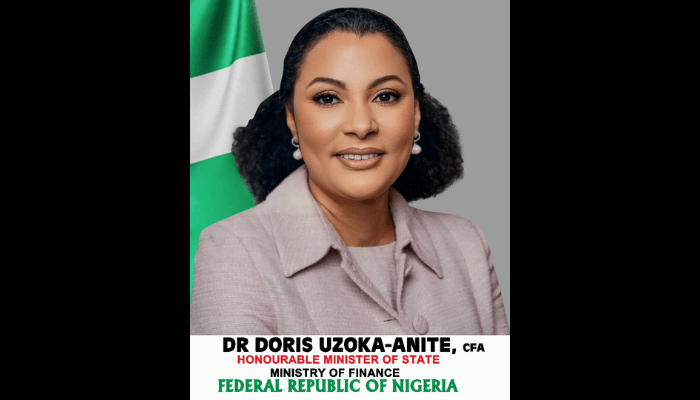
Speaking at the event, Doris Uzoka-Anite, Minister of State for Finance, reiterated the urgency of stopping the outflow of Nigeria’s wealth, especially in the form of aggressive tax avoidance by multinational corporations.

“Illicit financial flows are the hidden drainpipes of our national wealth. They fuel corruption and strip Nigeria of resources needed for schools, hospitals, roads, and jobs,” she said.
She highlighted that Nigeria loses roughly $18 billion annually to IFFs, with profit shifting and tax avoidance being major contributors. She described the ongoing reforms as a strategic pivot away from an oil-dependent economy toward one driven by sustainable tax-based revenues.
The minister unveiled a three-pillar strategy to tackle illicit financial flows, beginning with comprehensive policy and legislative reforms aimed at closing existing legal loopholes that enable financial crimes.
She also emphasised the importance of transparency and beneficial ownership disclosure, which would help expose hidden transactions and deter the misuse of anonymous corporate structures.
“The third component of the strategy focuses on leveraging digital intelligence and enhancing enforcement coordination to enable real-time detection and prevention of illicit financial movements.

“This is not the job of one agency alone. We are working hand-in-hand with the Central Bank of Nigeria, Economic and Financial Crimes Commission (EFCC), Nigeria Financial Intelligence Unit (NFIU), Customs, Corperate Affairs Commission (CAC), and other enforcement partners. It’s a whole-of-government and whole-of-society approach”, Uzoka-Anite said.
Earlier, Zacch Adedeji, Executive Chairman of the FIRS, described the growing threat of illicit financial flows as a “national emergency” that must be tackled with urgency, technology, and coordinated action.
“We are not just here to talk, but to act and to act decisively. Illicit financial flows are robbing Nigeria of its present and future. But with the right tools, the right will, and the right laws, we will track, return, and restore our stolen wealth”, Adedeji declared.
He emphasised that under President Bola Tinubu’s Renewed Hope Agenda, fiscal reform is now a national priority.
He noted that the recent signing of four tax reform laws by the President on June 26 was a clear indication of the Administration’s resolve to overhaul the country’s revenue system.
He announced that FIRS had launched an ambitious digital transformation initiative, including the creation of a Tax Intelligence and Analytics Department designed to conduct real-time data analysis, detect anomalies, and integrate information across platforms.
He added that a newly established Pursuit of Crime Management Unit would drive asset recovery and close systemic loopholes that allow IFFs to thrive.
In her keynote address, Irene Ovonji-Odida, a member of the African Union High-Level Panel on Illicit Financial Flows, called for African nations to challenge the international financial structures that facilitate capital flight from the continent.
She argued that Africa remains on the margins of global financial rule-making, participating only in enforcement but excluded from decision-making. Ovonji-Odida criticised a global system she said was built to favour wealth extraction from the Global South.
“Most so-called tax havens are not independent nations. They are overseas territories controlled by powerful Countries. And while African corruption is often blamed, the bigger story is about global systems enabling this financial haemorrhage”, she said.
She praised FIRS’s investment in technology as a key step towards building resilience, shaping narratives, and regaining financial control, and urged African Countries to reclaim their development models from externally-imposed neoliberal ideologies.
“Historically, development has been state-driven. But we’ve been told to step aside and let the private sector lead. Yet, the countries that achieved prosperity did so with strong public institutions”, she said.