As the monetary policy committee of Nigeria’s central bank meets on Tuesday to set interest rates, the world is watching with keen interest the economy of Africa’s most populous nation.
And some like The Economist see signs that the beleaguered economy of Africa’s sleeping giant is about to turn the bend.
Even if there is a cut, they are likely to remain high, as the country has been operating a tight monetary policy to bring down inflation.
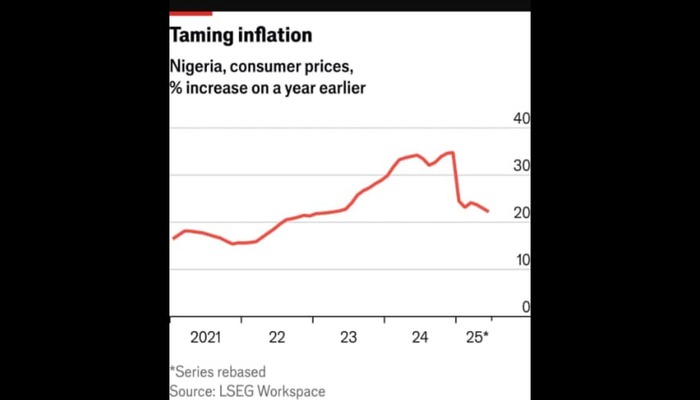
According to the Economist, the approach seems to be working: headline price growth fell for a third consecutive month to 22.2% in June, an almost two-year low.

After a tumultuous few years, Nigeria’s currency appears to be stabilising.
This comes despite a drop in the price of oil, the country’s main export.
The Nigerian all-share index is up 18% and some analysts expect remittance inflows to rise from $23.8bn last year to $25.3bn this year.
An oil refinery built by Africa’s richest man, Aliko Dangote, has reduced Nigeria’s costly dependency on imported petroleum products.
But there is room for caution: food prices have ticked up again. It will be a while before Nigerians feel better off.