|
Getting your Trinity Audio player ready...
|
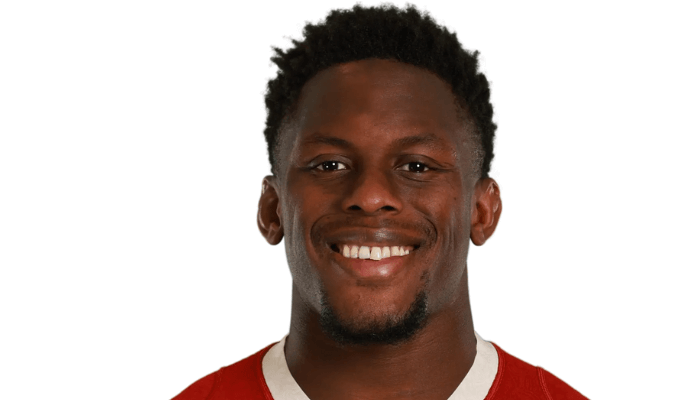
When Oghenemaro Miles Itoje was a boy, rugby wasn’t even on his radar. “Rugby is not the sport I grew up with,” he has said. “When I was one to eleven, I never dreamed of playing. I barely knew what rugby was at that point.” That unfamiliarity didn’t last long. Introduced to the game at St George’s School in Harpenden, the son of Nigerian immigrants quickly showed promise. A scholarship to Harrow followed, where Itoje honed the discipline that would become the cornerstone of his career. By 19, he was playing senior rugby for Saracens. And by 30, he was not just England captain but the first Black captain of the British & Irish Lions.
Itoje’s rugby journey defies convention. Born in Camden, North London, on October 28 1994 to Nigerian parents, he grew up in a home steeped in discipline and culture. His father, Efe, and mother ensured that he and his siblings remained strongly connected to their roots. “A lot of Nigerians are surprised at how much of the Nigerian food I eat, and how everything about Nigeria I’m aware of,” he said. “I’m still very in touch.” That cultural connection became a source of pride and inspiration for Itoje, shaping not just his worldview but his leadership style.
Read also: Once told he’d amount to nothing — now Chef Izu Ani owns some of Dubai’s finest restaurants
From 2005 to 2011, Itoje played youth rugby for Harpenden and then made the step up to the senior team at Old Albanians. It was there, under the guidance of volunteer coach Stuart Mitchell, that he learned how to channel his natural athleticism into something more purposeful. “Stuart was a massive influence in my formative years,” Itoje recalls. “He used to drive me all around the country wherever we had the games.”

He signed a professional contract with Saracens in 2012 and made his senior debut the following year. It didn’t take long for him to make his mark. Between the ages of 20 and 22, Itoje won five Premiership titles and three European titles with Saracens. His breakout season came in 2015–16, when he was named European Player of the Year.
Read also: Rugby School Nigeria to open Eko Atlantic City annex in September
The accolades came thick and fast. In 2016, Itoje made his debut for England during the Six Nations Championship. By the end of the tournament, he was a Grand Slam winner. Since then, he’s become a linchpin of the England team, known for his intelligence, breakdown dominance and composure under pressure. In July 2025, Itoje reached a milestone: 100 international Test caps—93 for England and 7 for the Lions. The same year, he captained England through a successful Six Nations campaign, with gritty victories over France and Scotland earning him his first Calcutta Cup as skipper.
But perhaps his most historic role came just months later. In May 2025, Itoje was named captain of the British & Irish Lions for the upcoming tour to Australia—making him the first Black player to hold that honour and the first Englishman to do so since Martin Johnson in 2001. It was a symbolic moment as much as a sporting one. Itoje had often spoken of how, growing up, he looked up to players who looked like him. One of them was Ugo Monye, also of Nigerian descent, who scored a famous try against South Africa in 2009. “When you’re young and growing up, you look at players that look like you,” Itoje said. “Ugo is one I could identify with.”
Read also: Rugby School Group to unveil new campus in Lagos

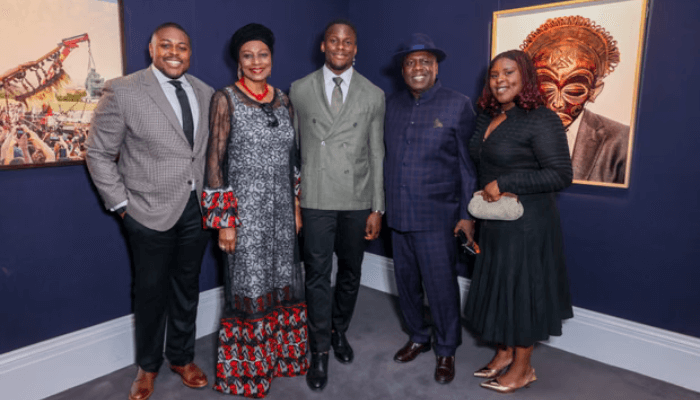
Off the pitch, Itoje is a multifaceted figure—an art lover, philanthropist, and advocate for African excellence. He co-founded the Akoje Gallery to promote African artists and launched the Pearl Fund, a charitable foundation aimed at tackling poverty among children in Nigeria and across the continent. After England’s 2019 Rugby World Cup final defeat to South Africa, he quoted a Nigerian proverb: “When a ram goes backwards, it is not retreating. It moves back to gather more strength.”
Itoje is also acutely aware of his place in history. “There’s only a small number of us who have contributed to the Premiership,” Ugo Monye once said. “We’re punching way above our weight.” Indeed, British-Nigerian players like Gabriel Ibitoye, Immanuel Feyi-Waboso, Beno Obano, and Nick Isiekwe are now making their own mark on the game—and many of them cite Itoje as a trailblazer.
Read also: What to know about Nigerian British actor Damson Idris
And it’s not just heritage that defines Itoje—it’s the consistency of excellence. In the 2024–2025 season, he led Tier‑1 nations in key metrics: 15 turnovers, 300 attacking rucks, and 137 defensive rucks. He played every minute of England’s Six Nations campaign and was praised by pundits and peers alike. He captains Saracens, captains England, captains the Lions. And he does so not with bluster, but with calm intellect and resolve.
“I want to be part of an England team that is winning trophies, that’s at the forefront of world rugby,” he said recently. With leadership roles across club, country, and continent-spanning teams, Maro Itoje is doing more than leading rugby—he’s redefining who gets to lead it.