Builders, investors, and those who want to store wealth in Eko Atlantic City must pay N2 billion, which is the current price of a plot of land in that city, a new report has stated.
The report, titled ‘The State of Lagos Real Estate Market,’ which was launched recently by the Roland Igbinoba Real Foundation for Housing and Urban Development (RIRFHUD), recalls that in the 2000s, a plot of land in the city sold for N180 million.
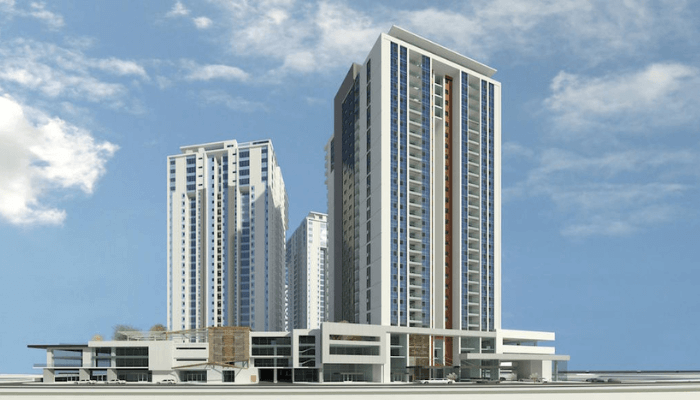
Eko Atlantic City, a meticulously planned, flood-protected, and high-security enclave, is an ultra-modern city rising on land reclaimed from the shorelines of the Atlantic Ocean adjacent to Victoria Island in Lagos.
It is a flagship development backed by strong demand from both local elites and international buyers. The city is described by its promoters as a future financial and tech hub, guaranteeing sustained demand.

The upward trajectory of land prices in the city reflects a common trend in the Lagos property market, which, according to the new report, now in its third edition, has over the last 10 years undergone a dramatic shift, transitioning from a landscape and premium investment space to a highly competitive one with more accessible entry points.
“This evolution is most vividly illustrated by the consistent and often exponential appreciation of land prices,” the report says, citing Ibeju-Lekki, where a plot was available for as low as N500,000-N1.5 million in 2013, before major development hubs like the Lekki Free Trade Zone began.
Land value surged to between N5 million and N10 million by 2018 as significant infrastructure projects commenced and, by the first quarter of 2025, the same land commanded prices between N25 million and N40 million, representing a potential 40-fold increase in value over a decade.
Similarly, plots in Lekki Phase 1, which were priced at N10 million – N15 million in 2005, are now valued at over N400 million – N500 million, while land prices in Eko Atlantic, which stood at N180 million per plot in the early 2000s, have also escalated to over N2 billion today.
Read also: Rugby School Nigeria to open Eko Atlantic City annex in September

The report explains that “this extraordinary appreciation underscores that real estate in Lagos has become a primary vehicle for wealth accumulation. The market’s dynamism is driven less by a pure housing need for the general populace and more by its function as a high-yield investment vehicle for the affluent, including a significant proportion of diaspora investors.
This establishes luxury real estate, where Eko Atlantic belongs, as a critical mechanism for wealth generation and preservation in Lagos, particularly for those with patient capital and a long-term investment horizon.”
On the key drivers of market appreciation and growth, the report states that the remarkable appreciation and growth in the Lagos luxury real estate market over the last decade can be attributed to several interconnected factors.
One of such factors is urbanisation. Another is population growth. The report notes that Lagos’ population has expanded rapidly, reaching nearly 24 million residents, with an annual growth rate of 2.5 per cent.
“The city experiences an influx of over 6,000 immigrants daily, with approximately 50 per cent choosing to remain, significantly intensifying the demand for housing across all sets, including luxury. The population is projected to exceed 25 million by 2025, further fuelling this demand.
“Despite the broader infrastructural challenges, individual luxury properties in Lagos are equipped with world-class features and amenities designed to meet international standards. These developments aim to create a self-contained, elevated living experience for their affluent residents,” the report says.
Eko Atlantic City, for instance, is being built with innovative infrastructure and transportation systems to support its growing population. The city will have its dedicated road network, as well as a light rail system that connects the different neighbourhoods. The transportation system will be designed to reduce traffic congestion and promote sustainable mobility.
The city, patterned after Manhattan in New York City, is designed to accommodate 250,000 residents, with 150,000 others commuting to the city daily.
It has become Nigeria’s most sought-after city for its high-end infrastructure, prestige and well-planned city layout as reflected in an eight-lane boulevard, 13 internal bridges, underground cables, and green footprints defined by over 30,000 trees.