Rash statements by Nigerian officials and those of Process and Industrial Development (P&ID) on the matter of a judgement debt of $9.6 billion dangling over Nigeria, threaten to reduce the issue to vaudeville. Except that it is deadly serious and could engulf more than a fifth of Nigeria’s foreign reserves.
We submit that the buck on this matter stops on the desk of Nigeria’s Attorney General and he must take charge and drive the narrative in the direction of the law instead of politics.
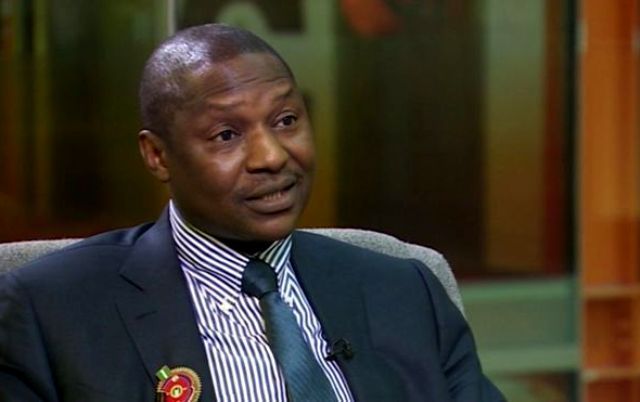
Abubakar Malami, Minister of Justice and Attorney General, in interviews with a foreign station shifted responsibility for the P&ID case to a previous government. He stated, “The government as a unit was delicately involved,” referring to 2010 administration, “the award was in 2012, and then three years after the current administration under the leadership of Muhammadu Buhari came into place. So, the time when this administration resumed in 2015, the award was over three years, there was no appeal, no application for execution, no application to set the award aside.”
As the minister surely knows, the government is a continuum. The matter concerns the Nigerian government, and he has served as the country’s chief law officer for five years now. The latest deliberations on the case happened in the pendency of his control over the ministry. He cannot and must not be allowed to pass the buck or deny responsibility as he has tried to do.

The political considerations on when and where the problem started is irrelevant. Deal with the current situation.
The $9.5 billion judgement underlines the importance of the sanctity of contracts. The Nigerian government has become notorious for failing to honour commitments into which it wilfully enters. It is not right for the country’s reputation. It is okay to seek a reversal of the judgement, but we must do this within the ambit of the rule of law and appropriate procedure.
Respecting the sanctity of contracts lies in observing process and requirements.
Nigeria must follow due process in the pursuit of this matter, including in potential application for the deployment of the silver bullet of a UK legislation that protects the country from any arbitrary seizure of our assets.
Accountability also at issue. For five years, the federal government never mentioned that there was such a contract between Nigeria and any player nor bothered to brief. The matter remained “confidential” until P&ID then got this humungous judgement amount.

Then there is the matter of the standing of our judiciary. Because Nigeria undermines its judiciary in several ways, many international partners no longer want to rely on the Nigerian court to resolve disputes.
The quality of bureaucracy is troubling. What manner of civil service is available to support the executive and what variety of counsel are they offering? There is no accountability for the egregious errors that attended this contract. No heads are rolling. Why so? Ignorance and incompetence at play.
While at it, Nigeria needs an inventory of cases involving it and contractors.
P&ID has also behaved strangely. Creditors hardly openly antagonise their debtors from whom they expect to collect payment. P&ID is doing so. They have been taking on key officials of the federal government in the media. Is it smokes and mirrors? Is it a diversion?
The way out is to engage. Tackle the matter in the courts and through direct engagement and negotiation, where necessary and feasible. The court of public opinion or trying to score points for the government now will not make a difference in the case. Nor would antagonising Britain. Deal with the legal, primarily.