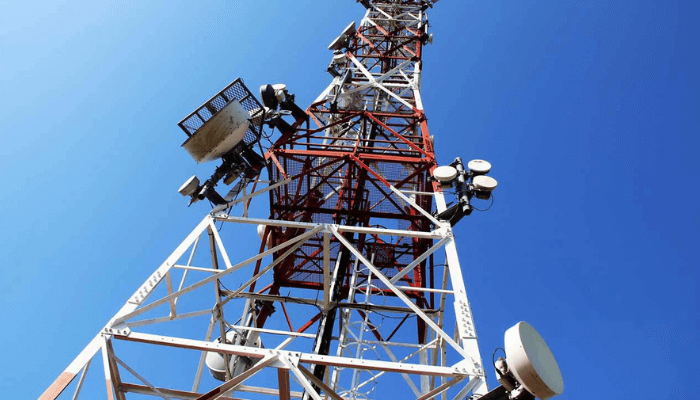
…As Continent eyes accelerated rollout in 14 more markets in 2026
Africa’s 5G rollout has reached a significant milestone, with 53 operators across 29 countries now offering commercial 5G services as of late 2025, according to the latest data from GSMA Intelligence.
The continent is poised for further acceleration, as operators in an additional 14 markets have committed to launching networks in the coming 2026 and beyond.
This expansion reflects growing momentum for fifth-generation wireless technology in Africa, where adoption remains early-stage but is accelerating amid surging data demand and evolving policy frameworks.

As of September 2025, 53 operators had activated commercial 5G mobile services across the 29 markets, with 25 of those operators also deploying 5G Fixed Wireless Access (FWA) to provide high-speed broadband in underserved suburban and rural areas.
Projections indicate Africa closed 2025 with approximately 54 million 5G connections, equating to just 3.8 percent of total mobile subscriptions. While penetration trails global averages, stakeholders see this as a solid base for scaling, especially with sub-$100 5G-compatible smartphones anticipated later this decade.
“5G momentum continues to build in Africa,” GSMA Intelligence noted in its Q2 2025 review, highlighting the rapid addition of markets and the dual focus on mobile and FWA services.
North Africa continues to lead with dedicated spectrum strategies enabling dense urban coverage.
Egypt remains the frontrunner, having generated over $700 million through 3.5 GHz auctions in 2024, allowing operators like Telecom Egypt, Vodafone Egypt, Orange Egypt, and Etisalat Misr to drive commercial deployments.

Tunisia and Morocco followed suit in 2025, with nationwide launches supporting high-density applications.
In Sub-Saharan Africa, a more gradual, multi-operator model prevails, often building on “4G-first” approaches while leveraging technology-neutral policies in markets like Kenya and Tanzania for spectrum repurposing.
South Africa, Nigeria, and others emphasize high-value use cases, including FWA targeting premium segments with monthly ARPU of $24–$32.
Read also: Festive demand, 5G, premium boom lift global smartphone shipments by 4% in Q3 2025
In Nigeria, a key Sub-Saharan market, operators like MTN and Airtel have prioritized 5G expansion despite affordability challenges.
MTN Nigeria, an early mover, has deployed over 2,100 5G sites and committed significant investments, including part of the group’s $3.5 billion five-year plan for the country.
Recently, MTN Nigeria launched unlimited 5G broadband plans, with Egerton Idehen, chief broadband officer, stating the move aims to “provide the necessary high-speed infrastructure to support contemporary Nigerian digital demands and enable customers to ‘Stay Limitless’,” addressing frustrations with capped data, costs, and instability for remote work, streaming, and gaming.
The Nigerian Communications Commission (NCC) has underscored ongoing progress, noting in early 2026 that “this expansion was underpinned by stronger network foundations, with 4G population coverage consolidating at about 85 percent and 5G expanding to roughly 13 percent of the population and continuing to grow.”
The regulator emphasised that these gains set the stage for rising digital expectations and reliability.
Challenges persist, however. As of mid-2025, only 16 African nations had allocated 5G spectrum, under 30 percent of the continent, versus over 90 percent in Europe.
Power instability affects 60 percent to 80 percent of towers, compounded by high diesel costs, though operators counter with solar hybrids (improving uptime 15 percent to 25 percent) and Energy-as-a-Service models (cutting costs 20 percent tl 40 percent). These efforts are laying groundwork for substantial economic gains.
GSMA forecasts 5G contributing $10 billion to Africa’s economy by 2030, powering fintech via secure slicing, telemedicine in healthcare, precision agriculture with IoT/drones, and industrial efficiency in mining and ports.
With Africa’s youthful population fueling data consumption growth, from 15.6 GB monthly in 2024 onward, and more markets gearing up, 5G is set to bridge gaps, spur innovation, and support a projected $712 billion GDP contribution from a mature digital economy by mid-century. As deployments accelerate, the technology promises to transform connectivity and drive Africa’s inclusive digital future.