Speed has emerged as a defining factor in the survival of many animals, shaping both hunting and defence strategies. From escaping predators to catching prey, swiftness offers species a critical advantage in the wild.
For countless creatures, it is the final line of defence against persistent threats in the food chain. Evolutionary pressure over centuries has produced animals of remarkable speed, adapted to thrive across varied habitats and ecosystems.
According to Britannica, these are the 5 fastest animals on Earth
The Cheetah (Acinonyx jubatus)
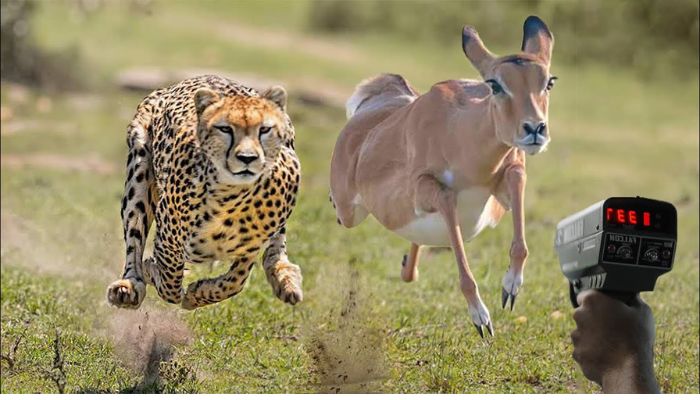
The Cheetah is the fastest animal on land. With its slender frame, long legs, and powerful muscles, the cheetah is created for explosive acceleration. Capable of reaching 71 miles per hour (97 to 114 km/h) in just under three seconds, this big cat holds the title of the fastest land animal on the planet. However, its incredible speed comes at a cost—it can only maintain this pace for about 20 to 30 seconds before overheating.

Read also: Every 24 hours, globally 3.4 to 6.5bn animals are killed for food-Report
The Pronghorn (Antilocapra americana)
The Pronghorn is the fastest Land Animal Over Long Distances. North America’s pronghorn may not match the cheetah’s explosive sprint, but it leaves nearly every other animal behind when it comes to endurance running. Often referred to as the fastest sustained runner in the animal kingdom, the pronghorn can maintain speeds of 35 mph (56 km/h) for several miles and reach bursts of up to 55 mph (88 km/h) when necessary.
Read also: Troops recover 900 rustled animals after fierce gun battle in Zamfara
The Black Marlin (Istiompax indica)
Underwater, the black marlin is the fastest fish. The black marlin slices through the sea like a torpedo. This large and powerful fish has been estimated to reach speeds up to 80 miles per hour (129 km/h), making it one of the fastest marine animals ever recorded. Its streamlined body and rigid pectoral fins help reduce drag and enhance propulsion. Another contender is the sailfish, with verified speeds reaching around 67 mph (108 km/h). These fish rely on their agility and speed to hunt schooling prey like sardines and mackerel, often launching out of the water in high-speed bursts.
Read also: Lion kills keeper in Ogun, Borno zoo struggles to recapture escaped animals

The Horse Fly (Tabanus trimaculatus)
Though tiny in size, the house fly is the fastest insect on earth known to science. In a 1970s lab experiment by C J Geden, one specimen was recorded flying at speeds approaching 90 miles per hour (145 km/h)—an astonishing feat for such a small creature. However, because this was under experimental conditions, some entomologists debate its relevance in the wild.
Other insects, like dragonflies and hawk moths, are also swift fliers, but few come close to the horse fly’s speed. Their quick movement is often necessary for evading predators and seeking mates over large distances.
The Peregrine Falcon (Falco peregrinus)
When it comes to raw speed, the peregrine falcon is in a class of its own. During a hunting stoop (a high-speed dive), it can reach speeds over 185 miles per hour (298 km/h)—making it the fastest animal on Earth. Peregrines achieve this through aerodynamic body shapes, specialised feathers, and strong chest muscles.
In level flight, other birds take the lead. The white-throated needletail swift is considered the fastest bird in powered, horizontal flight, clocking in at around 105 mph (169 km/h). The golden eagle and Eurasian hobby also showcase impressive speeds during dives and chases, often exceeding 100 mph (160 km/h).