…calls for objective criticisms backed with facts
The Nigeria Presidency, on Thursday, called for objective criticisms of President Bola Tinubu’s Administration, backed with facts and figures, adding that no fewer than 396,000 students benefited from students’ loan and 250,000 business men and women benefited from MSME loans.
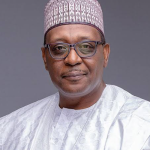
Sunday Dare, Special Adviser to the President on Media and Public Communications, in a statement which he put up to react to the Editorial of a Major National Newspaper (Not BusinessDay), noted that issues treated by the publication portrayed an “exaggerated and unbalanced portrait of Nigeria as a nation overwhelmed by hunger, hardship and helplessness”.
Dare, who noted that Presidency is not surprised by the newspaper’s opinion, as it “has consistently and deliberately misinformed its readers about the Government’s policy”, noted that “The Tinubu Administration believes in the right of the media to offer constructive criticism, but it must be anchored on facts, not distortion or selective pessimism.”

He noted that while the Tinubu Administration would not deny that “some of our citizens face economic challenges, it is essential to separate honest concern from exaggerated pessimism and generalisation, the Tinubu administration is not indifferent to the genuine concerns of the people. The irony is that what is often criticised today are, in fact, the policies that will ensure that Nigerians have a more secure, stable and prosperous future.
“President Bola Ahmed Tinubu is not indifferent to Nigerians’ difficulties. On the contrary, he is taking deliberate, targeted steps—many already yielding results—to reset our economy from a legacy of consumption without productivity, opacity without accountability, and policy that served the powerful, not the people”.
Presidency noted that the UNICEF “prediction” that from April 2025, 33 million Nigerians, including 16 million children, would face hunger, was widely cited but wrongly interpreted.
“What was presented was not a UNICEF-specific report but the Cadre Harmonised Food and Nutrition Insecurity Analysis, jointly prepared by the Federal Government of Nigeria, FAO, WFP, and UNICEF. It is not a current count, but a worst-case projection for the June–August 2025 lean season, assuming no mitigation actions by Government or partners”.
He noted that in response, the Tinubu’s Administration introduced measures to among others, ensure that “over 42,000 metric tons of grains were released from federal strategic reserves; 117,000 metric tons were under additional procurement; the President activated the Food Security Council; emergency nutrition support was scaled up in Borno, Yobe, Adamawa, Katsina, Sokoto, and Bauchi States.

Presidency, while describing malnutrition as a “serious national concern, but let’s not localise it as a “Northern Nigeria” crisis. Since 2020, COVID has disrupted the global food system, worsened the Russia-Ukraine war, and is now aggravated by conflict in the Middle East.
“According to the World Bank’s April 2025 Food Security Update, over 1.4 billion people worldwide are under food stress, a problem that is not unique to Nigeria.
He noted that the editorial’s use of the term “worthless naira” is false and misleading.
“Since hitting a low of ₦1,800/$1 in March 2024, the naira has rebounded strongly due to Increased oil receipts and remittances, Restoration of investor confidence, Unification of the FX window, Reduction of FX backlog by over $4 billion (CBN data, May 2025)
“As of August 1, 2025, the naira traded around ₦1,525/$1, a sizable appreciation since its lowest ebb. Nigeria’s FX reserves are stabilising, and foreign portfolio inflows are picking up after major reforms in the monetary and fiscal space.
“The naira has not collapsed—it has been corrected and is now recovering. Yes, this administration is listening – And Acting on viable Recommendations, not the ones driven by anger and ambition.
“We welcome suggestions such as suspending VAT on food, reducing taxes on drugs and medical equipment, and easing the tax burden on MSMEs. The Federal Ministry of Finance and the Fiscal Policy and Tax Reforms Committee are working on many of these.”
He reiterated that “starting from January 2026, the new tax reforms will streamline over 60 overlapping taxes into fewer, manageable channels. Eliminate nuisance taxes that burden small businesses. Create exemptions for essential goods, including some food and medical items. Encourage state-federal tax harmonisation to stop multiple taxation.
“The President works closely with State Governors through the National Economic Council (NEC) to implement immediate local tax reliefs, VAT waivers, and food market stabilisation efforts in each state.
“The National Home-Grown School Feeding Programme serves over 9.8 million children in 53,000 schools across 36 states and the FCT.
“Over 200,000 cooks and local farmers are engaged in the programme, which is being digitised for transparency and efficiency. The Federal Government has not abandoned the programme.
“On the broader safety net, three million vulnerable households have received ₦75,000 each under the Renewed Hope Conditional Cash Transfer, with plans to scale up to 15 million households. As of August 7, over 396,000 students now benefit from NELFUND tuition loans and stipends.
“The Presidential MSME Grant Scheme has disbursed funds to over 250,000 businesses in 2025, supporting small and medium-sized enterprises despite the outcry on CBN interest rates”, he noted.
Presidency, while noting that the global food prices are also driving local pains, added that Nigeria is however, responding. “The FAO Food Price Index (June 2025) shows global food prices remain 22% above 2019 levels”, he added.
Presidency cited countries like Kenya, Ghana, Pakistan, and Sri Lanka, that are also struggling with food price inflation, noting that “Nigeria, under President Tinubu, is actively mitigating this global shock, by rolling out the following measures: State of Emergency on Food Security; Invested ₦200 billion in dry-season and all-year farming”.
He also noted that the government targeted 500,000 farmers for input support in 2025; Launched the National Commodity Board to regulate food price volatility; Introduced transport subsidies to cut logistics costs for food.
“The President is not acting in isolation. Joint State-FG food distribution plans are being implemented through ongoing engagements with State Governors, LGAs, development partners, and civil society. States have received direct cash support and grants for local market stabilisation”, he said.
According to him, the government is also coordinating ongoing to scale up nutrition interventions, including micronutrient support for women and children.
“We also acknowledge that hardship is uneven across regions. However, Nigeria is one country, one people, and the fight against hunger is a collective effort, not a northern, southern, Christian, or Muslim issue.
“Let’s speak the truth. Yes, Nigerians are belt-tightening, but Nigeria is healing. The economic surgery undertaken by President Tinubu is not without pain, but it is yielding green shoots.
“To those who ask, “Where is the hope?” We say hope is in the stabilising naira, in three million families lifted by direct transfers, and about 400,000 students now schooling without fear of paying fees. Hope is in the 500,000 farmers sowing into a new food system. Hope is in a government that is finally treating poverty not as a slogan but as a solvable problem”, he explained.
He also noted that only recently, the Tinubu’s administration launched an effort to drive grassroots economic growth and poverty reduction across Nigeria,with the approval of ward-level development strategy called the Renewed Hope Ward Development Programme (RHWDP).
” This initiative, which was endorsed by the National Economic Council (NEC) during its 150th meeting, is part of the President’s broader Renewed Hope Agenda, which aims for a $1 trillion economy by 2030.
“Key aspects of the RHWDP include: Targeting all 8,809 wards in Nigeria: The programme is designed to reach every administrative ward, ensuring that no community is left behind in national development efforts.
Focus on key development areas: It aims to serve as a coordinated intervention framework focused on poverty alleviation, food security, rural infrastructure, power supply, and job creation.
“This administration does not ask for silence in the face of hardship. It asks only for fairness and a shared commitment to rebuilding this country, not just exaggerating its pain. This is what President Tinubu expects from all Nigerians and well-wishers of our country”, he concluded.