Leading sports merchandising outfit Adidas fears a decline in sports products sales during the FIFA World Cup finals, starting in 34 days.
The global sports goods manufacturing giants are worried about the feared decline in sales during the quadrennial football gala amid controversies and geo-political tensions surrounding the host nation.
FIFA World Cup in Russia 2018 will feature 32 nations for the sport’s most coveted title.
Kasper Rorsted, Chief Executive of the German multinational sports manufacturers Adidas in a recent interview on CNBC has confessed that they are expecting a commercially less strong world cup this year.

Asked whether the ongoing geo-political tensions between Russia and other countries will result is sales slump especially after investing a huge chunk around World Cup, Rorsted said, “I think a normal football fan is less impacted by such tensions and Russia will have a very strong show this world cup, but it will be commercially less strong world cup edition.
“However, from the brand’s point of view, it is still going to be the most viewed event in the world of sports irrespective of where it is happening. We are still expecting strong performance from our 12 teams in Russia. Even though with less commercial upside, but brand wise, it will be a very strong experience for us in Russia and I hope Team Adidas wins the world cup.”
In the first quarter, Adidas reported a strong double-digit growth in North America despite 6% slump in sports apparel sector and rivals Under Armour and Nike which saw no growth at all. The German brand has said that the online segment, North America, and China continue to be their key growth drivers with 27%, 23% and 26% growth in the respective seasons. Japan and South Korea remain slow-growth areas.

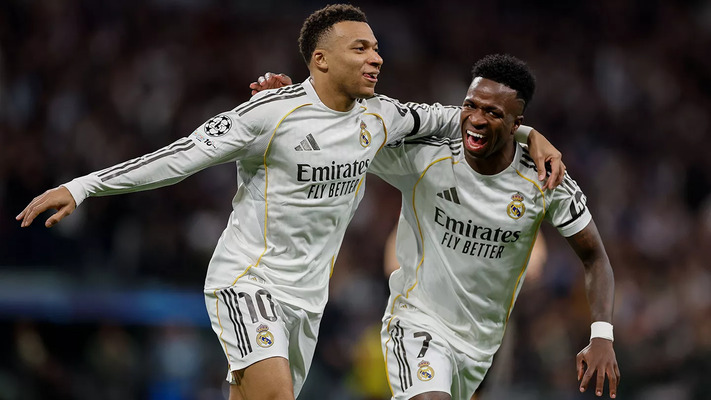
Adidas’ strong football market includes partnerships with FIFA, UEFA and their respective events FIFA World Cup, UEFA EURO 2012 and 2016, UEFA Champions League; national federations such as reigning FIFA World Cup champion Spain, Germany, Argentina, Russia, Mexico, Japan, Denmark, Greece; top leagues such as Major League Soccer in the USA); clubs (e.g. Real Madrid, AC Milan, Chelsea FC, FC Bayern Munich) and individual players (e.g. three-time FIFA World Player of the Year Lionel Messi, Xavi, Thomas Müller, David Villa, Nani, Robin van Persie and David Beckham).

The build-up to 2018 edition of the World Cup has been marred by various controversies and countries taking a tough stance against Russia because of rising geo-political tension. The choice of Russia as a host nation has remained controversial since they last hosted the 2014 Winter Games at Sochi. Controversial issues have included the level of racism in Russian football, and discrimination against LGBT people in wider Russian society among several other issues.
Russia’s involvement in the ongoing conflict in Ukraine has also caused calls for the tournament to be moved, particularly following the annexation of Crimea. In 2014, FIFA President Sepp Blatter stated that “The World Cup has been given and voted to Russia and we are going forward with our work”. The same stance has been followed by the current president Gianni Infantino.
The host nation has also faced allegations of corruption in the bidding processes for the 2018 and 2022 World Cups caused threats from
England’s Football Association has threatened to boycott the tournament after the allegations of corruption in the bidding processes for the 2018 and 2022 World Cups. The British PM in response to the March 2018 poisoning of Sergei and Yulia Skripal, has announced that no British Ministers or members of the royal family would attend the World Cup, and issued a warning to any travelling England fans.
Sergei is a former Russian military officer and British spy who acted as a double agent for the UK’s intelligence services during the 1990’s and early 2000’s, until his arrest in December 2004. On March 4, 2018, he and his daughter Yulia were poisoned in Salisbury, England. Later in March, the British government accused Russia of attempted murder and announced a series of retributive measures against Russia, including the expulsion of diplomats.
Country like Iceland, considered a friendly and politically neutral country for many years, has decided to diplomatically boycott the Russia-held 2018 FIFA World Cup.
Adidas and Nike will be producing team jerseys of majority of qualified teams. Other manufacturers include Umbro, New Balance, Puma and Errea.
Anthony Nlebem