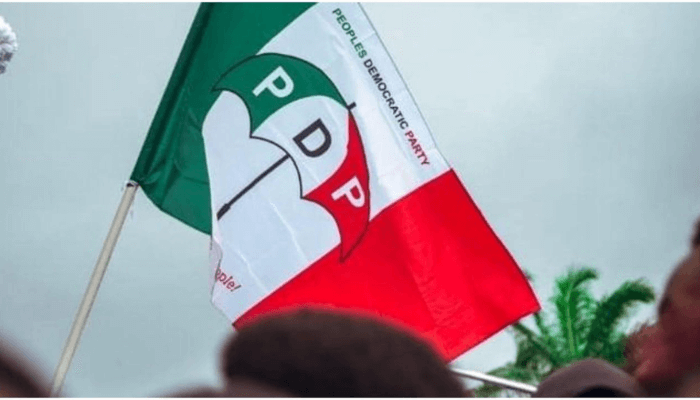
The race for the 2027 presidential ticket of the Peoples Democratic Party (PDP) became clearer last week after the National Executive Committee (NEC) officially zoned the slot to the South, ending months of speculation over the party’s direction.
At its 102nd meeting in Abuja, the NEC also confirmed Umar Damagum as substantive national chairman.
The move was described by Debo Ologunagba, national publicity secretary as “a corrective step to restore fairness.”
Speaking after the meeting, another member of the party told our correspondent that the decision “is about equity and balance. It is to assure Nigerians that the PDP remains a party of justice. We do not want a repeat of 2023 when the party fractured because we ignored zoning. It’s a way forward.”

Read also: ADC will rescue Nigeria from current state of abyss
Already, three names dominate conversations about who might emerge from the southern bloc.
Prominent among them is former President Goodluck Jonathan, whose return has been the subject of speculation for months.
Jonathan, who left office in 2015 after a bruising defeat, retains broad appeal across both northern and southern political circles.
Within the PDP, he is viewed as a unifying figure, someone who could rally disparate factions and even draw sympathy votes from beyond the party’s traditional base. His reluctance to declare openly has not stopped top party leaders from wooing him. However, he faces a challenge with Section 137(3) of the 1999 Constitution, which was amended after a court judgment that allowed him to run in 2015. The section says that anyone sworn into power twice cannot contest the same position again.

Equally significant is Governor Seyi Makinde of Oyo State, whose star has risen steadily in the party.
At just 57, Makinde represents a younger generation of PDP leadership. Posters bearing his image have already appeared in parts of the country, signaling the ambition of his loyalists.
But Makinde’s allies insist the governor has not declared interest.
A close confidant, who pleaded anonymity, told BusinessDay, “Governor Seyi Makinde is very capable and if he wants to run for any political office, he’s very free to do so.
“I am close to him, and he hasn’t personally told me of such an ambition. For now, all that people are saying are mere speculations and permutations.
“But he is eminently qualified, a man of integrity, and if he chooses to contest, he will make it known himself.”
Also in the mix is former Anambra governor Peter Obi, whose 2023 run under the Labour Party electrified young voters and reshaped Nigeria’s electoral map.
Though still tied to his third-force politics, Obi has kept close contacts within the PDP, fueling speculation that he could stage a return.
Zoning the ticket to the South has effectively cleared the path for him should he choose to contest under his former party’s platform.
Read also: 2027: I will contest the ADC presidential primary, won’t step down for anyone – Amaechi
Among those whose names have been whispered in political quarters is Seriake Dickson, former governor of Bayelsa State and the senator representing Bayelsa West.
But Dickson has firmly distanced himself from the speculation.
In a candid response to reports linking him to the race, Dickson told our correspondent: “This is an unfounded rumour. I’ve not even been in the country. Nigerians can speculate rubbish.
“There is speculation that my oga, former President Goodluck Jonathan, is interested.
“So why should my name come up here? I have not told anybody I am interested. What I am thinking of is going back to the Senate, because my people want me to continue.
“Not that I’m not qualified to run for presidency, but this is not something I am considering.”
Dickson’s firm denial narrows the field but also reflects the ripple effect Jonathan’s possible entry has caused in the South-South.
Another name gaining traction is that of Governor Peter Mbah of Enugu State.
Since assuming office in 2023, Mbah has projected himself as a reformist.
His allies have flooded the media with testimonials of his governance style, branding him the ‘Talk and Do’ governor. Though, like others, he has not declared interest, Mbah’s growing national profile has placed him among potential aspirants.
PDP’s gamble
Beyond personalities, the zoning decision is a gamble for the PDP.
Supporters argue that it restores the party’s founding ethos of balance and inclusion.
Read also: APC wins 20 LGs, PDP 3, in Rivers council polls, as state eyes end to emergency rule
As the country looks ahead to 2027, the PDP’s gamble on zoning to the South is both a nod to history and a test of survival.
Whether it produces a statesman like Jonathan, a generational voice like Makinde, or a populist force like Obi, the choice will not only shape the party’s chances at the polls but also signal how Nigeria’s oldest opposition party intends to reinvent itself in an era of shifting loyalties and rising discontent.
Dissenting voice
Gbenga Olawepo-Hashim, a former presidential aspirant, described the PDP zoning exercise as unconstitutional.
In an interview, he argued: “Nigeria doesn’t need zoning to produce a competent president. What the PDP has done is an elite conspiracy, not democracy. We will appeal this to the convention because zoning is not in the constitution of the Federal Republic. It is a mockery of internal democracy.”