…lREV must be legitimated, security forces must be neutral- Odion-Akhaine
As preparation for the 2027 general election begins in earnest, one issue that has remained a major concern to the average Nigerian and political stakeholders is how credibility can be restored to the nation’s electoral process.
For now, the controversy that trailed the conduct of the 2023 general election and recent off-cycle polls in states like Kogi, Imo and Edo, indicates a significant decline in public confidence in the Independent National Electoral Commission (INEC).
Many stakeholders have called on the National Assembly to expedite action on the amendment of the Electoral Act currently before it. The slow process has led to increasing agitations, with many fearing that it could be deliberate.

For pundits, reforming the nation’s electoral process to restore sanity, regain the confidence of Nigerians and strengthen democracy was crucial ahead of the next round of national polls.
There was so much optimism in the run-up to the 2023 general election because of promises made by INEC that there would be transmission of results to the INEC Result Viewing Portal (IReV) in real-time on Election Day.
“There is no going back on the transmission of results to the INEC Result Viewing Portal (IReV) in real-time on Election Day.” Mahmood Yakubu, INEC Chairman had said on October 26, 2022.
Following this assurance, many Nigerians, who had earlier given up, geared up for the election. Among others, a report by socioeconomic research firm, SBM Intelligence revealed that 43% of Nigerians eligible to vote in the 2023 general election were first-time voters, youth who were pregnant with hopes of a transparent, free, and fair election that would be electronically transmitted from the polling units to the Results Viewing Portal (IReV) for the world to monitor in real-time.
However, the rude shock came on Election Day when the commission abruptly abandoned its promises by failing to deploy these technologies optimally, on the premise that they suddenly developed faults.

Stakeholders say ahead of 2027, sweeping reforms were urgently needed in the conduct of elections; they noted that perhaps, the current crisis was responsible for systemic bad governance and lack of accountability among political leaders in the country.
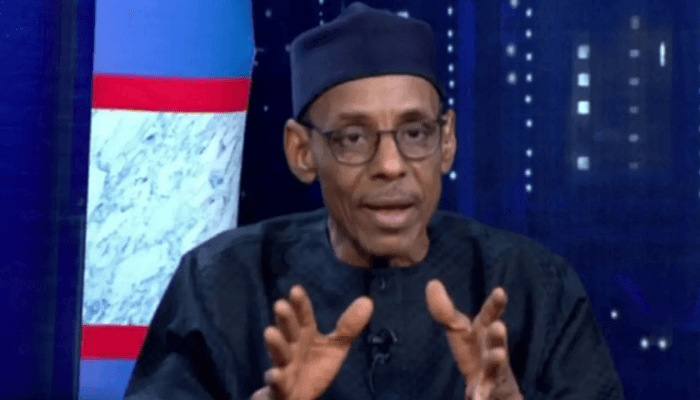
Speaking with BusinessDay, Sylvester Odion-Akhaine, a professor of political science, Lagos State University (LASU), said if the country was serious about conducting credible election in 2027, the first step to be taken was for the Electoral Act to be amended for the transmission of election results through lREV.
Read also: What would decide Nigerians votes in 2027 election, by Muhammad-Baba
Pointing to recently held off-cycle elections, the professor argued that security agencies were having too much influence in the conduct of elections in the country, saying that there must be a way to guarantee their neutrality.
According to him, “lREV must be legitimated in the Electoral Act by way of amendment. The real-time release of results will be the icing on the cake.
“There must be a way to guarantee their neutralisation of the security forces. “They are currently tools in the hands of the executive.
“Simultaneously, the judiciary needs to be reformed to avoid non-participants in the electoral process being imposed on the people.”
Similarly, also speaking with BusinessDay, Dipo Olorunwale, political analyst, said the country’s inability to prosecute electoral offenders was a major setback to free and fair polls. He warned that the current impunity is likely to continue in 2027.
“People are doing these things because there is no one that has been arrested and jailed. Look at what happened in Lagos State in 2023 where people were beaten and threatened from coming out to vote and nothing happened. It would happen again in 2027, nothing would happen,” he said.
He further called for voter education and electronic transmission of results in the 2027 polls.
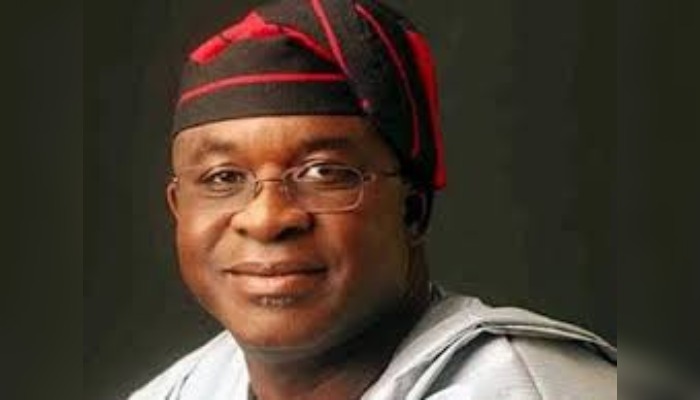
Such views were further highlighted by former president, Goodluck Jonathan in a speech some days ago, Jonathan argued that the main problem was the process of appointing the INEC chairman.
While acknowledging progress since the return to democratic rule in 1999, he highlighted persistent flaws in the electoral system.
Jonathan called for a review of the process for appointing the INEC Chairman, recommending that an independent panel, composed of representatives from the judiciary, civil society, academia, trade unions, and professional bodies, should handle screening and nomination.
“Nigeria has made notable progress since our return to democratic rule, but we must acknowledge that our electoral system still faces significant challenges. If we are truly committed to democracy, we must be bold enough to reform the process to better reflect the will of the people and the principles of justice, accountability, and inclusion,” he said.
“Credibility of elections rests heavily on the neutrality and competence of the independent National Electoral Commission. So many questions have continued to be raised on the propriety of the process of appointing the INEC Chairman.
“I believe that Nigeria can also improve the process by establishing an independent screening and nomination mechanism.
This reform will reduce perceptions of bias, it will promote public trust in INEC, and enhance the legitimacy of its decisions,” Jonathan further said.
On the issue of political defections, Jonathan criticised the increasing practice of “cross-carpeting,” where elected officials abandon the parties under which they were elected, often without ideological justification or accountability.
“Parties are the foundation of any democracy, but in our context, they have become vulnerable to opportunism and instability,” he said.
Speaking further, he said: “We have seen a disturbing rise in the practice of cross-cupping — elected officials defecting from the parties under which they were elected. To remedy this, we should strongly consider the establishment of an independent Office of the Registrar of Political Parties charged with regulating party operations, promoting internal democracy, and enforcing party discipline,” he said.
He explained that such registrar would have the authority to declare the seat of any defector vacant. He noted that similar systems have worked in Kenya and Malawi, affirming the principle that the electoral mandate belongs to the people and not to individual ambition.
Jonathan also stressed the need to resolve all post-election disputes before the swearing-in of elected officials, warning that unresolved cases disrupt governance and erode public confidence.
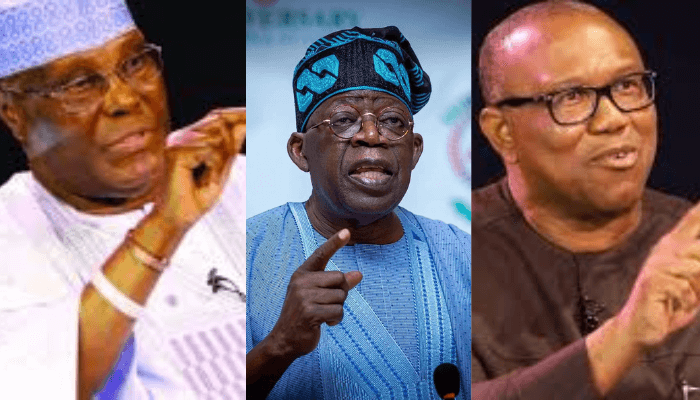
Also speaking in a similar vein, Atiku Abubakar, former Vice President called for urgent electoral and judicial reforms, warning that democracy in Nigeria is at risk if the judiciary continues to determine electoral outcomes, instead of voters.
Atiku stressed that reversing the decline in voter confidence required a review of key provisions of the Electoral Act.
He proposed that the appointment of INEC leadership should be determined through a voting system, not solely by presidential nomination, to ensure credibility.
The former Vice President added that the burden of proof in election petitions should be shifted to INEC, which must show that it complied with the law, rather than placing the responsibility on petitioners.
Quoting legal expert Chidi Odinkalu, a professor, Atiku warned against leaving the legitimacy of leadership in the hands of judges.
He recalled Odinkalu’s book ‘The Selectorate: When Judges Topple the People’, which raised concerns about judges being the ultimate deciders of electoral outcomes.
“The task ahead is to ensure that Nigerians freely choose their leaders at the ballot box without fear that their mandate will be overturned in court,” Atiku said.
Speaking recently on the efforts to amend the Electoral Act ahead of 2027 polls, Samson Itodo, Executive Director of Yiaga Africa, stressed the importance of concluding the electoral reform process well ahead of the 2027 elections.
“The timely conclusion of the reform process is critical. The National Assembly set a timeline for this but has failed to meet its own deadline,” Itodo said.
“The current state of our electoral process is fragile because relevant actors have failed to take meaningful steps to strengthen it,” he further said.
“Due to economic hardship, the 2027 elections could become the most monetised in Nigeria’s history,” he added.
“Vote-buying, especially through food inducement, is a real threat to electoral credibility. Nigeria has a history of fraudulent and controversial polls that have dented the credibility of elections, affecting public confidence in the process,” he pointed out.
Pundits say this was majorly responsible for the apathy seen in elections in the last two decades.
In Nigeria, most election results are disputed by politicians and challenged at the tribunal and court, which eventually determine the outcome and winners.