With less than two years to Nigeria’s next general elections, the contours of the 2027 presidential contest are gradually coming into view. Political analysts agree that while character, competence and economic literacy should be central to voters’ choices, elections in Nigeria are rarely decided on ideals alone. Instead, long-standing political fault lines, entrenched power blocs and the calculations of influential king makers are already shaping the emerging battle for Aso Rock.
Commentators insist that Nigerians must weigh integrity, sound knowledge of domestic economic affairs, international credibility and physical fitness when evaluating presidential hopefuls.
Read also: 2027 elections: Gambari urges stronger democracy, unity, security in Nigeria
Equally important, they argue, is the political will to tackle Nigeria’s most pressing challenges, including insecurity, unemployment and corruption. Yet, history suggests that structural realities, rather than lofty expectations, often prove decisive.

Fault lines
Perhaps, the most enduring fault line in Nigeria’s politics is the principle of rotational presidency. Introduced in 1999 by the People’s Democratic Party (PDP), zoning created an unwritten agreement that the presidency should alternate between the North and the South. Over the years, the arrangement has gained wide acceptance across political parties and has become a powerful determinant of electoral outcomes.
The 2015 election is often cited as a turning point. Former President Goodluck Jonathan and the PDP are widely believed to have lost largely because of pressure from the party’s northern bloc, which argued that it was the North’s turn to reclaim power.
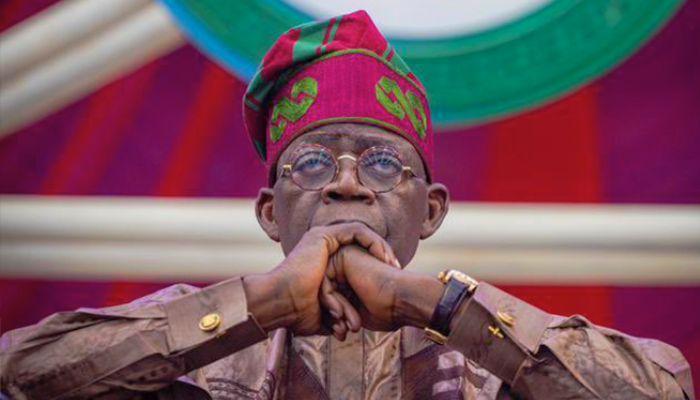
Similarly, analysts maintain that President Bola Tinubu’s victory in 2023 reflected the prevailing view that the presidency should return to the South after eight years of northern leadership.
That same logic now underpins the crisis within the PDP. The party’s decision not to zone its 2023 ticket to the South is seen as a major trigger of its internal discontent, prompting a reversal ahead of 2027. The PDP has since resolved to zone its next presidential ticket to the South in an attempt to stabilise the party and restore internal balance.

The newly formed African Democratic Congress (ADC), which is operating as a coalition platform, is facing a similar dilemma. As preparations for 2027 intensify, the party is struggling to reach a consensus on which region should produce its presidential candidate.
Katchy Ononuju, a public affairs analyst and director-general of the Heritage Centre, Abuja, believes the presidency should remain in the South until 2031. A chieftain of the ADC, Ononuju argues that zoning the ticket to the South is the only realistic way for the coalition to defeat President Tinubu.
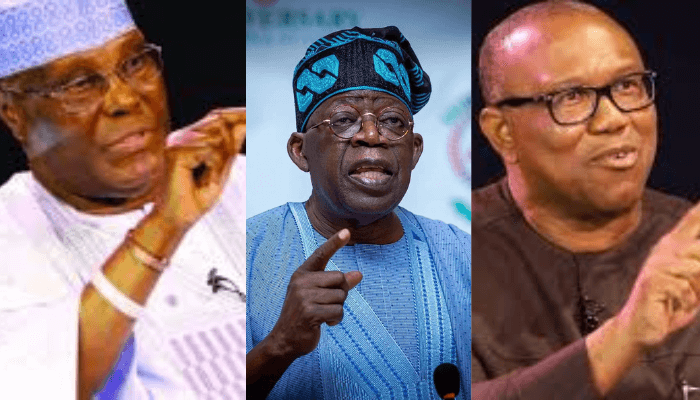
Former Vice President Atiku Abubakar, former Rivers State governor and ex-transport minister Rotimi Amaechi, and Peter Obi, former Anambra State governor and Labour Party’s 2023 presidential candidate are widely regarded as frontrunners for the party’s ticket.
Read also: Nigeria’s democracy under strain as politicians shift focus to 2027 elections – Itodo
The zoning debate has exposed sharp divisions within the ADC. However, Bolaji Abdullahi, the party’s national publicity secretary, said the coalition was pursuing a consensus approach, which Atiku has rejected. He noted that if consensus fails, aspirants would contest party primaries. Abdullahi stressed that the party’s immediate priorities lie elsewhere, adding that “when we get to that bridge, we will cross it,” while emphasising ongoing efforts to build structures nationwide.
For Sam Amadi, director of the Abuja School of Social and Political Thoughts, the opposition’s inability to unite may have cost it a clear opportunity to defeat the ruling All Progressives Congress (APC) in 2023.
According to him, 2027 presents another chance, but only if opposition figures can overcome internal rivalries. He argued that “the first thing is to perhaps, create a unified opposition,” adding that they can defeat the APC if they remain together and communicate a message that resonates with ordinary Nigerians.
Despite the advantages of incumbency, President Tinubu’s re-election prospects face mounting pressure. Economic hardship and unpopular policy choices have weakened public confidence. Central to the controversy is the new tax regime that took effect from January 1, 2026. The administration has been hit by credibility concerns following revelations that the tax laws passed by the National Assembly differ from the versions signed into law and gazetted.
A report by KPMG confirmed the existence of “errors, inconsistencies, gaps, omissions, and lacunae” in the documents, triggering widespread calls for reconsideration. The president’s insistence on the January 1 take-off has fuelled fears that revenue ambitions are being prioritised over citizens’ welfare.
BusinessDay checks also suggest that the administration may face renewed backlash over the Moslem-Moslem ticket adopted in 2023, an issue the opposition is seeking to exploit to gain support among Christian voters. Accusations of nepotism and lopsided appointments favouring the South-West have further complicated the political climate, despite strong denials from the president’s media team.
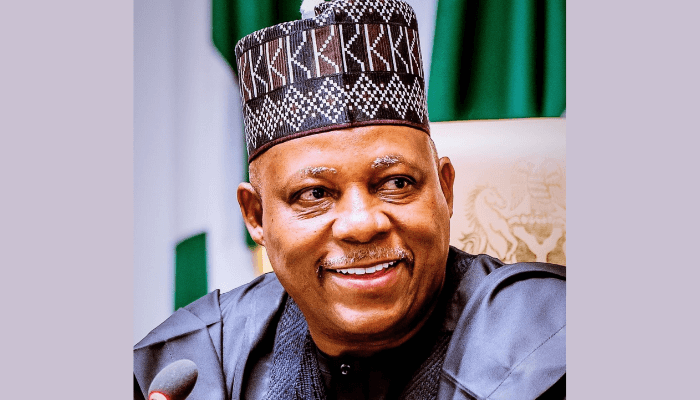
Within the APC, opposition figures are watching for signs of internal implosion as disaffection grows over unfulfilled promises. Speculation around the possible replacement of Vice President Kashim Shettima, though reportedly dropped, has added to uncertainty. The alleged overbearing role of the Minister of the Federal Capital Territory, Nyesom Wike, is also seen by some party loyalists as a double-edged sword, with calls mounting for his removal from the cabinet.
Influence of power blocs
The North is still regarded as a critical electoral force, but analysts increasingly question the durability of the once-assumed 12-million-vote bloc associated with former President Muhammadu Buhari. Results from the 2023 election suggest a more fragmented political landscape.
President Tinubu won the election with 8,794,726 votes, representing 36.61 percent of the total. Atiku Abubakar followed with 6,984,520 votes, or 29.07 percent, while Peter Obi polled 6,101,533 votes, winning 11 states, including Lagos and the Federal Capital Territory, and securing 25.40 percent.
Regional patterns reveal shifting allegiances. Tinubu dominated the South-West with 54 percent, while Atiku and Obi polled 22 percent and 20 percent respectively. In the North-West, Tinubu recorded 39 percent against Atiku’s 35 percent. Atiku swept the North-East with 51 percent, while Obi dominated the South-East with 88 percent and led in the South-South with 42 percent.
Read also: 10 African elections that will shape 2026
Overall, Tinubu drew 38 percent of his votes from the North and 34 percent from the South. Atiku secured 36 percent from the North and 19 percent from the South, while Obi drew 44 percent of his support from the South.
INEC data shows that youths make up about 40 percent of Nigeria’s 93.4 million registered voters, highlighting their growing influence. With 8,809 wards, 774 local governments and 176,846 polling units nationwide, grassroots mobilisation remains decisive.
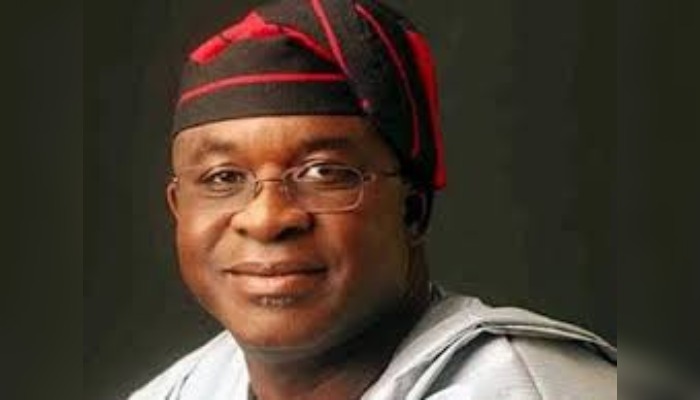
The rapid spread of the ADC into traditional APC strongholds such as Yobe, Gombe and Kebbi could reshape voting patterns. Figures like David Mark, Rauf Aregbesola and Peter Obi are seen as driving this expansion. In Kano, Rabiu Kwankwaso remains a prized political asset courted by multiple parties.
The influence of the Obidient movement, speculation about drafting former President Goodluck Jonathan, and the APC’s strategy of consolidating power through mass defections of governors are all key variables.
The ruling party is reportedly targeting control of 28 states, believing it would ease its path to victory. From the 20 states it won in 2023, the APC has already expanded its reach through high-profile defections, setting the stage for an intense contest in 2027.
Kingmakers’ role
Beyond regional arithmetic and party platforms, the 2027 election is also being shaped by a constellation of political actors whose influence could prove decisive. These kingmakers are not necessarily presidential aspirants, but power brokers whose networks, followership and strategic choices could tilt the balance.
Within the opposition space, the emergence of the ADC as a coalition vehicle has elevated several figures into kingmaker territory. David Mark, former senate president and Rauf Aregbesola, former Osun State governor are widely seen as instrumental to the ADC’s rapid penetration into states previously considered safe APC territory, including Yobe, Gombe and Kebbi. Peter Obi’s involvement is also viewed as critical, given the mobilisation strength of the Obidient movement, which analysts believe could again influence turnout and voter enthusiasm in 2027.
In the North, Kano remains a major battleground, with Rabiu Kwankwaso described by political watchers as a “beautiful bride” being courted by all major parties. His political base and capacity to deliver votes in the North-West make him a strategic asset ahead of the election.
Speculation around efforts to draft former president Goodluck Jonathan into the race has also entered calculations, with analysts noting that such a move could redraw alliances and alter zoning assumptions, particularly in the South-South.
Reda also: INEC opens accreditation portal for Rivers by-elections
On the ruling party’s side, President Tinubu is relying heavily on elite consensus and state power structures. BusinessDay checks show that the APC is banking on mass defections of governors to consolidate control of up to 28 states, a strategy aimed at neutralising opposition momentum ahead of the polls.
Together, these actors — governors, former office holders and influential political blocs — are expected to play outsized roles in determining not just who runs, but who ultimately wins the presidential election in 2027.