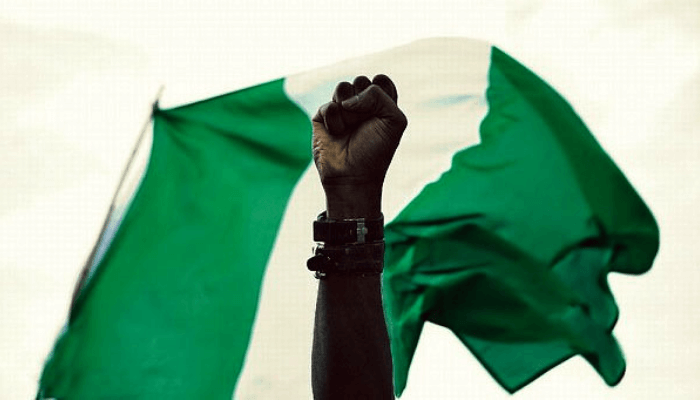
Taking account of 2025 political happenings and projecting into 2026, we can recall that Nigeria returned to civil rule in 1999 with high hopes that the long night of military authoritarianism had finally ended. More than two decades later, those hopes are under severe strain. Under President Bola Tinubu, Nigerians are increasingly worried that the country is drifting toward a governance style that echoes the very dictatorship democracy was meant to bury. While the context today is civilian rule, the methods (intimidation, shrinking civic space and institutional subservience) feel disturbingly familiar.
The warning signs are not abstract but are lived realities. Across Nigeria, peaceful protesters are arrested, journalists are harassed, and critics of government, especially at the state level, are routinely invited by security agencies or detained on unclear charges. According to data from rights groups and media monitoring organisations, Nigeria recorded dozens of cases of protest clampdowns and journalist intimidation in 2024 and 2025 alone, often justified under the guise of ‘maintaining public order’. In practice, these actions weaken one of democracy’s core pillars – freedom of expression.
“At the federal level, the concern is not only about actions but also about institutional balance. Democracy thrives when institutions are strong and autonomous.”
At the state level, executive overreach has become particularly troubling. Governors, empowered by control over security votes and influence over state police commands, increasingly behave like untouchable strongmen. Citizens who criticise policies on social media or organise local protests risk arrest, prolonged detention or harassment without trial. The Nigerian Police Force, constitutionally mandated to protect citizens, is too often deployed as a tool of intimidation rather than law enforcement. This trend erodes public trust and normalises fear as a method of governance.
At the federal level, the concern is not only about actions but also about institutional balance. Democracy thrives when institutions are strong and autonomous. Nigeria’s experience suggests a steady weakening of that autonomy. The legislature, rather than acting as an independent check, often appears reluctant to challenge executive excesses. Bills with far-reaching implications for free speech and civic engagement have repeatedly surfaced over the years, creating a climate of uncertainty and self-censorship, even when such bills are eventually shelved after public backlash.

The judiciary, the last hope of the common citizen, has also come under pressure. Delays in adjudicating politically sensitive cases, selective enforcement of court orders, and public accusations between arms of government all contribute to the perception of a justice system under strain. When citizens begin to doubt that courts can protect them against the state, democracy itself is on its way out.
Nigeria’s recent electoral experiences further deepen anxieties. Elections should be moments of renewal, but reports from recent off-cycle and general elections point to logistical failures, voter suppression, intimidation, and disputed outcomes. Confidence in the Independent National Electoral Commission has been shaken, not only by technical glitches but also by perceptions of political interference. A democracy in which citizens lose faith in elections risks sliding into managed rule.
There is also an uncomfortable historical parallel. Nigerians remember the era of Muhammadu Buhari as military head of state in the 1980s, when press freedom was curtailed and dissent was criminalised. Although the context today is different, echoes of that past, especially intolerance of criticism and reliance on coercive power, are what make current developments alarming. Democracy is not defined merely by elections; it is defined by restraint, accountability and respect for rights.
The implications of this drift are severe. In the short term, repression fuels anger and alienation, particularly among youths already battered by unemployment, inflation and rising living costs. In the medium term, it discourages investment, weakens social cohesion and drives talented Nigerians into exile. In the long term, a democracy that silences opposition risks becoming fragile. History shows that such systems do not produce stability; they produce eruptions.

As we know, when there is a will to do right, there will also be a way. Majorly, the current administration must make an unequivocal commitment to civil liberties. Peaceful protest, criticism and investigative journalism should be protected, not criminalised. Security agencies must be reoriented toward rights-respecting policing, with clear consequences for abuse.
Also, institutional independence must be strengthened in practice, not just rhetoric. INEC, the judiciary and oversight bodies require both financial autonomy and political insulation. Appointments should prioritise competence and integrity over loyalty.
Likewise, the National Assembly must reclaim its constitutional role. Rather than acting as a rubber stamp, it should rigorously scrutinise executive actions and resist laws that shrink civic space under vague pretexts.
Similarly, state-level impunity must be checked. The Federal Government cannot preach democracy while tolerating authoritarian practices by governors. Mechanisms for accountability, through courts, legislatures and civil society, must be supported, not undermined.
Above all, citizens themselves have a role. Democracy survives when people insist on it. Civil society, professional bodies, the media and ordinary Nigerians must continue to speak, organise and demand accountability, even when it is uncomfortable.
Nigeria’s democracy is not yet dead, but it is under pressure. As Harry Truman once warned, “When governments commit to silencing opposition, the slide toward repression accelerates.” President Tinubu still has the opportunity to reverse this drift, strengthen institutions and prove that Nigeria’s democracy can mature rather than regress. The alternative, a slow descent into civilian authoritarianism, is a price the country cannot afford to pay.