In the past week, you might have witnessed a friend effortlessly manage his entire morning from his phone. Checking his account balance on his Kuda or GTB banking app, ordering breakfast through Chowdeck or even scheduling meetings via his calendar. You might even be that friend; most of your activities are digital. Even the news you are currently reading is digital.
We have digitised nearly everything. Fintech revolutionised money. E-commerce transformed shopping. Food delivery reimagined meals. Yet healthcare, the most critical aspect of our lives, still operates like we’re stuck in the past.
“The technology to solve this already exists. We’re not waiting for some breakthrough innovation. The digital infrastructure powering our banking apps, food delivery services, and ride-hailing platforms can all be applied to healthcare.”
When healthcare access is difficult, people adapt. But not always safely. They Google symptoms and self-medicate or reuse old prescriptions without consulting doctors. They buy antibiotics over the counter because “seeing a doctor is too hard” or “takes too long.”
Research shows that 47.7% of Nigerians with tertiary education self-medicate with antibiotics. The reasons are inconvenience, limited access to doctors, financial constraints, and the ease with which prescription medications can be purchased without oversight. This is a public health crisis hiding in plain sight.

In 2019, Nigeria recorded 64,500 deaths directly attributable to antimicrobial resistance (AMR), with 263,400 deaths associated with drug-resistant infections. Without intervention, projections suggest Nigeria could face up to 249,000 AMR-associated deaths annually by 2030.
To put this in perspective, the 64,500 AMR-related deaths in 2019 were more than all deaths combined from enteric infections, tuberculosis, respiratory infections, maternal and neonatal disorders, neglected tropical diseases, malaria, and cardiovascular diseases. We are at the epicentre of a crisis most people don’t even know exists. Nigeria ranks 20th globally for age-adjusted AMR mortality rates.
Much of this resistance stems from the very accessibility problems we’ve failed to solve. When seeing a doctor requires taking a full day off work, when diagnostic tests cost more than a month’s salary, and when pharmacies are the only healthcare providers within reach, people make pragmatic choices with devastating long-term consequences.
The technology to solve this already exists. We’re not waiting for some breakthrough innovation. The digital infrastructure powering our banking apps, food delivery services, and ride-hailing platforms can all be applied to healthcare.
That is why OneHealth was founded in 2019. We asked ourselves: what if managing your health was as seamless as managing your financial portfolio? What if getting a prescription refilled was as easy as making a high-value transfer? The answer led us to build an integrated healthcare ecosystem that mirrors the digital security and convenience Nigerians already expect everywhere else.

Through our platform, patients connect with telemedicine doctors in minutes. Once diagnosed, our pharmacy network spanning all 36 states and over 2,000 pharmacies ensures medications are accessible regardless of location. We’ve served well over 100,000 patients, with 56,000 in the last year alone. Our partnerships with 15+ HMOs and healthcare providers create a connected system where health information flows seamlessly between doctor, pharmacy, and insurer.
Critically, every customer interaction is handled by pharmacist-trained professionals who understand which medications require prescriptions and why. So prescription medicines are never dispensed without valid prescriptions. We also have integrated telemedicine partnerships; if you need a prescription, you speak to a doctor within minutes. Through our lab partnerships, if you need diagnostic testing, we facilitate that too. This removes every legitimate excuse for non-compliance while maintaining the medical standards that protect both individual and public health.
As we journey into 2026, accessibility must extend beyond acute care to preventive health and chronic disease management. Obesity and metabolic disorders represent another growing health crisis in Nigeria, yet access to evidence-based, medically supervised weight management remains limited for most people. This is why we’re piloting The Method, a doctor-led GLP-1 weight loss programme that brings the same medical oversight standards we apply to prescription medication access to weight management.
The programme addresses a gap in the healthcare ecosystem: patients who would benefit from medically supervised weight loss but lack access to endocrinologists or structured programmes. Using GLP-1 medications, the same class as Ozempic and Mounjaro, The Method, in partnership with seasoned consultants and gym partners, provides doctor consultations, pharmacist support, and muscle-health guidance, all delivered within Nigeria’s regulatory framework.
This should be a standard. The tools exist. The technology is proven. The business models work. What’s needed is a fundamental shift in expectations from both patients and providers.
To my fellow Nigerians: Build your health ecosystem the way you’ve built your financial ecosystem. Find a telemedicine provider you trust. Connect with a digital pharmacy that operates nationwide. Integrate lab services that make diagnostic testing accessible. And refuse to compromise on quality and compliance just because something is convenient.
To healthcare entrepreneurs: The market is ready. Nigerians have proven they’ll adopt technology that genuinely improves their lives. Let us continue to build ecosystems that solve the friction points: access, affordability, convenience, and compliance all at once.
To policymakers: Strengthen and enforce our regulations on antimicrobial stewardship. Support the digital health infrastructure that makes compliance practical rather than punitive, and fully embrace the already existing National Action Plan on Antimicrobial Resistance.
The pharmaceutical sector in Nigeria is valued at over $4.5 billion and growing. The market opportunity is immense. But more importantly, with 64,500 deaths already attributable to antimicrobial resistance annually, and projections suggesting this could reach a quarter of a million deaths by 2030, we don’t have the luxury of accepting the status quo.
Being healthy in 2026 should not be harder than ordering dinner or checking your bank account balance. Your health deserves an ecosystem.
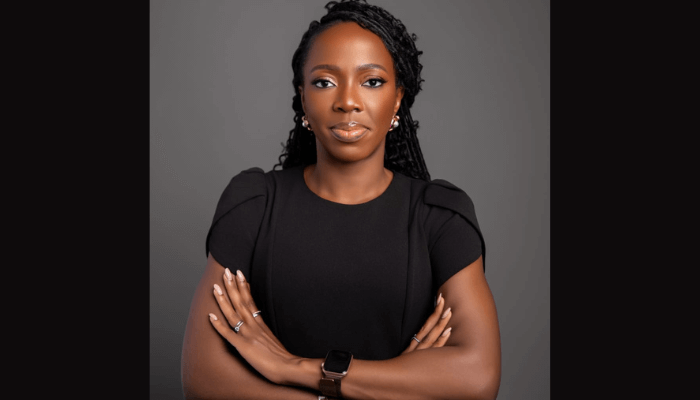
Adeola Alli is a pharmacist and the founder & CEO of OneHealth, a foremost digital pharmacy and healthcare infrastructure company.