When Mercy Kalu opens her roadside restaurant in Akanu each evening, she no longer watches potential customers disappear into the darkness. The solar-powered streetlights that now illuminate this southeastern Nigerian settlement have fundamentally altered her business calculus. What once took a week to sell now moves in three days.
“Our people go to bed early, like fowl, when there is no light,” Kalu explains. Now farmers visit her shop after sunset to buy soap, water, and soft drinks, a simple shift that represents a profound economic multiplier effect rippling across Nigeria’s 237 million people.
This transformation, playing out in communities across Africa’s most populous nation, marks a dramatic departure from decades of energy poverty. While countries like the United States generate solar power through utility-scale projects feeding into centralised grids, Nigeria’s solar boom is hyperlocal, distributed, and increasingly corporate-backed, a model that’s attracting nearly $2 billion in international investment and fundamentally reshaping how rural economies function.
The numbers tell a striking story. Nigeria imported 1,721 megawatts of photovoltaic panels in the year to June, enough to meet 5 percent of national demand and nearly quadruple the volume from 2021, according to climate think tank Ember. The country now ranks second only to South Africa for solar imports on the continent, yet the impact diverges sharply from its southern neighbour.

“The fact that most of this capacity comes from distributed systems means its impact is far more widespread than in countries like South Africa, where large utility-scale plants dominate,” says Wale Aboyade, vice president for public affairs at Sun King, the world’s largest off-grid solar equipment supplier. “In Nigeria, solar is reaching hundreds of thousands of homes and businesses directly, rather than being concentrated in a handful of big power stations.”
Read also: Nigeria’s grid crisis sparks push for digital energy solutions -Schneider
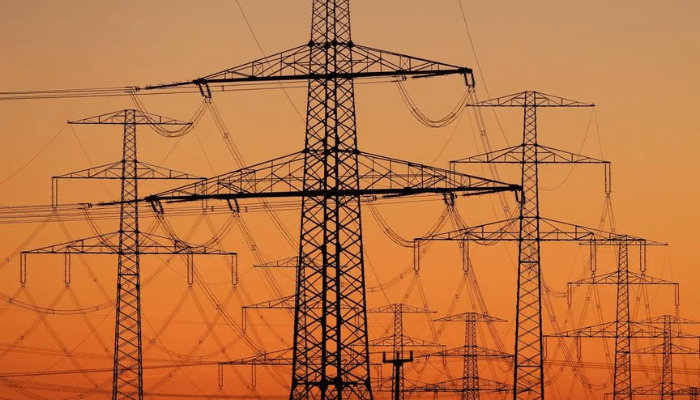
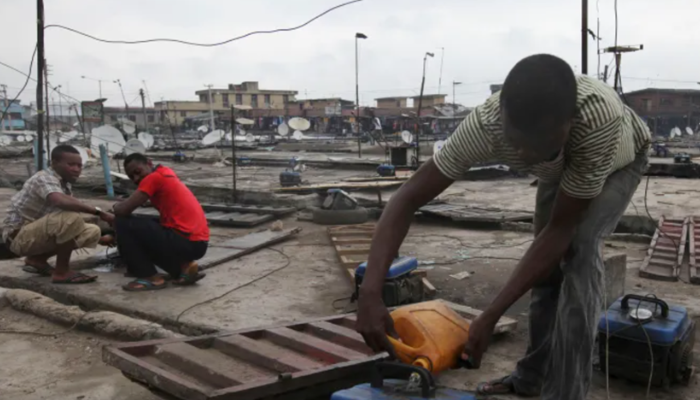
The infrastructure void that created this opportunity is staggering. Nigeria’s national grid, built primarily since the 1960s and powered by natural gas, supplies roughly 4 gigawatts of power. South Africa, with one-quarter of Nigeria’s population, generates more than six times that capacity. The shortfall has historically been filled by diesel and gasoline generators providing an estimated 75 gigawatts of electricity, leaving approximately 90 million Nigerians, 38% of the population, with minimal power access, more than any other nation globally.
“Solar is coming in to replace a lot of that inefficient individual power generation,” says Muhammad Wakil, country delivery lead for the Global Energy Alliance for People and Planet, a Rockefeller Foundation-backed nonprofit. “And it’s happening for residential, it’s happening at the commercial level.”
Major international players are capitalising on this market dislocation. Husk Power Systems, the world’s largest solar minigrid operator, runs approximately 70 systems across Nigeria and is raising $400 million to expand operations there and in India. The company’s minigrids power small communities either disconnected from the national grid or plagued by erratic state supply.

“When we stepped into a village, we could smell a waft of diesel hanging in the air,” recalls Manoj Sinha, Husk’s co-founder and CEO. The change is tangible: communities can now refrigerate beverages and process rice without the acrid smell of diesel fuel.
Sun King has scaled even more dramatically, selling 75,000 solar kits monthly in Nigeria—up from 3,000 monthly in 2020. The company offers small panels and batteries on a pay-as-you-go basis, recently securing funding from the International Finance Corporation and local lender Stanbic IBTC Bank.
This corporate expansion builds on a $750 million World Bank initiative called Mission 300, which aims to deliver electricity to 300 million Africans by 2030. Nigeria is negotiating an additional $1.1 billion from Japan, France, and the African Development Bank. The country attracts disproportionate investment partly due to favorable regulations allowing power providers to charge market rates that enable cost recovery and profit, a critical distinction from markets like Tanzania, where government-mandated pricing forced Husk to exit in 2022.
The economic effects cascade through local markets. Chisom Osinachi, who operates a convenience store in Akanu, now keeps his shop open until 10 p.m. thanks to solar lighting. “It’s the biggest thing I need to make my business grow, and it has been growing higher and higher,” he says.
The cost savings prove equally transformative. Nigeria’s 2023 removal of fuel subsidies drove dramatic gasoline and diesel price increases, making generator operation prohibitively expensive for many businesses and households. Solar systems suddenly offered not just reliability but economic logic.
At Ohafia’s local government headquarters, solar panels installed in October now power offices and staff quarters continuously. Deputy Mayor Eme Iro articulates a remarkable reversal: “Given what we have built, when grid electricity returns to this area, it’s only going to be an alternative.” Solar has become the primary system; the national grid, if it returns, will serve as backup.
The shift extends beyond commerce into basic services. In the Asaga community, a solar-powered borehole provides 24-hour water access, eliminating diesel generator costs entirely. The streetlights lining Akanu’s roads came from community levies, donations, and political contributions—a grassroots financing model now maintained by local development associations.
Mba Odo Okereke, traditional ruler of the Akanu area, observes the evening bustle from his ceremonial chair. Motorbike taxis drop passengers along the illuminated motorway. “Our night has become like day,” he says. “See everywhere, people are moving.”
That movement, of people, goods, and capital, represents Nigeria’s solar revolution in microcosm: distributed energy creating distributed economic opportunity, one streetlight at a time.