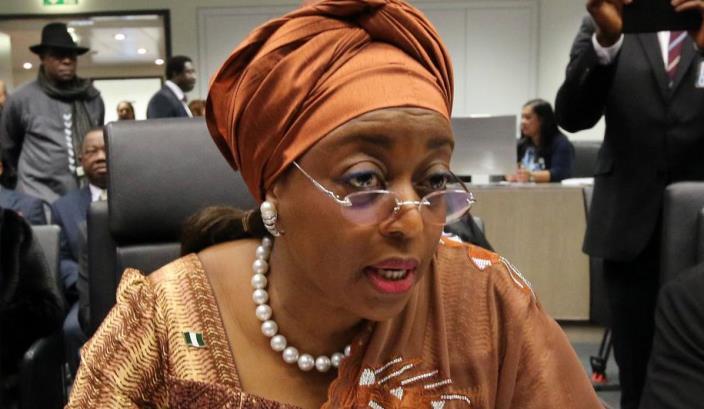
Diezani Alison-Madueke, former Nigerian petroleum minister, appeared before Southwark Crown Court in London on Monday for the preliminary hearing of her bribery trial, with the full trial scheduled to begin on January 26, 2026. The case, listed in Court 8 before Justice Thornton, stems from allegations that Alison-Madueke accepted a £100,000 bribe in exchange for awarding multi-million-pound oil and gas contracts during her tenure as minister.
Alison-Madueke served as Nigeria’s minister of petroleum resources from 2010 to 2015 under the Goodluck Jonathan administration and made history as the first woman to be elected president of the Organisation of Petroleum Exporting Countries (OPEC) in 2014. The charges against her highlight ongoing international scrutiny over alleged corruption in Nigeria’s oil sector and form part of a broader effort by authorities in the United Kingdom, United States, and Nigeria to track illicit gains from government contracts.
In August 2023, the UK’s National Crime Agency (NCA) formally charged Alison-Madueke, citing suspicions that she accepted bribes to award contracts worth millions of pounds. Following her arrest, she was granted bail in October 2023, set at £70,000, with strict conditions due to concerns that she posed a flight risk. These conditions included an electronic tag, a nightly curfew from 11 p.m. to 6 a.m., and a requirement to pay the surety before leaving the court building.
Read also: FG receives $52m Diezani Alison-Madueke’s loot from US in boost for scarce forex

The UK case is closely linked to international asset recovery efforts involving Alison-Madueke. In January 2025, the Nigerian and United States governments signed an agreement to return $52.88 million recovered from Galactica assets connected to the former minister. According to US authorities, Alison-Madueke and her associates used proceeds from the alleged illicit contracts to purchase luxury real estate in California and New York, as well as a 65-metre superyacht, the Galactica Star.
Back home, Nigeria’s Economic and Financial Crimes Commission (EFCC) has also targeted assets linked to Alison-Madueke, signaling a sustained domestic effort to hold her accountable for alleged corruption. Analysts say the high-profile case underscores the ongoing global fight against the diversion of public funds and corruption in natural resource management.
Observers note that Alison-Madueke’s trial carries significant political and symbolic weight. As one of Nigeria’s most prominent former government officials, her case has attracted international attention and raises questions about accountability for senior officials who oversee lucrative national resources. It also highlights the growing collaboration between international law enforcement agencies in tracing and recovering assets acquired through corruption.
The preliminary hearing on Monday primarily focused on procedural matters ahead of the full trial, including confirmation of legal representation and court schedules. The upcoming trial in January is expected to examine evidence provided by the NCA, including documentation of alleged bribes, contracts awarded, and financial transactions linked to Alison-Madueke and her associates.
With the global and domestic spotlight on the case, Alison-Madueke’s trial could set a precedent for how allegations of high-level corruption involving cross-border financial transactions are prosecuted. Legal experts and anti-corruption activists are closely monitoring the proceedings, emphasizing the importance of judicial transparency and accountability in cases of this magnitude.