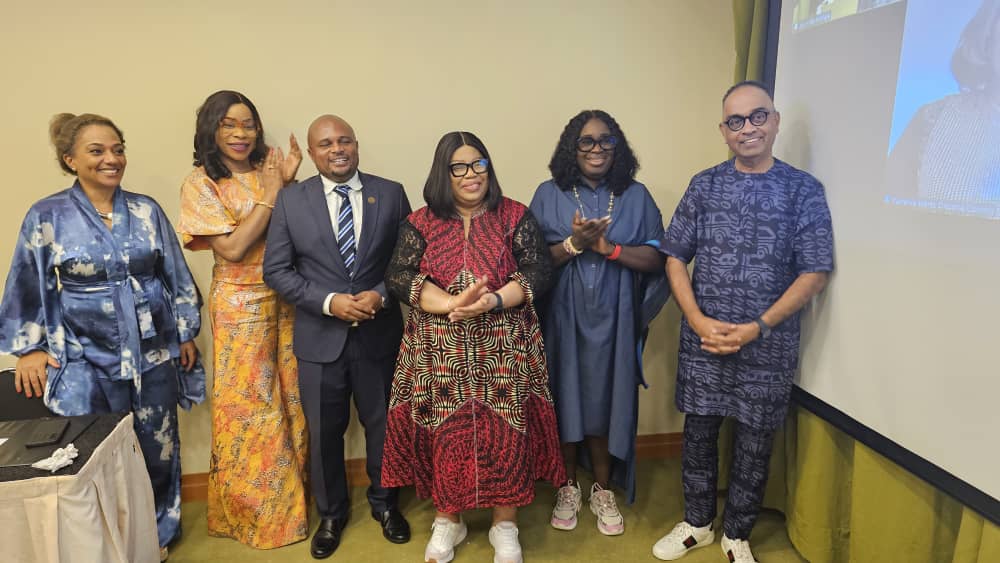
The International Coaching Federation (ICF) Nigeria Charter Chapter has unveiled a new leadership team with a clear focus on strengthening governance and decision-making in Nigeria through the structured use of professional coaching.
Charles Okeibunor, who assumes office as president of ICF Nigeria, at the inauguration of the new board, in Lagos, said the organisation would prioritise collaboration with public and private institutions to promote coaching as a tool for effective leadership, strategic thinking and accountable governance.
According to Okeibunor, many of Nigeria’s governance challenges stem from poor decision-making rather than lack of expertise, a gap he believes professional coaching can help address.
“Every individual and institution is a product of the decisions they make. Coaching enables leaders to think through those decisions critically, analytically and tactically before acting,” he said.

Okeibunor explained that coaching provides a neutral and structured environment where leaders can clarify goals, interrogate assumptions and evaluate the consequences of policy choices, leading to more informed and effective outcomes.
He likened the role of a coach to that of a guide rather than a director, noting that coaches do not impose solutions but help decision-makers arrive at better ones. “A coach does not tell you where to go. You already know your destination. What coaching does is help you reach that destination faster, safer and more efficiently,” he said.
He added that coaching also builds the humility required to reassess decisions when policies or programmes are not delivering expected results, an attribute he said is critical for good governance.
As part of its governance-focused agenda, the new ICF Nigeria leadership is seeking strategic partnerships with government institutions across all levels, positioning coaching as a capacity development tool for public sector leaders.
Okeibunor called for closer collaboration between ICF Nigeria and government agencies, describing the federation as a solution-oriented body with trained professionals capable of supporting leadership development within the public sector.

“The first step is awareness. Government institutions need to understand what coaching is and how it can support leadership effectiveness,” he said.
He clarified that professional coaching differs from teaching, counselling or advising, stressing that its core value lies in stimulating potential, creativity and strategic thinking.
He noted that ICF Nigeria, has over 100 professionally trained coaches with both local and international certifications, ready to support institutions seeking to improve governance outcomes.
New board, shared vision
The event also featured the swearing-in of the ICF Nigeria Board for the 2026–2028 tenure, administered by trustee Habiba Balogun, who charged the new leadership to uphold the organisation’s values, work collaboratively and maintain the highest standards of professionalism.
The new board comprises Charles Okeibunor, president; Ekhorose Ame-Ogie, vice president; Nkiru Adekoya, secretary; Femi Odelusi, director of education; Patrenia Werts Onuoha, director of communications; Anant Rao, director of partnerships; Gloria Gbemudu, director of memberships; Taiwo Dayo-Abatan, director of programmes and Dr. Tina Udoji, director of finance
Leadership as public trust
In his acceptance speech, Okeibunor described leadership as both a sacrifice and a sacred trust, pledging that the new board would focus on growth, ethical conduct and sustained impact rather than short-term achievements.
“Leadership tests your depth. As long as our conscience, commitment and consistency are clear, the results will follow,” he said.
The outgoing president, Akanimo Ekong, urged the new board to expand the reach and professionalism of coaching in Nigeria, noting that the discipline remains underutilised despite its proven impact on leadership effectiveness.
With its new leadership in place, ICF Nigeria says it aims to deepen the role of professional coaching in governance, positioning it as a catalyst for better policies, stronger institutions and improved national outcomes.