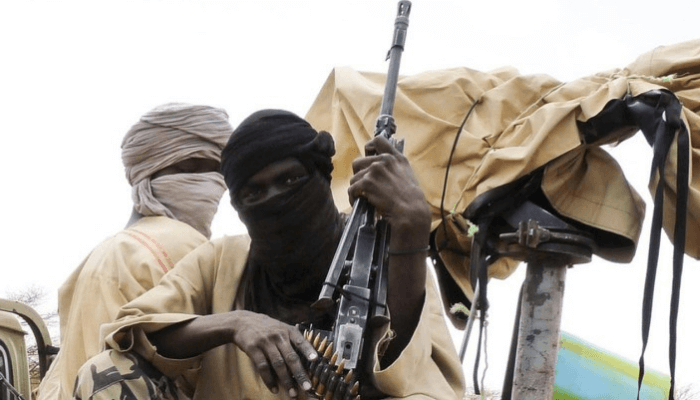
Across villages, highways, farms, and even places of worship, a rising tide of violence in Nigeria has transformed insecurity from a distant headline into a lived reality for millions. This escalation of banditry, defined by armed criminal groups engaging in kidnapping, murder, cattle rustling, and extortion, has deepened longstanding fears, disrupted daily life, and eroded the social fabric that binds communities. In the last year alone, dramatic attacks have underscored this grim reality: armed gangs stormed a mosque in Katsina State during morning prayer, killing scores of worshippers and abducting nearly 100 into the forests, shattering the peace of what should have been a sanctuary of faith.
The Katsina mosque massacre of 19 August 2025 was not an isolated incident, but rather a stark emblem of a broader crisis. Armed bandits, sometimes in collaboration with extremist groups operating in the Sahel, have intensified their attacks across northern and central Nigeria. Another violent raid in Kwallajiya village, Sokoto State, on 1 July 2025, claimed the lives of 15–17 people as heavily armed militants struck residents preparing for afternoon prayers. Such incidents reflect not only the ferocity of the violence, but also its deep intrusion into everyday life — targeting farmers during harvest, worshippers at prayer, and commuters on arterial roads.
These attacks have been accompanied by a broader wave of insecurity that stretches across many states. Governors in Katsina and Plateau States ordered immediate school closures in response to a spate of bandit raids on communities, underscoring how insecurity has disrupted education and parent confidence in sending children to school. Meanwhile, across the North-West and North-Central regions, farmers and villagers live with the daily fear of ambush, kidnapping, or cattle raids, driving displacement and undermining local economies.
The human cost of this conflict cannot be overstated. Thousands have been killed, many more kidnapped for ransom, and entire communities have fled in search of safer ground. International organisations have raised concerns that unchecked attacks by armed groups and bandits are contributing to a broader humanitarian crisis in parts of Nigeria. Beyond the headlines, the loss of life is matched by economic instability: farmland lying fallow, children out of school, and local markets shuttered as insecurity chokes normal life.

Root causes: Why banditry has escalated
Understanding why banditry has grown in scale and lethality requires looking at multiple, overlapping factors. The expansive and often forested terrain of northwestern Nigeria — spanning parts of Zamfara, Sokoto, Katsina, and neighboring states — provides hideouts and corridors for armed groups to traverse, evade capture, and coordinate simultaneous raids across villages. These geographical vulnerabilities, compounded by porous borders with Niger and Mali, allow weapons and fighters to move with relative ease.
European Union Agency for Asylum
The motivations behind banditry are equally complex. While at its core banditry may involve criminal motives like kidnapping for ransom, it has become interwoven with other forms of conflict, including extremist insurgencies and resource-driven tensions such as cattle rustling and disputes over land use. Some groups, once local criminal syndicates, have been transformed by contact with foreign fighters and radical elements, adopting more organised and violent tactics. Economic deprivation, unemployment, and poverty create fertile recruitment grounds for these groups, particularly among youth who see few opportunities outside the barrel of a gun.
Government Response: Efforts, Strengths, and Shortcomings
The Nigerian government and its security agencies have not been idle, but the scale of the challenge has stretched national capabilities. The military, police, and intelligence agencies have launched operations aimed at degrading bandit networks, rescuing hostages, and restoring relative calm in key flashpoints. In some regions, intensified patrols and joint task force deployments have had tangible impact, reducing the frequency of attacks in historically volatile areas. Civil-military cooperation efforts, including the formation of multi-agency intelligence shut-in units, have improved coordination and information-sharing between security actors.
Yet gaps remain. A recurring criticism from citizens and analysts alike is that responses can be reactive rather than proactive, pursued after attacks have already occurred rather than preventing them through early warning and community engagement. Coordination among federal, state, and local security actors is improving, but bureaucratic hurdles, resource limitations, and sometimes a lack of real-time intelligence have impeded swift, decisive action. These structural weaknesses have been exploited by criminals who strike with speed, melt back into forest hideouts, and exploit the slow pace of response.
There have also been policy shifts towards community-centric security strategies. Efforts to strengthen community policing, for instance, seek to bridge trust gaps between local populations and security forces. By empowering local leaders, neighbourhood watch schemes, and civilian volunteers with training, and by creating formal channels for communication with police and military, the government aims to cultivate local intelligence flows that can prevent attacks before they occur.

We, The People: How Nigerians Can Confront This Dragon
While government action is necessary, it cannot alone quell a crisis of this magnitude. The fight against banditry — like any national struggle — requires citizens not just as passive beneficiaries of security, but as active partners in shaping and defending peace.
First, community cooperation is vital. Local vigilance groups and citizens must work closely with security agencies, sharing credible information, and identifying suspicious activities early. This requires building trust: security forces must treat communities with respect, uphold human rights, and be transparent about their operations so that citizens see them as protectors, not occupiers.
Second, economic opportunities for youth must be central to any long-term solution. Many young Nigerians have been drawn into criminal enterprises not because they are inherently violent, but because they lack viable alternatives for sustainable livelihoods. Investing in education, vocational training, and employment in vulnerable regions can help turn the tide away from gun-to-handedness toward productive engagement.
Third, traditional leaders, religious institutions, and civil society must be marshaled as peacemakers. These actors hold moral authority and local legitimacy that can help mediate disputes, reduce tensions, and advocate for non-violent resolution. Mobilising them in dialogue platforms and community councils gives ordinary citizens a voice in shaping how security is pursued in their towns and villages.
Fourth, Nigerians must advocate for greater accountability and efficient governance. This means more effective use of technology — such as drones, surveillance systems, and data analytics — to map and disrupt criminal networks. It also means improved judicial follow-through so that those arrested for crimes face timely trials and appropriate penalties, decreasing incentives for recidivism.
Lastly, Nigerians in the diaspora and within civil society can continue to apply pressure for data-driven policies, support humanitarian relief for affected communities, and invest in programs that address the socio-economic roots of banditry.
Conclusion: From Crisis to Collective Resolve
The escalation of banditry in Nigeria is undoubtedly one of the most pressing security challenges of our time. The harrowing attacks on civilians, such as the Katsina mosque massacre and numerous raids across northern states, remind us daily of the stakes. But this dragon can be tamed — not through isolated military might alone, but through collective resolve, community engagement, economic upliftment, and deeper cooperation between citizens and the state. Each Nigerian — whether a farmer in the North, a trader in the Middle Belt, or a professional in Lagos — has a role to play in demanding accountability, fostering unity, and building resilient communities where peace is not merely an aspiration, but a lived reality.
In confronting the scourge of banditry, Nigeria is challenged not only to protect lives and property, but to reaffirm the bonds of citizenship and shared destiny that make our nation stronger. Only by working together — as a people and through inclusive institutions — can this dragon be confronted and overcome.