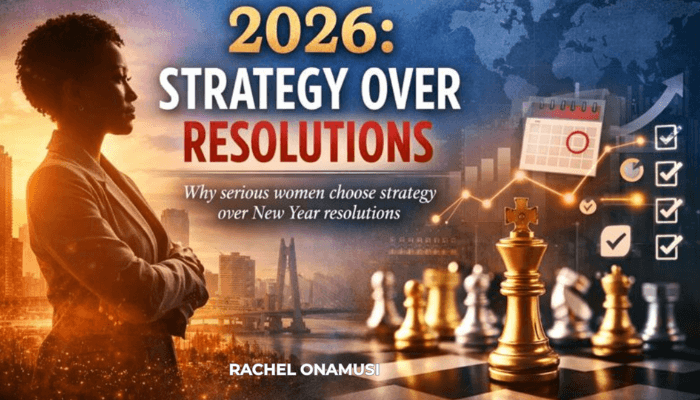
…Why serious women choose strategy over New Year resolutions
If you’ve been following me for a while, you’ll know that I don’t make New Year’s resolutions or recommend them. I think we attach far too much importance to the arbitrary structuring of the Gregorian calendar. If you have a bright idea in August, please start in August.
We should not need a fictional countdown further along in the year to do better, be better, or start something great.
But as I entered that strange twilight zone between Christmas and New Year’s – the one where days blur and time loses meaning – I couldn’t help but reflect on the things I’d like to do differently this year. And after getting over my initial shock at my own self-betrayal, the thought I was left with is: I want to make b*st*rd money this year.

And I am not changing that ambition. I’m talking about the kind of money that makes people ask if you won the lottery or if you have a calabash hidden somewhere in your wardrobe.
But this vague desire is exactly why I don’t like New Year’s resolutions – and why so many of them fall off within the first fortnight. Resolutions typically come with no systems, no metrics, no accountability, and no contingency for real life.
“This year, I’ll save.”
“This year, I’ll start a business.”
“This year, I want to lose weight.”
Girl… how?
How many? How much? By when? To what end? How are you actually going to do it?
Resolutions are born from feelings.
They’re a response to guilt, pressure, comparison, or January optimism. But to really get anything done in January and beyond, you’re going to need strategy.

Strategy takes into account where you are, what you have, and the constraints you’re working with. It then helps you put a plan together that discipline and willpower can realistically execute.
Anything else is just wishful thinking.
And the more I think about it, the more I realise that perhaps there does need to be a point in the year where we stop, take stock, and deliberately map out the next 365 days. An opportunity to review our ambitions and modify them if needed – because ambition is good – great, even. And it’s especially important for Nigerian women navigating career ceilings, financial pressure, and family or societal expectations.
Statistically, Nigerian women are a force in enterprise: eight out of every ten Nigerian women consider themselves entrepreneurs, with many juggling income-generating activities alongside their primary jobs, a clear signal that ambition is alive and well here.
You need something that wakes you up from the monotonous slog of “same thing, different day.” Wishful thinking does that quite nicely. Dreaming starts the journey, yes. But doing is what gets you there.
The way we think about goals is what separates high-performing women from those who spend the year wringing their hands and wishing.
- ]When a strategic woman sets a goal, she asks different questions:
- What does success actually look like? (Be specific.)
- What will this cost me? (Time, money, energy.)
- What systems need to exist? (Support, skills, tools.)
- What might get in the way – and what’s my Plan B?
Take a financial goal, for example. “I want to make more money” is not a strategy. “I want to earn an additional ₦15 million this year” is a starting point. From there, the questions become unavoidable: Where is that money coming from: salary, business, investments, multiple streams? What skills need sharpening? What expenses need reducing? What systems need automating? And what happens if one income stream dries up?
Clarity forces honesty. And honesty forces better decisions.
And this isn’t just about money. I have a friend – let’s call her Grace. Last January she said she wanted a promotion. Great. But her strategy was…hope. By March, she was frustrated. Until she rewrote her plan to include:
- specific projects she needed to lead
- courses she needed to finish
- names she needed to network with
- a quarterly review with her mentor
- By July, she had the promotion on her CV.
Strategy brings action.
Willpower is unreliable. Motivation is fickle. Systems, on the other hand, are loyal. If you’re serious about your life, you cannot rely on vibes. You’re going to need structures. Calendars. Budgets. Processes. Routines.
“I’ll try to save more” becomes “₦X automatically moves into a separate account on the 25th of every month.”
“I’ll network more” becomes “Two intentional coffees or industry events a month.”
“I want to grow my business” becomes “Weekly lead tracking, monthly reviews, quarterly strategy resets.”
If your goal doesn’t show up in your calendar or your bank statement, it’s not a priority. You’re still dreaming.
Next, you have to give your strategy room to breathe.
High-performing women understand the need to review, reset and adjust. They don’t abandon goals at the first sign of difficulty; they audit them. Monthly check-ins. Quarterly reviews. Annual recalibration. This is what progress looks like, and it doesn’t always happen on January 1.
Especially in this unpredictable economy, flexibility is not weakness, it’s leadership.
So, if you’re feeling overwhelmed, here’s a simple strategic roadmap for 2026:
Choose one primary focus for the year. Not everything at once.
Define success in numbers or outcomes, not feelings.
Build two or three non-negotiable systems that support that goal.
Schedule regular reviews. Yes, actually put them in your calendar.
Secure accountability, whether through a person, a structure, or a community.
Ladies, dreaming is for non-starters. Doing is for achievers.
When we talk about self-leadership, this is what we mean: taking our wild, ambitious thoughts and fitting them into structurally sound leadership frameworks – and then setting them up to succeed, the same way we would at work or in our businesses.
This 2026, perhaps the resolution is not to make louder or newer resolutions, but simply better decisions.
For me, I will be starting with one question: How exactly am I going to make this b*st*rd money?
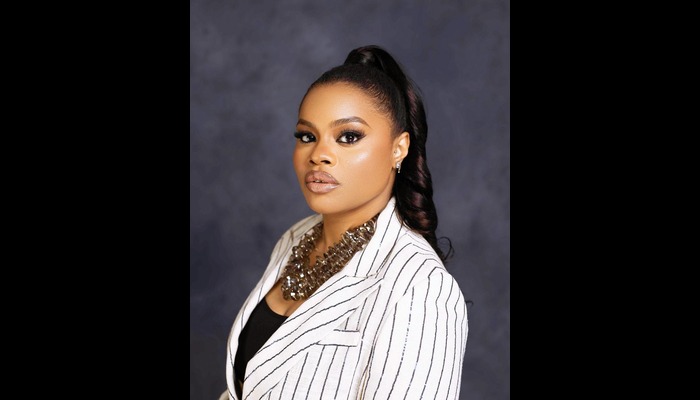
Rachel Onamusi is the CEO of VN Sync, a UK-based tech company and full-service marketing firm with expertise in all aspects of media and a strong focus on digital strategy development and implementation. Dedicated to creating lasting impact, Ms. Onamusi is a sought-after speaker, thought leader, writer and frequent media contributor.