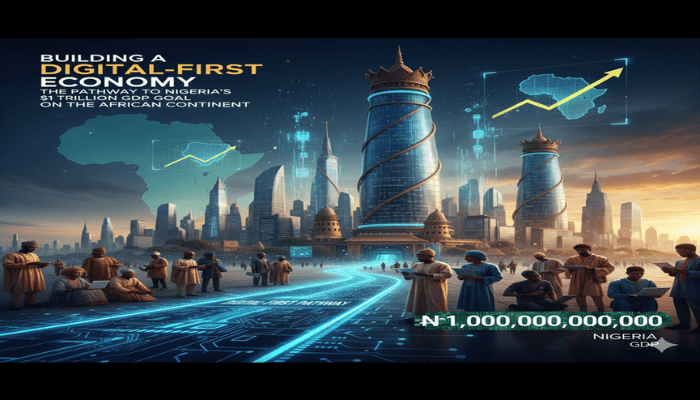
On a typical Lagos morning, the contradictions are everywhere. A roadside trader accepts mobile transfers beneath a billboard advertising prosperity. A traffic jam stretches endlessly while a startup pitches “smart mobility” a few streets away. This is Nigeria in 2026: energetic, hopeful, and innovative, but also filled with perennial challenges.
In design, there is a popular term: “wicked problems”. Not problems with simple answers, but deeply rooted challenges like food insecurity, fragile healthcare systems, and millions of children left outside the classroom. Fix one layer, and two more appear. Ignore them, and they quietly grow worse.
Nigeria, however, is not alone. Across the Global South, from India to Kenya to Brazil, countries facing similar constraints are showing that artificial intelligence does not have to be a luxury reserved for Silicon Valley. Used well, AI can become a practical, everyday tool for survival, efficiency, and inclusion.
Healthcare: When Technology Becomes a Bridge, Not a Replacement
Nigeria’s healthcare gap is one of its most painful realities. Even when you look away, one or two stories remind you of this perennial “wicked problem”.

India faced a similar shortage. Rather than waiting decades to train millions of doctors, it used AI as a bridge. Community health workers now screen for tuberculosis and eye diseases using simple smartphone tools. In Bangladesh, similar pilots showed something important: AI didn’t replace doctors. It filtered cases, ensuring specialists focused on those who truly needed urgent care.
For Nigeria, the lesson is simple and powerful. We already have community health workers everywhere. With AI support, a nurse in a rural clinic could suddenly access specialist-level insights through a screen, saving time, money, and lives.
Agriculture: Helping Farmers Decide, Not Guess
Agriculture feeds Nigeria, but it also frustrates millions of farmers. Climate uncertainty, pests, and poor access to information keep productivity low.
In Kenya, PlantVillage Nuru helps farmers identify crop diseases instantly using computer vision. In Ghana, AgroCenta applies machine learning and satellite data to predict crop health and improve access to markets.
These tools are not “nice to have”. They are survival tools. When AI works offline, on basic phones, and in local conditions, it becomes relevant to the smallholder farmer, not just large commercial farms.

Food security becomes less mysterious when farmers know when to plant, what is attacking their crops, and how to respond—without waiting for extension officers who may never arrive.
Education: Teaching Children the System Has Missed
With an estimated 18 million children out of school, the traditional classroom model simply cannot scale fast enough.
Other countries have stopped waiting. In India, platforms like BYJU’S use AI to personalise learning for millions of students. In Kenya, Eneza Education delivers adaptive lessons via SMS and low-bandwidth tools.
These systems learn how a child understands maths or reading, then adjust in real time. No laptops. No constant electricity. Just learning designed for real-world conditions.
For Nigeria, this approach could quietly transform communities where schools exist mostly in name, and teachers are painfully few.
Bottom Line
Every Nigerian is filled with ideas. What we lack is scale, coordination, and trust. AI will not magically fix our problems, but it can help us manage them better if we build for Nigerian realities.
That means power solutions that work with or without the DISCOs. It means local data that understands our accents, crops, and communities. And above all, it means earning public trust by deploying AI that supports people, not replaces them.
The choice before us is clear; the problems are not going away overnight, but we can draw inspiration from countries with similar economic challenges and demography to turn these wicked problems into opportunities for continuous AI innovation.
Dotun Adeoye is a technology entrepreneur, AI governance leader, and co-founder of AI in Nigeria. He has over 30 years of global experience across Europe, North America, Asia, and Africa and advises organisations on AI transformation, governance, and digital growth.