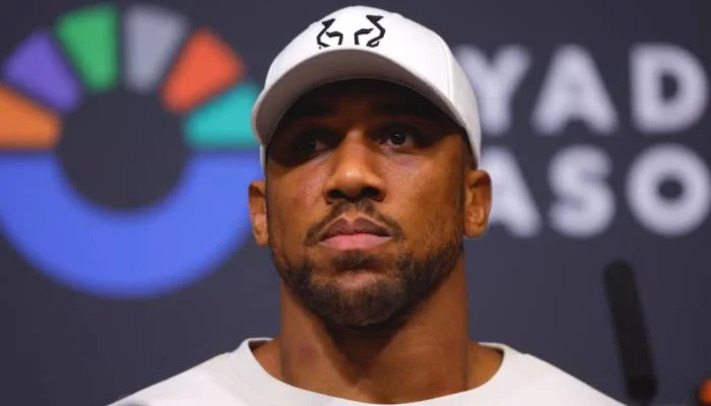
On December 29, 2025, the world was startled by the news that Anthony Joshua, the 36-year-old British-Nigerian heavyweight boxer was involved in a ghastly road traffic accident on the Lagos-Ibadan expressway. He was on his way to spend holiday time with members of his extended family.
Joshua had been in the news only ten days before that date after triumphing in a widely advertised boxing match with an internet influencer, a fight that was streamed live to millions of viewers on Netflix. It was a battle between the boxer and the browser, and there could have been only one outcome. And it was a massive streaming event that drew 33 million viewers and set new records for viewership.
Joshua earned a career-high purse in the region of $60 million for his day’s work. Sadly, two of his closest friends and training companions died on the spot. Joshua himself, it emerged, missed death by the merest whisker, having swapped seats with one of the deceased moments before they embarked on the fateful journey.
But this story is not really about Anthony Joshua. No.

As usual, the circumstances of the accident provided a field day for Nigeria-bashing. Nigeria had happened to the boxer, ran the trend. There was nothing like Emergency Medicine. No land or air ambulance in sight. No paramedics. The stationary truck the car ran into should not have been parked there in a sane society. The crowd of onlookers gawking at the scene and recording videos on their phones were a disgrace – one of them would even be discovered later to have stolen Joshua’s phone from the wrecked car. And so on.
As more information came in, it turned out not all the early criticisms were justified. First Responders – the Federal Road Safety Officials were at the scene a few minutes after the crash. True, there was no ambulance, air or ground, and there was the all too accustomed failure of pre-hospital care. A shaken and groaning Joshua was transported to hospital sitting in a police operational vehicle.
The genesis of the accident scenario had the familiar face of the Nigerian citizen road-user stamped boldly on it. The highway was a smooth and wide one. The extreme crushing damage to the car, an armoured bullet-proof monstrosity of an SUV, was such that the impact could only have occurred at an extremely high speed of impact. That the driver’s side was less affected than the other side suggested a dangerous change of lane was being executed.
The prescribed top speed for driving on Nigerian expressways was 80 kilometres per hour. Almost every Nigerian driver routinely exceeded that limit, whether within or outside the city. The presence of Road Safety Officials and Police at different points made not a hoot of difference. The Nigerian Road war-fare psychology required him to slow down at the scene of an accident to stare, and only occasionally to help. Leaving the spot, the driver was off again, tyres screaming on the tarmac as he flew into the stratosphere. In changing lanes, nobody knew, or cared, that there was a right side to overtake from, which was the left, with a clear indication of intention given well in advance. Commercial drivers were the worst culprits, but even University professors at the wheel did the same. And there was the sheer bloody-mindedness that stirred in the blood of a Nigerian when he saw another driver moving to get ahead of him, so that he instinctively sped up to prevent him.
A takeaway lesson from the Sagamu expressway tragedy was for the Nigerian to see his face in the mirror and say to it ‘I am a Nigerian citizen. This is who I am. I have many failings, including inadequate attention to the common good. I need to change’.

Enforcement of what ultimately were the values of a good and decent society, with an Omoluabi ethos, without insight and intentional compliance on the part of citizens, was never going to work.
Talking of citizenship, there was another ‘face in the mirror’ that a certain vocal cleric named Sheikh Gumi presented to the Nigerian public, around the same time as the tragic incident. This time the topic was about murderous insurgents in the northern part of the country labelled ‘bandits’ and ‘terrorists’, in the aftermath of the American strike on terrorists’ hideouts in Sokoto. On being asked if those people, many supposedly ‘foreigners’ from the Sahel, would get the message and leave Nigeria, he replied famously, along these lines-
‘They are not going anywhere…They are of us…and we are of them…’
It was a bold, in-your-face, entitled assumption that elicited deep revulsion in the souls of many people who did not agree with him in the country. It went to the very heart of the national question of Nigeria.
‘Who is a Nigerian?’
Nigeria is a multi-lingual, multi-ethnic, multi-religious nation with a secular constitution. It has long, currently porous borders, sharing 4,047 kilometres with Benin, 1,690 kilometres with Cameroun, 87 kilometres with Chad, and 1,497 kilometres with Niger. While it is true that many of Africa’s borders are colonial creations, the results of racist colonial aberrations of the Berlin Conference of 1884, the modern Nigerian nation is what it is. Borders define not only physical but psychological boundaries and are sacrosanct. When the nation’s new Minister for Defence floated a kite about building a fence round the monstrously long border of Nigeria, there was a loud silence. People were probably thinking of the humongous cost. But the fence would clearly define who is a Nigerian citizen, and who is not, and would render Gumi’s egregious point moot.
It requires no gift of prescience to see that if Nigeria hangs together, as it hopefully will, defining and enforcing its borders, physically and psychologically, is an assignment that will be done some day, by this generation or the next.