…Tinubu expected at official launch next month – Enoh
The Federal Government, on Thursday, soft-launched Nigeria’s National Industrial Policy, setting out an ambitious framework aimed at accelerating job creation, boosting productivity and delivering sustainable economic growth.
The policy was unveiled on the sidelines of the Nigerian Economic Summit Group’s 2026 Macroeconomic Outlook launch, marking what the government described as a turning point in Nigeria’s industrial development strategy.
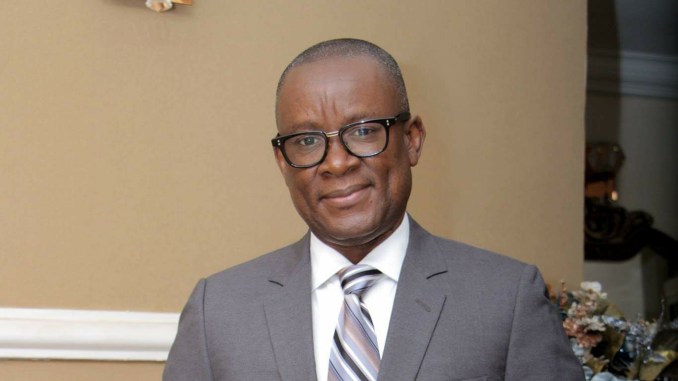
Speaking at the Nigerian Economic Summit Group (NESG) Macroeconomic outlook event in Lagos, John Owan Enoh, Minister of State for Industry at the Federal Ministry of Industry, Trade and Investment, said the new policy fills a longstanding gap in Nigeria’s economic architecture.

He noted that, for the first time in several years, the country now has a clearly defined and nationally validated industrial policy. According to him, Nigeria entered the current administration without a formal industrial framework, a weakness repeatedly highlighted by development partners, including the United Nations Development Programme. That absence, he said, made structured engagement on industrial development difficult and limited long-term planning.
Read also: NESG sees Nigeria’s inflation hitting single-digit by 2029
Enoh said the renewed focus on industrialisation has gained momentum over the past year, following President Bola Tinubu’s decision in October 2024 to restructure the Ministry of Industry, Trade and Investment. The restructuring led to the appointment of two ministers with complementary mandates, one focused on trade and investment and the other on industrial development.
While Nigeria has long operated trade and investment policies, Enoh said the lack of a coherent industrial policy created execution gaps. The newly approved framework, which received Federal Executive Council approval before the end of last year, is intended to align trade, investment and industry within a single strategic vision. A formal public launch of the policy is planned for next month, with the President expected to attend.
He emphasised that the National Industrial Policy is designed as an action-oriented framework rather than a shelf document. Developed through extensive stakeholder consultations, the policy comes with implementation structures already in place.

According to Enoh, dedicated teams are working to translate the framework into tangible outcomes, including jobs, productivity gains and sustainable growth. He said the policy seeks to resolve Nigeria’s long-standing paradox of vast natural resources and a large domestic market coexisting with fragmented value chains and limited industrial capacity, especially as the African Continental Free Trade Area reshapes regional competition.
The policy is anchored on six mutually reinforcing pillars, including competitive industrial production, import substitution and value chain development in sectors such as agro-processing, solid minerals and petrochemicals, MSME integration into industrial value chains, industry-aligned technology and skills development, quality standards and export readiness, and long-term policy coordination.
Enoh said the Government aims to synchronise investment, energy, finance, skills, infrastructure and regulation to end policy silos. With targets that include raising manufacturing’s contribution to GDP to between 20 and 25% by 2030, he said the policy sends a clear signal to investors and producers: Nigeria is committed to backing value addition, local enterprise and job creation through predictable rules, coordinated institutions and disciplined execution.